
Quote of the day by British-American theoretical physicist Freeman Dyson: “We must be careful not to discourage our twelve-year-olds by…”

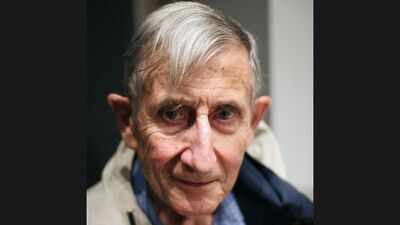
Ask an adult what killed their love of a subject, and you’ll often hear the same answer. The exams. Something they once found fascinating got flattened into a syllabus, a set of model answers, and a grade out of a hundred. The physicist Freeman Dyson saw the danger in that, and put it bluntly. We must be careful, he warned, not to discourage our twelve-year-olds by making them waste the best years of their lives preparing for examinations. It’s a striking thing for a great scientist to say. You might expect a man of his standing to demand more rigour and more testing. Instead he worried about the opposite. That we take curious young minds at their most alive, and spend those years training them to pass tests, rather than letting them fall in love with learning itself.
Quote of the day by Freeman Dyson
“We must be careful not to discourage our twelve-year-olds by making them waste the best years of their lives preparing for examinations.”
Who was Freeman Dyson
Freeman Dyson was one of the most original scientific minds of the last century. Born in England in 1923, he moved to the United States and made his name in physics, most famously by tying together rival versions of a theory called quantum electrodynamics into one coherent picture. He spent most of his career at the Institute for Advanced Study in Princeton, the same place Einstein worked.Curiously, he never bothered to finish a PhD, and rather wore that as a badge of honour. He was also a gifted writer, with books like Disturbing the Universe and Infinite in All Directions that carried big ideas to ordinary readers. He thought about science, war, the far future and, as here, how we educate the young.
Where the quote comes from
The line appears in his 1988 book Infinite in All Directions, but the view behind it was shaped by his own schooling. Dyson grew up in England spending most of his time on Latin and Greek, with very little formal science. Oddly, he thought that was a blessing. Because science was never crammed into him for exams, he said, he never got turned off it. It stayed something he did for fun, not because he had to.That experience clearly stuck with him. So when he warns about exam preparation eating up the best years of a child’s life, he isn’t speaking as a man who hated school. He’s speaking as someone convinced that the freedom to be curious, to mess about and explore, is what actually produces real thinkers.
What is the meaning of the quote
Dyson’s point is about what heavy exam preparation quietly costs. Around the age of twelve, children are naturally curious. They ask endless questions, chase odd little interests, and learn things simply because they want to. That hunger is precious, and in Dyson’s view, surprisingly fragile.When school becomes years of drilling for tests, that curiosity can fade without anyone noticing. Learning stops being about wonder and starts being about marks. Children learn to give the answer the examiner wants rather than to think for themselves. The danger he names isn’t that exams teach nothing. It’s that they can crowd out the very thing that makes a young mind come alive. You end up with excellent test-takers who’ve quietly lost the urge to explore.
Why this quote is relevant
This hits a nerve in plenty of places, and few more than countries where exams rule everything. Whole childhoods can vanish into coaching classes, practice papers and the chase for a few extra marks. The pressure seems to start younger every year, and Dyson’s warning is a reminder of the hidden price tag on it.None of this means exams are useless or that standards don’t matter. The question he’s raising is one of balance. If a child spends their most curious years doing little but preparing to be tested, what happens to imagination, to play, to the joy of figuring something out for its own sake? Those, he’d argue, are exactly the things real thinkers are made from.
How to apply this quote in daily life
Whether you’re a parent, a teacher, or just thinking back on your own school days, the idea is easy enough to act on.
- Protect curiosity, not only grades. If a child is gripped by something with no exam attached, treat that as valuable, not a distraction from the real work.
- Leave room for unstructured learning. Time to read, tinker, build and wonder, with no test at the end, is where the best thinking quietly grows.
- Watch for the spark going out. If a once-curious child starts seeing learning only as a chore for marks, read that as a warning sign, not proof they’re settling down.
- Keep marks in their place. Exams are a tool, not the point. The point is a person who still wants to learn long after the last paper is handed back.
Other famous quotes by Freeman Dyson
Dyson had a knack for saying deep things plainly. Here are a few more of his lines.
- “Science is not a collection of truths. It is a continuing exploration of mysteries.”
- “The glory of science is to imagine more than we can prove.”
- “A good scientist is a person with original ideas.”
- “So long as you have courage and a sense of humour, it is never too late to start life afresh.”
It says something that one of the sharpest scientific minds of his age spent so little energy worshipping exams. Dyson trusted curiosity over testing, and wonder over drilling. His warning is gentle but serious. We should be careful what we put children through in the name of preparation, because the years we spend cramming them for tests are the same years we could be teaching them to love learning for life.


