
Quote of the day by Albert Einstein: “If a cluttered desk is a sign of a cluttered mind, of what, then…”

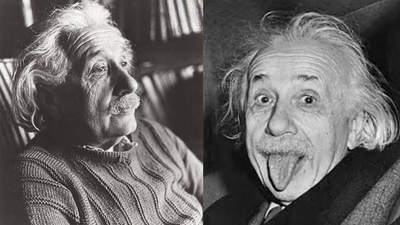
While a desk covered in books, papers and unfinished notes may be seen as a sign of an untidy mind, the great scientist Albert Einstein had a different view of this assumption. In particular, he asked, “If a cluttered desk is a sign of a cluttered mind, of what, then, is an empty desk a sign?” This statement suggests that the state of a person’s workspace does not always reflect their cognitive abilities. While the work environment of a person may give some clues about their work style, it certainly doesn’t reveal all aspects of their thinking. Thus, for some people, a cluttered desk is a working method which implies having all needed references and ideas close at hand. Einstein’s saying shows that intellectual capacity may be difficult to assess according to one’s external tidiness.Albert Einstein (1879-1955) was a German theoretical physicist, the author of the theories that have changed the perception of the concepts of space, time, gravity, and the universe. His theory of relativity became one of the cornerstones of modern physics. The description of the photoelectric effect provided by Einstein led to his Nobel Prize in Physics of 1921.
Quote of the day by Albert Einstein
“If a cluttered desk is a sign of a cluttered mind, of what, then, is an empty desk a sign?”
What does this quote mean?
Einstein’s question plays with the assumption that external order reflects internal order. If a messy desk automatically meant a messy mind, then we might reasonably expect an empty or perfectly organised desk to indicate an exceptionally clear and productive one. But reality is far more complicated. People have different ways of thinking and working. Some need everything arranged neatly before they can concentrate, while others find that having several books, notes or objects around them helps them make connections between ideas. The important point is that a desk is a workspace, not a window into someone’s intelligence.
A cluttered desk can sometimes reflect an active mind
When someone is deeply involved in a project, their surroundings can naturally become crowded. A writer may have several drafts nearby, a scientist may be comparing research papers, and an artist may keep sketches and reference material spread across a table. What appears to be disorder could simply be evidence that the person is actively working through a problem. Of course, excessive clutter can sometimes make work more difficult. But Einstein’s point is that we should not automatically assume that every untidy workspace represents confusion. Sometimes, the apparent mess is simply the physical evidence of ideas being developed.
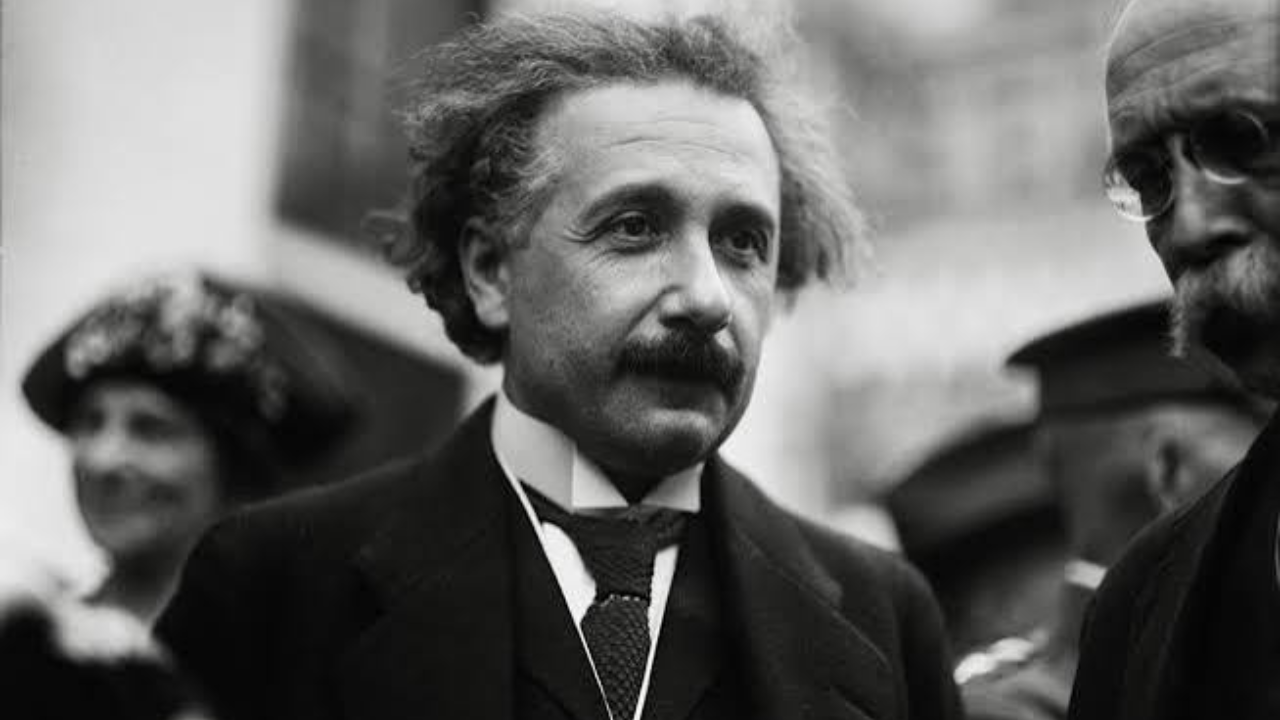
Albert Einstein (Image: National Geographic)
An empty desk does not guarantee a clear mind
The humour in Einstein’s question comes from applying the same logic in reverse. If we treat a cluttered desk as proof of mental disorder, what should we conclude when a desk contains absolutely nothing? An empty surface could belong to someone highly organised, someone who prefers digital tools, someone who has just finished working or someone who simply has not started yet. The desk itself cannot tell us which explanation is correct. Absence of clutter is not proof of clarity, just as the presence of clutter is not proof of confusion.
Creativity does not always follow a neat path
Creative thinking is rarely a perfectly ordered process. One idea can lead to an unexpected question, which can lead to another possibility and eventually change the original direction of a project. Notes may be rewritten, books may be revisited and discarded ideas may suddenly become useful later. This is why creative environments can sometimes look chaotic. The disorder may reflect experimentation rather than a lack of discipline. What matters is whether the person can navigate that environment and turn scattered thoughts into something meaningful.
Everyone has a different way of organising their thoughts
There is no single workspace that works for everyone. One person might prefer an almost completely empty desk, while another might keep everything they need within arm’s reach. Some people organise their thoughts visually, surrounding themselves with reminders and notes; others prefer to keep everything stored away until they need it. Neither method is inherently better. Productivity depends less on whether a workspace looks impressive and more on whether it helps the person concentrate, solve problems and make progress.
We often judge competence by appearances
This insight from Einstein is also connected with another tendency which humans possess: that of making snap decisions depending on how things look. For instance, a neat office environment may make one think of a person as organized, while a messy work environment may give one the impression of the opposite. However, things are not always what they seem. The same goes for many other aspects of our lives. A person may be speaking in low tones but have great thoughts in his or her head, may appear calm but work really hard.
Sometimes order is useful, but it is not the goal
This does not mean that organisation has no value. A manageable workspace can save time, reduce distractions and make it easier to find important things. For many people, keeping their surroundings organised genuinely improves concentration. But organisation should serve the work rather than become a measure of personal worth. A beautifully arranged desk is useful if it helps someone work better; it is not valuable simply because it looks productive.
Einstein’s joke carries a serious lesson
The brilliance of the quote lies in how quickly it exposes a weak assumption. We often believe that visible order must reflect mental order, but there is no simple relationship between the two. Einstein’s question encourages us to pause before turning an observation into a conclusion. A messy desk tells us that a desk is messy. An empty desk tells us that it is empty. Neither one tells us everything about the person sitting behind it.
Why this quote still matters today
In an era filled with productivity routines, minimalist workspaces and carefully organised digital lives, Einstein’s words offer a useful reminder not to confuse appearance with achievement. Organisation can certainly help us work, but intelligence, creativity and curiosity do not have a particular visual style. The lasting lesson behind Einstein’s observation is that a productive mind does not have to look organised from the outside. What matters is not whether the desk is perfectly clean or completely covered in papers, but what the person is able to think, discover and create.


