
Quote of the day by Albert Einstein: “Everything that is really great and inspiring is created by…”

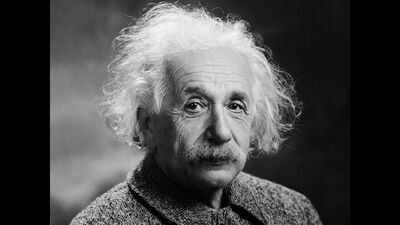
Albert Einstein wrote, “Everything that is really great and inspiring is created by the individual who can labor in freedom.” The line is a straightforward claim about where genuinely original work actually comes from. Not from committees, not from rigid instruction, and not from people working under constant supervision, but from individuals given enough room to think, experiment and follow an idea wherever it leads. Einstein had good reason to believe this. Some of his own best thinking happened well away from any formal academic setting, at a desk job with plenty of quiet hours and nobody checking his work too closely. The line reads like a simple statement of values, but it is really a description of the exact conditions that produced his own most important discoveries.
Quote of the day by Albert Einstein
“Everything that is really great and inspiring is created by the individual who can labor in freedom.”
Where the line comes from
This quote appears in Out of My Later Years, a 1950 collection of Einstein’s essays and reflections written well after he had already reshaped physics with the theory of relativity. By that point in his life, he had spent decades thinking about the conditions that actually produce meaningful work, not just in science but in any creative field.The essay this line comes from was concerned with freedom in a broad sense, personal, political and intellectual. Einstein was not simply making a comment about laboratories or universities. He was arguing that creative achievement of any kind depends on the freedom to think without being told exactly what conclusion to reach.
What Einstein meant by labouring in freedom
The word “labor” in the quote matters as much as the word “freedom.” Einstein was not describing idle daydreaming. He was describing sustained, genuine effort, just effort that had not been forced into a rigid, predetermined shape by outside authority.Freedom without effort produces very little. Effort without freedom tends to produce competent, ordinary results rather than anything genuinely original, since the person doing the work is mostly following instructions rather than pursuing their own honest curiosity. Einstein’s claim is that the two need each other. Real freedom gives effort somewhere interesting to go, and real effort gives freedom something to actually produce.
His own escape from rigid schooling
Einstein had personal reasons to trust this idea. As a schoolboy in Germany, he disliked the rote, drill-based teaching common at the time, and later described it as closer to military discipline than genuine education. He taught himself calculus at twelve, largely outside the structure of his formal lessons, because that structure did not give him room to explore the questions that actually interested him.After university, Einstein could not initially find an academic post and instead took a job at the Swiss Patent Office in Bern, examining patent applications for a modest salary. That job turned out to be an unexpected gift. It paid the bills without demanding the kind of intense academic politics or teaching load that came with a university post, leaving him with real mental space in the evenings. It was during those patent office years, in 1905, that he published four papers that changed physics, including the special theory of relativity. He was not free from work. He was free from having his thinking directed by someone else.
Why freedom still fuels the best work
The pattern Einstein described keeps showing up well outside physics. People doing their most original work, in research, in the arts, in business, tend to describe similar conditions, real responsibility paired with real room to make their own choices about how to approach a problem.Micromanagement produces compliance, not originality. A person told exactly how to do something rarely improves on the instructions, because there was never any room to. Someone given a genuine problem and the freedom to solve it their own way is far more likely to find something nobody had thought to specify in advance.
How to build more of it into your own life
You do not need a patent office job to apply this. The relevant question is whether you actually have room, in your work or your own projects, to try something your own way, rather than simply following a script someone else wrote.Where you do have that room, protect it rather than filling it up with more supervision or more rigid process than the task actually needs. Where you do not have it, even a small amount reclaimed, an hour with no meetings, a task nobody is checking on closely, can be enough to produce something genuinely your own rather than simply competent.
Other famous quotes by Einstein
- “Imagination is more important than knowledge.”
- “The important thing is not to stop questioning.”
- “Education is what remains after one has forgotten what one has learned in school.”
- “The most beautiful thing we can experience is the mysterious. It is the source of all true art and science.”


