
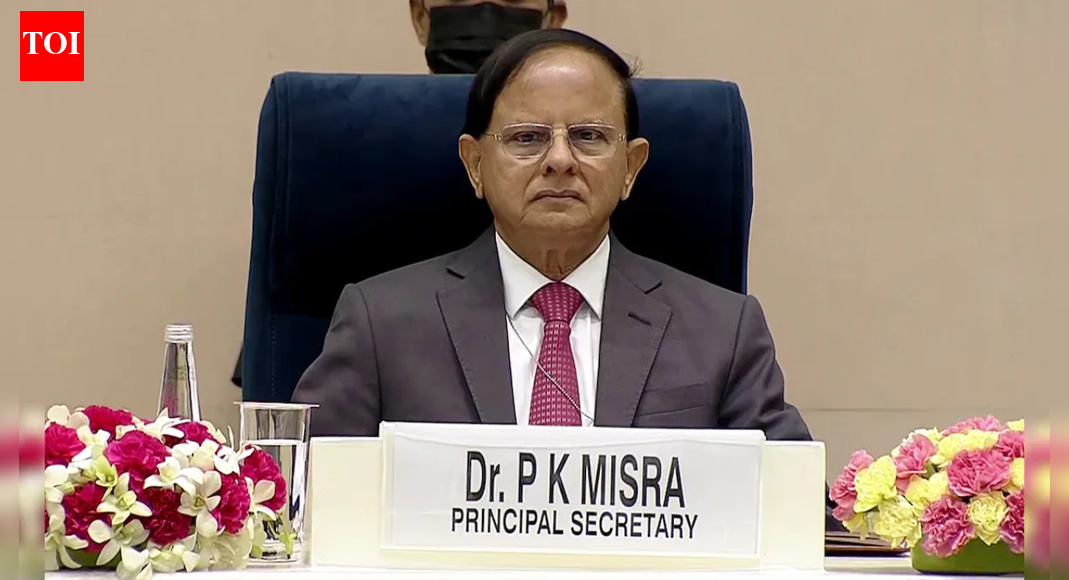
Principal Secretary P.K. Mishra outlined three key principles for future-ready civil services: reorienting towards a developmental state, reimagining selection for capable individuals, and fostering lifelong learning. He emphasized a shift from process to outcomes, collaboration over hierarchy, and partnering with citizens to navigate a complex, interconnected world. P K Mishra, principal secretary to PM Modi (File photo) NEW DELHI: To make civil services future ready and to achieve the goal of a developed India, the principal secretary to PM, P K Mishra, Thursday suggested three guiding principles — “reorienting the purpose of civil services to developmental state, re-imagining selection to identify deeply capable individuals and building a lifelong learning state”.Addressing the centenary conference of Union Public Service Commission (UPSC), the country’s top bureaucrat also spoke about a shift from process compliance to outcome delivery; from incremental improvement to accelerated transformation; from siloed govt departments to interoperable digital infrastructure; and from a state that delivers to citizens to a state that partners with citizens.In a statement, the PMO said Mishra underlined how emergence of technology, urbanisation, climate challenges and frequent disasters have reshaped the responsibilities of civil servants, and today’s governance demands collaboration more than hierarchy.Highlighting the world is becoming more interconnected and volatile, with strategic competition spanning technology, supply chains, data, cybersecurity, AI, space and critical minerals, he said civil servants are managers of uncertainty, interpreters of complexity and guardians of India’s strategic interests, and their readiness must begin with how they are selected.End of ArticleFollow Us On Social MediaVideosIndia Is a Key Ally, Cyprus Assures Strong Push to Finalise India–EU FTA TalksImran Khan Health Rumour: PTI Holds Sit In Outside Adiala Jail, KP CM Sohail Afridi Stages ProtestRam Madhav Challenges ‘No-Religion’ Narrative in White Collar Terror DebateAustralia Says India Is Now A Leading Global Power, Credits PM Modi For Transforming World DynamicsOusted PM Sheikh Hasina Faces Fresh Conviction as Court Awards 21-Year TermPM Modi Announces Major Move Allowing Private Players Into Nuclear Sector To Spur Advanced ReactorsExplained: Why Vikram-I Could Transform India’s Satellite Launch Market And Global Space Leadership‘Pak, Bangladesh, US…’: BJP Alleges Congress Using Foreign ‘X’ Accounts to Set India’s NarrativePakistan’s Adiala Jail Issues Statement On Imran Khan’s Health Amid Viral Death RumoursThe Indrajaal Ranger: India Unveils AI-Enabled Anti-Drone Patrol Vehicle In Hyderabad123PhotostoriesMalayalam cinema legends who made every frame shine with raw talentBollywood gems reviving forgotten tales with fresh heart and magic for a new generation of cinema lovers everywhereFun facts about the ‘Stranger Things’ castFrom ‘Apne’ to ‘Rocky Aur Rani Kii Prem Kahaani’: Dharmendra movies you can watch on OTT platforms‘Stranger Things 5’: Meet the new cast and find out who survives the final battle‘Stranger Things’ cast: Then and now‘Stranger Things’ cast: Educational qualificationsTaarak Mehta Ka Ooltah Chashmah: From Dilip Joshi being older than Amit Bhatt to Mandar Chandwadkar leaving his Dubai job for acting; Lesser-known facts about the castGastroenterologist doctor reveals the power of eating 3 eggs everyday5 must-visit national parks in the USA that are also UNESCO World Heritage Sites123Hot PicksDelhi AQI TodayNew Labour CodeWorld NewsGold rate todaySilver rate todayPublic Holidays NovemberBank Holidays NovemberTop TrendingToronto Maple LeafsAyesha CurryFuzzy ZoellerCristiano RonaldoStefon DiggsGabrielle UnionVanessa BryantReed Sheppard GirlfriendStephen CurryCandace Owens
NEW DELHI: To make civil services future ready and to achieve the goal of a developed India, the principal secretary to PM, P K Mishra, Thursday suggested three guiding principles — “reorienting the purpose of civil services to developmental state, re-imagining selection to identify deeply capable individuals and building a lifelong learning state”.Addressing the centenary conference of Union Public Service Commission (UPSC), the country’s top bureaucrat also spoke about a shift from process compliance to outcome delivery; from incremental improvement to accelerated transformation; from siloed govt departments to interoperable digital infrastructure; and from a state that delivers to citizens to a state that partners with citizens.In a statement, the PMO said Mishra underlined how emergence of technology, urbanisation, climate challenges and frequent disasters have reshaped the responsibilities of civil servants, and today’s governance demands collaboration more than hierarchy.Highlighting the world is becoming more interconnected and volatile, with strategic competition spanning technology, supply chains, data, cybersecurity, AI, space and critical minerals, he said civil servants are managers of uncertainty, interpreters of complexity and guardians of India’s strategic interests, and their readiness must begin with how they are selected.


