
The invisible glaze: Why your shower tiles are losing their sparkle |

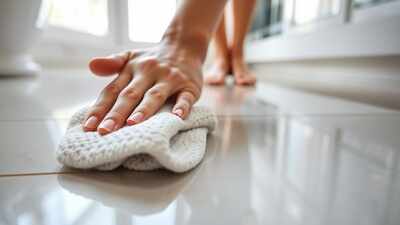
Much effort and money go into choosing perfect tiles to convert our bathroom into our private getaway. Be it an elegantly shiny marble finish or a classic ceramic glazing, the first impression we get is that of a perfectly clean room. However, after several months of using the bathroom every day, even the most careful cleaning might not be able to retain the sparkling freshness of your tiles. Instead, your tiles become cloudy and dull. We think this is due to the dirty marks on them.In reality, there is a possibility that the tiles are becoming slightly coated with oils used in luxury bathroom products. Each time a person applies body wash or rinses out a creamy conditioner, tiny films of oils and surfactants remain on the surface. Far from being purely aesthetic concerns, these substances help create a lubricating biofilm that slowly modifies the composition of the tile surface. Consequently, with each use of these products, tiles get a coating of oils that makes their surfaces look dull.The chemistry behind bath soap hazards to tile floorsIt may come as no surprise, but ingredients which contribute to the beneficial properties of body washes are also responsible for the problems related to the appearance of tiles. Bath soaps use a combination of non-emulsified oils to provide a nourishing effect on the skin, as well as surfactants that make these products bubbly. While being good for the skin, these compounds are actually functioning as lubricants. In turn, they coat the floor and make it hard to create proper contact between the foot and the surface.A groundbreaking article published in The Open Dermatology Journal explores the interaction between hygiene and hazard. The authors discovered that soap films were able to drastically reduce the coefficient of friction of bathroom floors. The floor is covered with a film that reduces its traction properties as compared with the dry surface of the tile. The article highlights the fact that most bathroom accidents are not caused by water but rather by the chemical composition of the bath products.
Specialized glazes and gentle cleaning with surfactant neutralizers can restore the sparkle. Rinsing tiles after showering and using a squeegee also helps prevent this “tile haze.”
The film acts as an optical diffuser. Light rays reflect off the tile and create the coveted, glassy finish when there is no soap film on a tile that has been cleaned. However, when there is a soap film on the tile, the light reflects at different angles. As mentioned above, the study states that the films are usually not visible to the human eye, making the risk of injury increase as the shine continues to decrease.Rejuvenating your floor’s shine with professional tile maintenanceIf you have noticed a change in the shine of your floor tiles, it is unlikely that any general floor cleaning products will be able to loosen the bonds of the oil-based surfactant molecules. In order to return your tile flooring to its original shine, you must destroy the film by disrupting its chemical composition.The science of keeping these surfaces clean has advanced significantly in recent years. A study titled Effect of coating on cleanability of glazed surfaces looked at how different surface treatments can prevent this buildup from happening in the first place. The researchers discovered that tiles with smoother, more specialised glazes, including those with titanium dioxide or zirconia, are much better at resisting the “stick” of oils and particles.With the use of such cutting-edge coatings, producers can design surfaces that exhibit hydrophilic behaviour, wherein water spreads out, cleans residues, and does not allow any bead formation. From the standpoint of the general householder, such research emphasises the importance of selecting the appropriate instruments. Soft non-abrasive brushes, together with a neutraliser of surfactants, will help peel off such an invisible film layer and return the pristine gloss of the surface underneath the accumulated film of body wash.Everyday tips for maintaining your bathroom’s glossinessThere are some tips that can prevent the reappearance of such a feared phenomenon as “tile haze” in your bathroom. Immediately after you take a shower, rinse the tiles with warm water, which will lead to faster dissolution of oily residue in the water. If the ingredients of your bath products are thick and viscous, a fast run of a squeegee on the tiles’ floor will save you from a new film layer formation.A thorough cleaning procedure using vinegar and water may help in balancing some alkaline soaps; however, make sure that your tile is not acid-sensitive. Once you are aware of the fact that you have dull tiles due to the accumulation of chemicals rather than dirt, there’s no need to scrub excessively and opt for alternatives to restore the look of the room, giving it a spa-like feel.


