
Point Nemo is so remote that astronauts can be closer than people on Earth, yet its surrounding waters are a cemetery for spacecraft

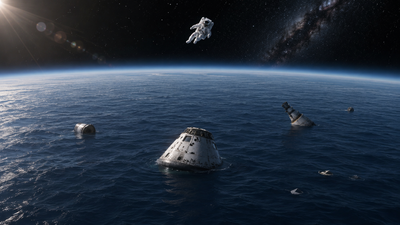
There is a stretch of the South Pacific Ocean so remote that the closest people to it are usually astronauts orbiting 400 kilometres overhead, not sailors or fishermen. This is Point Nemo, a spot 2,688 kilometres from the nearest land in every direction, and for more than five decades it has served a purpose most people have never heard of. Since 1971, spacefaring nations including Russia, the United States, Japan and several European states have deliberately guided over 263 retired satellites, space stations and rocket stages into these waters, turning the area into what is often called the spacecraft cemetery. The reasoning is straightforward: with no islands, almost no shipping, and no population for thousands of kilometres, Point Nemo is about as safe a place as exists to let space debris fall. Yet the practice is not without consequence, and the ocean floor beneath this empty stretch of water may be paying a price that no one has fully measured.
Why Point Nemo is the most remote location on Earth
Point Nemo sits at coordinates 48°52.6′S 123°23.6′W, in a region so far from civilisation that it is the point on Earth farthest from any land. According to the National Ocean Service, the nearest land in any direction is Ducie Island in the Pitcairn group to the north, Motu Nui, part of Easter Island, to the northeast, and Maher Island in Antarctica to the south.This isolation is not incidental. It is precisely why the location has become useful for a very specific purpose. With no nearby islands, minimal shipping traffic, and no permanent population within thousands of kilometres, the area poses almost no risk to people or property when objects fall from the sky.
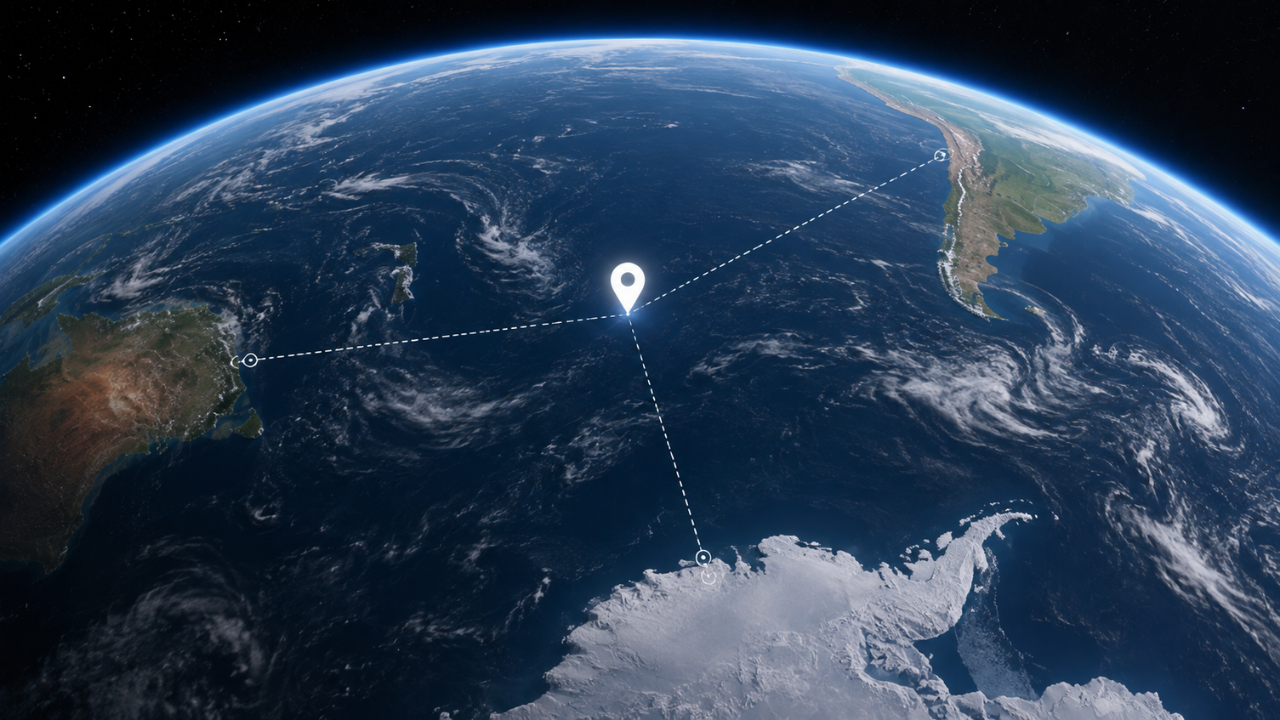
Image AI generated
Point Nemo spacecraft cemetery and the space debris sent into the Pacific
The wider region around Point Nemo is technically referred to as the Oceanic Pole of Inaccessibility or the South Pacific Ocean Uninhabited Area. According to a study published in the California Western International Law Journal, titled ‘From Outer Space to Ocean Depths: The ‘Spacecraft Cemetery’ and the Protection of the Marine Environment in Areas Beyond National Jurisdiction’, spacefaring nations including Russia, the United States, Japan and various European states have sunk over 263 pieces of space debris in this area since 1971.Russia accounts for the largest share of this debris, with more than 190 pieces including the remains of the Mir Space Station and three Salyut military space stations. The United States has contributed fifty-two pieces, including the remnants of Skylab, while Europe and Japan have added eight and six pieces respectively. Even private space operators have used the area, with SpaceX rocket stages among the more recent additions.
Why retired spacecraft are sent to Point Nemo for controlled re-entry
The practice of guiding retired spacecraft into this remote patch of ocean serves two purposes. Controlled de-orbiting reduces the amount of space junk orbiting Earth, which threatens the long-term sustainability of space activities, while also addressing the risk that falling debris could injure people or damage property on the ground.Current mitigation standards require that space objects in low Earth orbit be removed within twenty-five years of the end of their operational life. When a controlled re-entry is possible, agencies steer the debris towards an ocean area where the risk of casualties or property damage is negligible, and Point Nemo fits that requirement better than almost anywhere else on the planet. Even the International Space Station is expected to be de-orbited into this same stretch of ocean once it is decommissioned.
Environmental impact of the Point Nemo spacecraft cemetery on marine life
While splashdowns solve one problem, they raise another. The area is far from empty of life, hosting sponges, sea stars, squids, octopi, whales, viperfish and various fish and crustacean species, along with vulnerable ecosystems on the ocean floor that scientists have barely studied.Roughly 10 to 40 per cent of a spacecraft’s mass typically survives re-entry into the atmosphere, and this surviving material can include hazardous substances such as hydrazine, a toxic rocket propellant, along with radioactive components from nuclear power sources on certain missions. International space law focuses almost entirely on protecting human life and property, with little consideration given to the marine environment itself, leaving open questions about whether these splashdowns comply with obligations under the law of the sea to protect ocean ecosystems in areas beyond any single nation’s jurisdiction.


