
Photo credit: PTI UNITED NATIONS: India has asserted that any reform of the United Nations Security Council not accompanied by expansion in the permanent category with veto would perpetuate existing imbalance and inequities in the UN organ.Addressing the Inter-Governmental Negotiations (IGN) meeting on Security Council reforms on Tuesday, India’s Permanent Representative to the UN Ambassador Parvathaneni Harish also noted that consideration of a new category, with or without veto, would “complicate” an already existing discussion that involves wide-ranging views. Watch ‘No Veto, No Real Reform’: India Calls UNSC Structure Outdated, Demands Permanent Seat “There are two fundamental aspects that result in an imbalanced structure and lack of legitimacy and non-representativeness of the UN Security Council – these are the membership; and veto.”There is broad agreement on the dire need to reform the UN Security Council. It is evident that a structure designed more than 80 years ago does not meet the requirements of the current geo-political realities,” Harish said.The Indian envoy recalled that the sole reform of the Council in the 1960s, which expanded only the non-permanent category, led to an increase in the relative power of veto-wielders.In comparative terms, while the original ratio of permanent members, with veto, to non-permanent members was 5:6, it was amended to 5:10 thereafter to the relative advantage of veto-wielders.”Any reform that is not accompanied by an expansion in the permanent category with veto would deteriorate this ratio further and thereby, perpetuate the existing imbalance and inequities. Therefore, expanding the permanent category with veto is critical to real reform of the Security Council,” he said.Harish also noted that consideration of a new category under the framework of UNSC reform, with or without veto, would “complicate” an already existing discussion that involves wide-ranging views. “It is important to limit the scope of reforms to the existing framework in order to streamline and fast-track the path to reforms,” he said.India has been at the forefront of the decades-long efforts calling for reform of the Security Council, including expansion in both its permanent and non-permanent categories, saying the 15-nation Council, founded in 1945, is not fit for purpose in the 21st Century and does not reflect contemporary geo-political realities.New Delhi has underscored that it rightly deserves a permanent seat at the horse-shoe table.India also highlighted the issue of the “effective veto” that every Security Council member, elected and non-elected, enjoys on products / outcomes such as the Security Council presidential statements, the Press Statements and Sanctions Committees.”There have been instances in the past where elected members have created hurdles by exercising their effective veto on Council products only to serve their narrow vested interests,” he said.Harish also pointed out to calls for restraining the veto, as he referred to a resolution adopted in the UN General Assembly in 2022 with the aim of convening a formal meeting of the 193-member UN body to hold a debate within 10 days of a permanent UNSC member exercising its veto power.”However, this has not been an effective deterrent,” Harish said, adding that since the adoption of the resolution, 24 vetoes were cast on 20 draft resolutions. He added that seven draft resolutions were vetoed in 2024, the highest since 1986.”The UN membership has also witnessed the restraint of the two permanent members who have not cast a veto for over three and a half decades. Permanent members exercise veto many times on the basis of their own national considerations.”No limits can be effectively considered for imposition unless there are enabling provisions in the UN Charter, which paradoxically need a Charter amendment and hence again subject to a veto!” he pointed out.End of ArticleFollow Us On Social MediaVideosIMF Says India Growing Twice As Fast As World Economy, Signals Strength Amid Global SlowdownIndia May Face Oil Supply Pressure As US Ends Russian Crude Waiver, Says Bessent’India In Talks With Many Countries Over Hormuz’: MEA Amid US’ Naval BlockadeTamil Nadu elections 2026: Freebies war heats up between DMK, AIADMK & rivals’Not Shehbaz Sharif’: Ex-Minister Fawad Chaudhry Calls Asim Munir ‘De Facto Leader Of Pakistan’TCS Row Explodes: Horrific Details Of Sexual Abuse, Conversion Claims Rock India’s CorporateWomen’s Reservation Bill A ‘Trick’ To Hike Lok Sabha Seats? | Delimitation | Slam Dunk With TehseenIndia Bloc Backs Women’s Reservation But Opposes Delimitation, Flags Risk Of Political Power Shift‘Completely Unacceptable’: Jaishankar Slams Attacks On Merchant Shipping At Azec Plus MeetWomen’s Quota Bill: Govt Clarifies 850-Seat Lok Sabha Plan, Opposition Flags Delimitation Concerns123PhotostoriesChopping board to aluminium foil: 6 common kitchen items to throw out immediately and whyP. V. Sindhu’s elegant Hyderabad home combines minimalist interiors, family-centric spaces, and breathtaking hilltop viewsWhy visiting the Banaras ghats can change the way you see life and deathHard to believe but these are probably the 10 dirtiest spots in a hotel room8 ’90s baby names making a comeback with Gen AlphaChef Vikas Khanna makes it to 100 Most Influential People of 2026: 5 success lessons to learn from his culinary journeyFrom growing up in a conservative family to shooting her debut music video without informing them: Naagin 7’s Kanika Mann opens up about her journeyChandigarh’s Billionaire Lanes: 5 premium regions where the city’s rich live6 desi Indian dishes among Top 32 Rice Puddings in the WorldRanveer Allahbadia’s girlfriend Juhi Bhatt is redefining traditional wedding dressing with contemporary elegance123Hot PicksIran warDisney layoffsPurple cap winnerOrange cap winnerIPL Points TablePublic holidays April 2026Bank Holidays AprilTop TrendingTaylor Swift Wedding DressCanada Citizenship GarbaUK Migrant Gay ClaimsCBSE Class 12 ResultNirav ModiOmar Tricolour RowKargil Statehood DemandIPL Points TableIran crude oilMeenu Batra

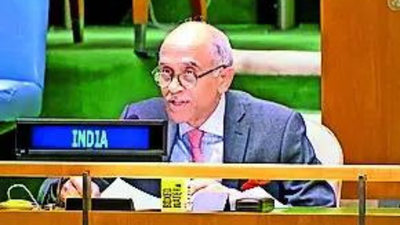
Photo credit: PTI
UNITED NATIONS: India has asserted that any reform of the United Nations Security Council not accompanied by expansion in the permanent category with veto would perpetuate existing imbalance and inequities in the UN organ.Addressing the Inter-Governmental Negotiations (IGN) meeting on Security Council reforms on Tuesday, India’s Permanent Representative to the UN Ambassador Parvathaneni Harish also noted that consideration of a new category, with or without veto, would “complicate” an already existing discussion that involves wide-ranging views.
“There are two fundamental aspects that result in an imbalanced structure and lack of legitimacy and non-representativeness of the UN Security Council – these are the membership; and veto.“There is broad agreement on the dire need to reform the UN Security Council. It is evident that a structure designed more than 80 years ago does not meet the requirements of the current geo-political realities,” Harish said.The Indian envoy recalled that the sole reform of the Council in the 1960s, which expanded only the non-permanent category, led to an increase in the relative power of veto-wielders.In comparative terms, while the original ratio of permanent members, with veto, to non-permanent members was 5:6, it was amended to 5:10 thereafter to the relative advantage of veto-wielders.“Any reform that is not accompanied by an expansion in the permanent category with veto would deteriorate this ratio further and thereby, perpetuate the existing imbalance and inequities. Therefore, expanding the permanent category with veto is critical to real reform of the Security Council,” he said.Harish also noted that consideration of a new category under the framework of UNSC reform, with or without veto, would “complicate” an already existing discussion that involves wide-ranging views. “It is important to limit the scope of reforms to the existing framework in order to streamline and fast-track the path to reforms,” he said.India has been at the forefront of the decades-long efforts calling for reform of the Security Council, including expansion in both its permanent and non-permanent categories, saying the 15-nation Council, founded in 1945, is not fit for purpose in the 21st Century and does not reflect contemporary geo-political realities.New Delhi has underscored that it rightly deserves a permanent seat at the horse-shoe table.India also highlighted the issue of the “effective veto” that every Security Council member, elected and non-elected, enjoys on products / outcomes such as the Security Council presidential statements, the Press Statements and Sanctions Committees.“There have been instances in the past where elected members have created hurdles by exercising their effective veto on Council products only to serve their narrow vested interests,” he said.Harish also pointed out to calls for restraining the veto, as he referred to a resolution adopted in the UN General Assembly in 2022 with the aim of convening a formal meeting of the 193-member UN body to hold a debate within 10 days of a permanent UNSC member exercising its veto power.“However, this has not been an effective deterrent,” Harish said, adding that since the adoption of the resolution, 24 vetoes were cast on 20 draft resolutions. He added that seven draft resolutions were vetoed in 2024, the highest since 1986.“The UN membership has also witnessed the restraint of the two permanent members who have not cast a veto for over three and a half decades. Permanent members exercise veto many times on the basis of their own national considerations.“No limits can be effectively considered for imposition unless there are enabling provisions in the UN Charter, which paradoxically need a Charter amendment and hence again subject to a veto!” he pointed out.


