
People show their mobile phones during the nationwide test of the new ‘Cell Broadcast Alert System’, in Patna on Saturday Phones shrieked. Screens flashed. A commuter lunged for an emergency chain. Theatre audiences froze. Patients gripped chairs. With tensions in West Asia already on edge, many feared the worst as confusion swept cities — before relief set in minutes later.Lakhs of users across India received a piercing “Extremely Severe Alert” around 11.45am Saturday, followed by a repeat minutes later — part of a nationwide test of a new cell broadcast-based disaster warning system.The message was blunt: no action required. The reaction was anything but. At a children’s play in Mumbai’s Prithvi Theatre, about 40 phones rang in unison, startling families queued for a performance. On a suburban train, one passenger tried to pull an emergency chain before others intervened.Phone sirens were annoying to some and scary to othersIn hospitals and clinics, alarms cut through consultations, leaving patients shaken.“I switched off my phone immediately thinking it was some bug,” said a Bandra resident. A visitor in Borivali recalled people freezing. “It was annoying to some and scary to others.”Across states, similar scenes played out. In Bhubaneswar, many feared hacking or a cyberattack before reading further.“I thought my phone was under attack, then felt relieved,” said a resident. In Bengaluru, users mistook it for a heatwave or earthquake warning before clarity emerged. In Lucknow, a pharmacist said several devices blared simultaneously, causing brief panic.In New Delhi, Kanika Sharma, 29, a private school teacher, said the sudden buzz during brunch initially triggered fears of global tensions before she realised it was a drill. “Tensions in West Asia were the first thing that came to my mind… this system can be useful in case of emergencies,” she said. Others flagged confusion over repeat alerts. Abhishek Dogra, 33, an IT professional from Jasola in southeast Delhi, said his entire family’s phones rang at once. “We were worried at first, then realised it was a test. It’s a good move, but test messages should be clearly marked,” he said.Authorities later confirmed it was a planned trial by National Disaster Management Authority and department of telecommunications, marking rollout of a real-time public warning system.Unlike SMS, cell broadcast technology pushes alerts simultaneously to all devices within a defined area, overriding silent and do-not-disturb settings.It requires no internet, apps or subscriptions.Alerts appear as full-screen pop-ups with a loud siren, temporarily halting other phone functions.The system, built on an indigenous platform known as SACHET and aligned with global alerting protocols, is already operational across all states and Union territories. Officials said it has enabled more than 134 billion SMS alerts so far in multiple languages for weather and disaster warnings.Saturday’s drill aimed to test reach, speed and public response. Messages were delivered in regional languages alongside English and Hindi to widen comprehension. Not all devices received alerts, highlighting gaps. Some users reported one phone ringing while another beside it stayed silent — a reminder of ongoing calibration. Officials said the system will be used for earthquakes, cyclones, floods, lightning and industrial hazards such as gas leaks. Geo-targeting will allow alerts tailored to specific districts or neighbourhoods.In Bihar, authorities are planning follow-up preparedness exercises, including blackout and civil defence drills later this month to build public familiarity. “It created awareness among people,” a senior official said.(Inputs from New Delhi, Bengaluru, Lucknow, Patna, Bhubaneswar, Hyderabad)End of ArticleFollow Us On Social MediaVideos‘Reminder To Those Who Misuse State Power’: Pawan Khera Jabs Assam CM After SC Anticipatory BailUS Retains India on Special 301 Priority Watch List, Flags Patent Regime, Enforcement GapsCourt Rejects Nida Khan’s Anticipatory Bail in TCS Nashik Harassment and Conversion CaseCensus 2027 To Begin In UP From May 2026 With 5 Lakh Personnel, & Caste Data InclusionHome Minister Amit Shah Meets Sonam Wangchuk & Other Leaders in Leh Ahead Of TalksChhattisgarh IED Blast Kills 4 DRG Personnel During Defusal Operation Near Kanker-Narayanpur BorderIndia-Bound LPG Tanker Sarv Shakti On The Move Across Strait Of Hormuz: Why It Matters?Rae Bareli’s MCF Unveils First Vande Bharat Trainset, Boosting India’s Production CapacityDelhi Police Bust Inter-State Auto Theft Racket Spanning 5 States; 10 Arrested,31 Vehicles RecoveredIndia Tests Disaster Information System, Citizens Get ‘Extremely Severe Alert’ On Phones123Photostories’The Devil Wears Prada 2′: Emily Blunt’s most iconic momentsMorning affirmation at 5 am: Affirmations that help you hear yourselfFrom Samay Raina roasting Sunil Pal and Navjot Singh Sidhu to Kapil Sharma pulling Ranveer Allahbadia and Samay’s leg over the India’s Got Latent controversy—highlights from The Great Indian Kapil Show5 things to think about before breaking upBTS: Top 7 romantic songs to add to your playlistWest Bengal elections 2026: Key candidates and their declared assets ahead of resultsStop stretching like this: Common morning routine mistakes hurting your spineWhy curd turns sour faster in summer and how to control fermentation at homeYour feet may be revealing health problems you’re missingPink Guava vs white Guava: Which one is healthier and why it matters123Hot PicksAssam key constituenciesKerala key constituenciesPuducherry election resultsTamil Nadu constituenciesAjay Pal SharmaBengal Poll RecordHimanta Biswa SarmaTop TrendingUS Germany relationsBank Holiday MayVande Bharat expressLPG cylinder price hikeMumbai missing linkPetrol, Diesel, LPG priceCBSE Class 12th ResultNEET 2026: Exam-day guideBSE AP SSC Class 10th ResultIPL Orange Cap

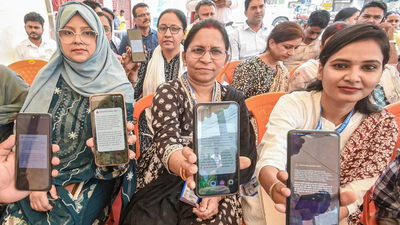
People show their mobile phones during the nationwide test of the new ‘Cell Broadcast Alert System’, in Patna on Saturday
Phones shrieked. Screens flashed. A commuter lunged for an emergency chain. Theatre audiences froze. Patients gripped chairs. With tensions in West Asia already on edge, many feared the worst as confusion swept cities — before relief set in minutes later.Lakhs of users across India received a piercing “Extremely Severe Alert” around 11.45am Saturday, followed by a repeat minutes later — part of a nationwide test of a new cell broadcast-based disaster warning system.The message was blunt: no action required. The reaction was anything but. At a children’s play in Mumbai’s Prithvi Theatre, about 40 phones rang in unison, startling families queued for a performance. On a suburban train, one passenger tried to pull an emergency chain before others intervened.
Phone sirens were annoying to some and scary to others
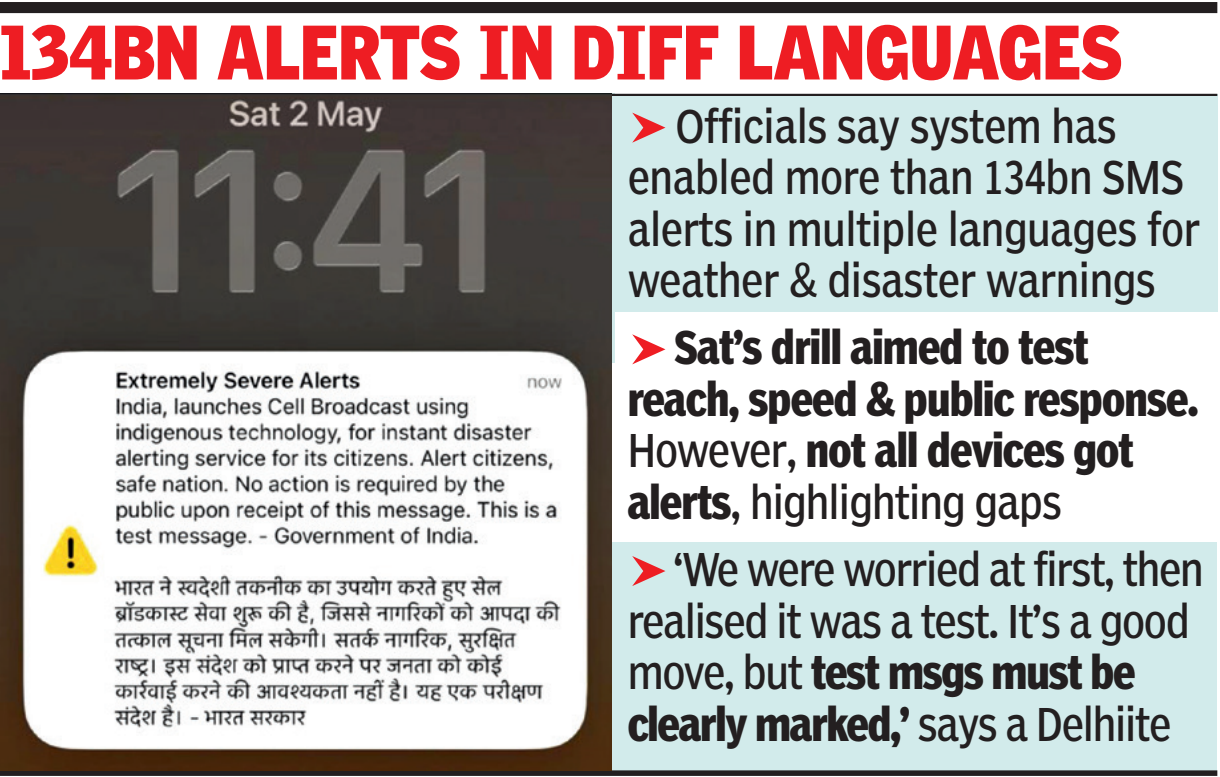
In hospitals and clinics, alarms cut through consultations, leaving patients shaken.“I switched off my phone immediately thinking it was some bug,” said a Bandra resident. A visitor in Borivali recalled people freezing. “It was annoying to some and scary to others.”Across states, similar scenes played out. In Bhubaneswar, many feared hacking or a cyberattack before reading further.“I thought my phone was under attack, then felt relieved,” said a resident. In Bengaluru, users mistook it for a heatwave or earthquake warning before clarity emerged. In Lucknow, a pharmacist said several devices blared simultaneously, causing brief panic.In New Delhi, Kanika Sharma, 29, a private school teacher, said the sudden buzz during brunch initially triggered fears of global tensions before she realised it was a drill. “Tensions in West Asia were the first thing that came to my mind… this system can be useful in case of emergencies,” she said. Others flagged confusion over repeat alerts. Abhishek Dogra, 33, an IT professional from Jasola in southeast Delhi, said his entire family’s phones rang at once. “We were worried at first, then realised it was a test. It’s a good move, but test messages should be clearly marked,” he said.Authorities later confirmed it was a planned trial by National Disaster Management Authority and department of telecommunications, marking rollout of a real-time public warning system.Unlike SMS, cell broadcast technology pushes alerts simultaneously to all devices within a defined area, overriding silent and do-not-disturb settings.It requires no internet, apps or subscriptions.Alerts appear as full-screen pop-ups with a loud siren, temporarily halting other phone functions.The system, built on an indigenous platform known as SACHET and aligned with global alerting protocols, is already operational across all states and Union territories. Officials said it has enabled more than 134 billion SMS alerts so far in multiple languages for weather and disaster warnings.Saturday’s drill aimed to test reach, speed and public response. Messages were delivered in regional languages alongside English and Hindi to widen comprehension. Not all devices received alerts, highlighting gaps. Some users reported one phone ringing while another beside it stayed silent — a reminder of ongoing calibration. Officials said the system will be used for earthquakes, cyclones, floods, lightning and industrial hazards such as gas leaks. Geo-targeting will allow alerts tailored to specific districts or neighbourhoods.In Bihar, authorities are planning follow-up preparedness exercises, including blackout and civil defence drills later this month to build public familiarity. “It created awareness among people,” a senior official said.(Inputs from New Delhi, Bengaluru, Lucknow, Patna, Bhubaneswar, Hyderabad)


