
NEW DELHI: The ministry of external affairs (MEA) on Saturday said Prime Minister Narendra Modi is a “quintessential” Indian politician who prefers direct engagement with the electorate.Addressing a media briefing in New Zealand, MEA Secretary (East) Rudrendra Tandon was asked why Prime Minister Narendra Modi had not held a press conference or interacted with New Zealand journalists during his visit.Responding with a laugh, Tandon said the question reminded him of a similar one raised during the Prime Minister’s visit to Norway earlier this year.”So you know, your question has that quality of deja vu, because see, it’s not appropriate for me as a civil servant to question Mr. Modi’s political method, he’s a very successful politician,” Tandon said.”But let me give you some context. Prime Minister Modi is a quintessential Indian politician. By and large, Indian politicians favour direct contact with their electorate,” he added.Explaining further, Tandon said India’s electorate largely prefers direct interaction with political leaders rather than communication through intermediaries.”And you must remember that the Indian electorate are predominantly rural folk. They want direct contact. They don’t like being spoken down to, they don’t like being spoken to through intermediaries,” he said.”And Mr. Modi has perfected the art of direct contact with his electorate, and he seems to be doing a rather good job of it, since you know, he’s been elected now, he’s in his third term, he’s one of the longest-serving Prime Ministers in our country,” Tandon added.Speaking about the purpose of the Prime Minister’s visit, Tandon said strengthening the rules-based Indo-Pacific order was a key objective.”The purpose of this visit is to strengthen the rule-based Indo-Pacific order. One of the reasons we look at New Zealand as a significant partner in this part of the world is because of our joint quest for strengthening the rule-based order in the Indo-Pacific, which is very important for India as an Indian Ocean nation,” he said.The remarks come months after a Norwegian journalist questioned why PM Modi did not take questions during a joint media interaction with Norwegian Prime Minister Jonas Gahr Støre in Oslo in May. The journalist had also referred to India and Norway’s rankings in the World Press Freedom Index.At the time, MEA Secretary (West) Sibi George defended India’s democratic institutions and media landscape. “We hear a lot of people asking why this, why that, but let me tell you this. We are one sixth of the total population of the world, but not one sixth of the problems of the world,” George had said.”We have a constitution which guarantees the fundamental rights of the people. We have equal rights for the women of our country, which is very important,” he added.George also criticised international commentary on India’s media environment saying, “You know how many stories are up here. We have how many breaking news coming every day in the evening. At least 200 TV channels in Delhi alone, in the English language, in Hindi language and multiple languages.”Prime Minister Modi is on a two-day visit to New Zealand from July 10-11 at the invitation of Prime Minister Christopher Luxon. The visit, the first by an Indian Prime Minister to New Zealand in 40 years, saw the two countries elevate bilateral ties to a Strategic Partnership and adopt a Roadmap to 2030 aimed at expanding cooperation in trade, defence, technology, security and regional affairs.Get the latest India news and live updates. Download the TOI App.About the AuthorTOI News DeskThe TOI News Desk comprises a dedicated and tireless team of journalists who operate around the clock to deliver the most current and comprehensive news and updates to the readers of The Times of India worldwide. With an unwavering commitment to excellence in journalism, our team is at the forefront of gathering, verifying, and presenting breaking news, in-depth analysis, and insightful reports on a wide range of topics. The TOI News Desk is your trusted source for staying informed and connected to the ever-evolving global landscape, ensuring that our readers are equipped with the latest developments that matter most.”Read MoreEnd of ArticleFollow Us On Social MediaVideosHighway Blocked, Resignations Threatened As BJP Faces Backlash Over Ticket Choice In MPNEET Paper Leak Traced To Contracted Paper Setters, Charge Sheet Likely This Month | WatchIndia, New Zealand Grows Ties to Strategic Partnership; Aim to Double Trade to ₹35,000 Crore by 2030″J&K Is Part Of India”: Indian Diplomat Objects To Map Row At Dhaka Foreign Policy EventSupreme Court Drama: Petitioner Abuses CJI, Throws Papers; No Contempt Action TakenDevendra Fadnavis Clarifies ‘Bhade Ke Tattu’ Remark, Says He Will Call Critics ‘Hired Fools’Amit Shah Announces Smart Border Vision With Four-Pronged Security Grid40-Foot Illegal Pipeline Linked To IOCL Oil Network Found In Rajasthan; Police Probe Oil TheftThree-Fold Rise In Assam Budget: Aims At Uplifting People, Says CM Sarma’You Will Have To Kill Me’: Mamata’s Defiant Message As TMC Faces Major Rebellion123PhotostoriesEating these 8 foods excessively may contribute to hair fall10 things every Indian child born in the 90s and 2000s remembersRelationship lessons from Riteish Deshmukh and Genelia D’Souza that couples can learnHow to know if fish is fresh: 5 simple signs that can save you from buying stale seafoodWhat happens to your body when you eat chickpeas every day for a monthFrom Samosa to Bread Pakoda: Popular deep-fried snacks of India and their calorie count you should knowTop 6 most visited national parks in the USA every nature lover should experience once in their lifetimeHow Chanel No. 5 got its famous name: The story behind the iconic fragrance10 baby names that mean “miracle” in different cultures6 stunning red birds in India and where to find them123Hot PicksSIRBlake LivelyGurgaon EncounterCM VijayAlex PereiraPM ModiNico HischierStrait of HormuzSimone BilesTop TrendingGurgaon MonsoonAMU Seerat CertificateTelangana Techie Wife MurderFIFA World Cup 2026Weather TodayTS EAMCET Phase 1 seat allotmentRamesh MhatreDelhi NCR rainGurgaon EncounterIran war

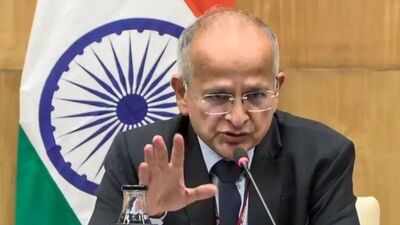
NEW DELHI: The ministry of external affairs (MEA) on Saturday said Prime Minister Narendra Modi is a “quintessential” Indian politician who prefers direct engagement with the electorate.Addressing a media briefing in New Zealand, MEA Secretary (East) Rudrendra Tandon was asked why Prime Minister Narendra Modi had not held a press conference or interacted with New Zealand journalists during his visit.Responding with a laugh, Tandon said the question reminded him of a similar one raised during the Prime Minister’s visit to Norway earlier this year.“So you know, your question has that quality of deja vu, because see, it’s not appropriate for me as a civil servant to question Mr. Modi’s political method, he’s a very successful politician,” Tandon said.“But let me give you some context. Prime Minister Modi is a quintessential Indian politician. By and large, Indian politicians favour direct contact with their electorate,” he added.Explaining further, Tandon said India’s electorate largely prefers direct interaction with political leaders rather than communication through intermediaries.“And you must remember that the Indian electorate are predominantly rural folk. They want direct contact. They don’t like being spoken down to, they don’t like being spoken to through intermediaries,” he said.“And Mr. Modi has perfected the art of direct contact with his electorate, and he seems to be doing a rather good job of it, since you know, he’s been elected now, he’s in his third term, he’s one of the longest-serving Prime Ministers in our country,” Tandon added.Speaking about the purpose of the Prime Minister’s visit, Tandon said strengthening the rules-based Indo-Pacific order was a key objective.“The purpose of this visit is to strengthen the rule-based Indo-Pacific order. One of the reasons we look at New Zealand as a significant partner in this part of the world is because of our joint quest for strengthening the rule-based order in the Indo-Pacific, which is very important for India as an Indian Ocean nation,” he said.The remarks come months after a Norwegian journalist questioned why PM Modi did not take questions during a joint media interaction with Norwegian Prime Minister Jonas Gahr Støre in Oslo in May. The journalist had also referred to India and Norway’s rankings in the World Press Freedom Index.At the time, MEA Secretary (West) Sibi George defended India’s democratic institutions and media landscape. “We hear a lot of people asking why this, why that, but let me tell you this. We are one sixth of the total population of the world, but not one sixth of the problems of the world,” George had said.“We have a constitution which guarantees the fundamental rights of the people. We have equal rights for the women of our country, which is very important,” he added.George also criticised international commentary on India’s media environment saying, “You know how many stories are up here. We have how many breaking news coming every day in the evening. At least 200 TV channels in Delhi alone, in the English language, in Hindi language and multiple languages.”Prime Minister Modi is on a two-day visit to New Zealand from July 10-11 at the invitation of Prime Minister Christopher Luxon. The visit, the first by an Indian Prime Minister to New Zealand in 40 years, saw the two countries elevate bilateral ties to a Strategic Partnership and adopt a Roadmap to 2030 aimed at expanding cooperation in trade, defence, technology, security and regional affairs.


