
NEW DELHI: Rains in different parts of the country due to monsoon recovery in the past seven-eight days brought some relief to farmers, but considering the uncertainty due to the potential impact of El Nino and the skewed distribution of rainfall, the agriculture ministry has stepped up its ground action with adequate seed availability and other measures to ensure uninterrupted sowing operations.Though the overall rain deficit reduced from 40% on June 30 to 15% on July 8, the acreage of Kharif (summer sown) crops was reported 21% down till Monday compared to the corresponding period last year. Low rainfall and delayed progress of the summer monsoon saw the sowing completed over nearly 351 lakh hectares, a decrease of 92 lakh hectares from 443 lakh hectares in 2025.Acreage of the most popular Kharif crop, paddy, is down by 14% to 60 lakh hectares till July 6, compared with 70 lakh hectares last year. Sowing area under oilseeds declined the most (nearly 40%) to 66 lakh hectares from 109 lakh hectares last year. Acreage of cotton also declined to 63 lakh hectares from 82 lakh hectares last year.IMD on Wednesday predicted “significant reduction” in rainfall activity over central India from Thursday onwards, hinting at an upcoming challenge. It already forecast “below normal” rainfall for July due to El Nino, a naturally occurring climate pattern characterised by above-average sea-surface temperatures in the central and eastern equatorial Pacific Ocean, which is associated with a weak monsoon in India.Underlining the challenge amid the forecast, Union agriculture minister Shivraj Singh Chouhan on Wednesday said the Centre is closely monitoring the situation in 13 states — Maharashtra, Madhya Pradesh, Gujarat, Uttar Pradesh, Rajasthan, Karnataka, Bihar, Jharkhand, Telangana, Andhra Pradesh, Punjab, West Bengal and Odisha — where kharif sowing has been impacted due to the late arrival of the monsoon.As on Wednesday, the number of rainfall-deficient districts declined from 262 to 178. Many districts, however, received a substantially high quantity of rainfall during a shorter period of time in the past one week mainly due to the formation of the low-pressure area over the Bay of Bengal, leaving farmers off guard.Chouhan said the efforts are being intensified to increase farmers’ participation under the ‘Pradhan Mantri Fasal Bima Yojana’ (crop insurance scheme), ensuring their financial protection in the event of crop losses due to adverse weather conditions.Referring to the govt’s preparedness, the minister said that an extensive monitoring mechanism was put in place, keeping in view the potential impact of El Niño. “The entire system was activated in advance and is working proactively… The El Niño Monitoring Cell, Crop Weather Watch Group, state-level control rooms and designated officers are continuously monitoring the progress of the monsoon, crop sowing, crop conditions and market trends,” he said.Get the latest India news and live updates. Download the TOI App.About the AuthorVishwa MohanVishwa Mohan is Senior Editor at The Times of India. He writes on environment, climate change, agriculture, water resources and clean energy, tracking policy issues and climate diplomacy. He has been covering Parliament since 2003 to see how politics shaped up domestic policy and India’s position at global platform. Before switching over to explore sustainable development issues, Vishwa had covered internal security and investigative agencies for more than a decade.Read MoreEnd of ArticleFollow Us On Social MediaVideosAfter SC Rap, NCERT Removes Chapter On ‘Corruption In Judiciary’ In Revised Class 8 Textbook”Didn’t Raise My Hand..”: Corporator Ramesh Mhatre Expresses Regret For KDMC Hospital Ambush’Welcome To UP 2.0′ TMC MP Mahua Moitra Slams Baruipur Encounter As BJP Defends Police ActionLashkar Commander Zakir Ganai Killed In Encounter In J&K’s Shopian, Hunt On For Second TerroristRam Temple Trust Accounts Reveal ₹3,264 Crore Donations, 32 Kg Gold And 1.5 Tonnes Of SilverBJP, RSS Launch Damage Control Drive? As Ram Mandir Donation Row Escalates Ahead Of UP PollsAircraft, Chopper Acquisition Under ED Lens: TMC’s ‘Dishonest Financial Dealings’ Case DeepensUS Charges Lawrence Bishnoi And Goldy Brar For Allegedly Ordering Nijjar’s Killing In Canada4 States Sign Historic Pact To End 50-Year Narmada Project Payment Dispute In Presence Of Amit Shah9 Indian Ships Carrying 198 Seafarers Remain Near Strait Of Hormuz; Govt Says All Vessels Are Safe123Photostories10 beautiful baby girl names inspired by stars and the skyFrom carpets to mattresses: 7 Smart ways to use baking soda for cleaning everyday household items’You kiss a lot of frogs before you find your prince’: Priyanka Chopra on why respect matters more than love for womenApple cider vinegar for hair: Mix it with these ingredients for stronger, longer, and shinier strandsHow to meditate: A step-by-step guide for beginners5 innocent-sounding phrases that can leave a bad impression on your co-workersAnshula Kapoor’s sindoori red Amit Aggarwal reception saree redefines modern bridal fashion with a couture twistFrom Rajma to Rajgira: 7 delicious Indian food items that have more calcium than milk per 100 grams; alternatives for plant-based and diary-free dietsWhite pedicures are out: Try these summer 2026 pedicure trends that are taking over every nail salon9 morning rituals that help high achievers and successful people stay ahead every day123Hot PicksWayanad landslideSiya GoyalNew EPFO portalBaruipur rapeMumbai rainfallStock market crashE20 PetrolLNG Vessel strikeNew EPFO PotralTop TrendingLionel Messi Clash with Egypt CoachIshowspeedBengal Rape Murder CaseFIFA World Cup 2026CBSE Class 10 ResultKetan Agarwal murder caseMumbai rainDelhi rainWeather tomorrowE20 petrol

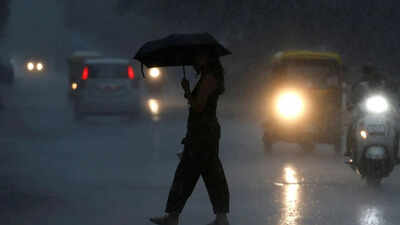
NEW DELHI: Rains in different parts of the country due to monsoon recovery in the past seven-eight days brought some relief to farmers, but considering the uncertainty due to the potential impact of El Nino and the skewed distribution of rainfall, the agriculture ministry has stepped up its ground action with adequate seed availability and other measures to ensure uninterrupted sowing operations.Though the overall rain deficit reduced from 40% on June 30 to 15% on July 8, the acreage of Kharif (summer sown) crops was reported 21% down till Monday compared to the corresponding period last year. Low rainfall and delayed progress of the summer monsoon saw the sowing completed over nearly 351 lakh hectares, a decrease of 92 lakh hectares from 443 lakh hectares in 2025.Acreage of the most popular Kharif crop, paddy, is down by 14% to 60 lakh hectares till July 6, compared with 70 lakh hectares last year. Sowing area under oilseeds declined the most (nearly 40%) to 66 lakh hectares from 109 lakh hectares last year. Acreage of cotton also declined to 63 lakh hectares from 82 lakh hectares last year.IMD on Wednesday predicted “significant reduction” in rainfall activity over central India from Thursday onwards, hinting at an upcoming challenge. It already forecast “below normal” rainfall for July due to El Nino, a naturally occurring climate pattern characterised by above-average sea-surface temperatures in the central and eastern equatorial Pacific Ocean, which is associated with a weak monsoon in India.Underlining the challenge amid the forecast, Union agriculture minister Shivraj Singh Chouhan on Wednesday said the Centre is closely monitoring the situation in 13 states — Maharashtra, Madhya Pradesh, Gujarat, Uttar Pradesh, Rajasthan, Karnataka, Bihar, Jharkhand, Telangana, Andhra Pradesh, Punjab, West Bengal and Odisha — where kharif sowing has been impacted due to the late arrival of the monsoon.As on Wednesday, the number of rainfall-deficient districts declined from 262 to 178. Many districts, however, received a substantially high quantity of rainfall during a shorter period of time in the past one week mainly due to the formation of the low-pressure area over the Bay of Bengal, leaving farmers off guard.Chouhan said the efforts are being intensified to increase farmers’ participation under the ‘Pradhan Mantri Fasal Bima Yojana’ (crop insurance scheme), ensuring their financial protection in the event of crop losses due to adverse weather conditions.Referring to the govt’s preparedness, the minister said that an extensive monitoring mechanism was put in place, keeping in view the potential impact of El Niño. “The entire system was activated in advance and is working proactively… The El Niño Monitoring Cell, Crop Weather Watch Group, state-level control rooms and designated officers are continuously monitoring the progress of the monsoon, crop sowing, crop conditions and market trends,” he said.


