
. NEW DELHI: India’s lung cancer burden is projected to rise sharply by 2030, with the North-East emerging as the worst-affected region and women recording the fastest increase in cases, a national study published in Indian Journal of Medical Research has found. Data from 57 populations across six regions show lung cancer incidence to be highest in the North-East, where rates for women are now close to those for men – an unusual pattern in India. Aizawl recorded the highest burden, with age-standardised incidence at 35.9 per lakh among men and 33.7 per lakh among women, along with the highest mortality. Although extremely high tobacco use – over 68% among men and 54% among women – continues to drive the region’s burden, doctors say the disease profile is shifting. “We are seeing more lung cancer cases among non-smoking women, linked to indoor air pollution, biomass fuel use, second-hand smoke and occupational exposure,” said Dr Saurabh Mittal of AIIMS’s pulmonology department. The shift is also reflected in tumour patterns nationwide. Adenocarcinoma has replaced smoking-linked squamous-cell carcinoma as the dominant subtype. In Bengaluru, it now accounts for over half of lung cancer cases among women, while Delhi has seen a sharp rise in large-cell carcinoma. Southern districts such as Kannur, Kasargod and Kollam reported high incidence among men despite relatively low tobacco and alcohol use, pointing to non-tobacco risk factors. Among women, Hyderabad and Bengaluru recorded the highest incidence in the south. In the north, Srinagar showed elevated lung cancer rates among men, while women in Srinagar and Pulwama also reported higher incidence despite low substance use. Trend analysis shows lung cancer incidence climbing by up to 6.7% annually among women and 4.3% among men in some regions. Thiruvananthapuram recorded the sharpest rise among women, while Dindigul saw the steepest increase among men. With tobacco use among women still below 10% nationwide, researchers point to worsening air quality and household exposures as key drivers. Projections suggest that by 2030, lung cancer incidence among men could exceed 33 per lakh in parts of Kerala, while among women it could rise to over 8 per lakh in cities like Bengaluru. Low mortality-to-incidence ratios in several regions also point to gaps in death reporting, potentially masking the true toll.About the AuthorAnuja JaiswalAnuja Jaiswal is a Senior Assistant Editor at The Times of India, with an impressive 18-year career in narrative journalism. She specializes in health and heritage reporting, expertly simplifying complex health information to make it engaging and understandable for readers. Her deep dives into heritage topics are well-researched, resulting in captivating narratives that resonate with her audience. Over the years, she has worked in Chandigarh, Chhattisgarh and West UP, gaining diverse on-ground experience that shapes her storytelling.Read MoreEnd of ArticleFollow Us On Social MediaVideosBJP Targets Mamata Banerjee Over ED Raid At I-PAC, Alleges Evidence TamperingFrom Op Sindoor To Venezuela: How Chinese Air Defence And Radar Systems Continue To Fail NationsDipu Das Lynching: Bangladesh Police Arrest Man Who Incited Mob As Attacks Against Hindus ContinueFrance Ditches Global South, Collective West As Jaishankar Warns Europe Of Changing World Order’Naughty, Nasty HM’: Mamata Slams Amit Shah After ED Raids TMC Leader Amid SIR RowPM Modi Launches ‘Somnath Swabhiman Parv’, Recalls Centuries-Old Resolve Behind Temple’s Revival“US Using Tariffs To Pressure India” Sareen Slams Trump Over Russia Sanction BillDonald Trump Pulls US Out Of India-Led Solar Alliance In Sweeping Exit From 66 Global AgenciesNew CCTV Footage Raises Questions Over Planning Behind Turkman Gate Clashes During Midnight DriveMinor Shooter Accuses National Coach Of Sexual Assault, NRAI Suspends Him Pending Police Inquiry123PhotostoriesBirthday Special: Farhan Akhtar’s movies to watch on OTTFarhan Akhtar’s social media moments with wife and kids10 smart and comforting sooji dishes to enjoy for breakfastExclusive: Viraj Bahl on the public admiration he’s been getting due to Shark Tank India; says ‘I still feel embarrassed when people ask me for selfies’‘Toxic’: Kiara Advani, Nayanthara to Rukmini Vasanth: Meet the leading ladies of Yash’s highly anticipated comeback filmHow to make comforting Gajar Matar Ki Sabzi at home10 most democratic countries in the world12 banana desserts enjoyed around the world’The Office’ to ‘Modern Family’: Best sitcoms to watch on PeacockCute Indian pet names for babies born in January 2026123Hot PicksMinneapolis Woman ShootMaharashtra civic pollsGold rate todayUAE citizenshipCigarette price hikePublic holidays January 2026Bank Holidays JanuaryTop TrendingCandace OwensTommy Fleetwood and Clare Fleetwood Net WorthTravis KelceBrandon TatumQuinn HutsonRic Flair Net Worth in 2025Rashee RiceMarshon Lattimore ArrestDelhi Demolition MosqueCandace Owens


NEW DELHI: India’s lung cancer burden is projected to rise sharply by 2030, with the North-East emerging as the worst-affected region and women recording the fastest increase in cases, a national study published in Indian Journal of Medical Research has found. Data from 57 populations across six regions show lung cancer incidence to be highest in the North-East, where rates for women are now close to those for men – an unusual pattern in India. Aizawl recorded the highest burden, with age-standardised incidence at 35.9 per lakh among men and 33.7 per lakh among women, along with the highest mortality. Although extremely high tobacco use – over 68% among men and 54% among women – continues to drive the region’s burden, doctors say the disease profile is shifting. “We are seeing more lung cancer cases among non-smoking women, linked to indoor air pollution, biomass fuel use, second-hand smoke and occupational exposure,” said Dr Saurabh Mittal of AIIMS’s pulmonology department.
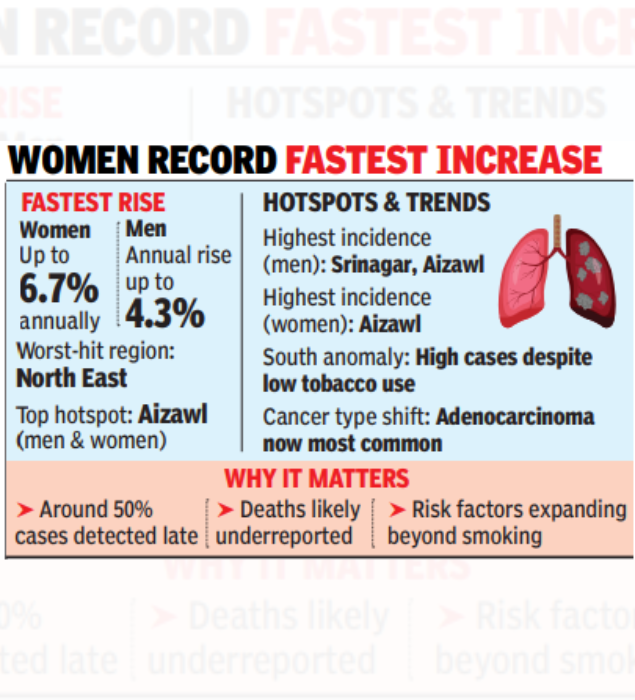
The shift is also reflected in tumour patterns nationwide. Adenocarcinoma has replaced smoking-linked squamous-cell carcinoma as the dominant subtype. In Bengaluru, it now accounts for over half of lung cancer cases among women, while Delhi has seen a sharp rise in large-cell carcinoma. Southern districts such as Kannur, Kasargod and Kollam reported high incidence among men despite relatively low tobacco and alcohol use, pointing to non-tobacco risk factors. Among women, Hyderabad and Bengaluru recorded the highest incidence in the south. In the north, Srinagar showed elevated lung cancer rates among men, while women in Srinagar and Pulwama also reported higher incidence despite low substance use. Trend analysis shows lung cancer incidence climbing by up to 6.7% annually among women and 4.3% among men in some regions. Thiruvananthapuram recorded the sharpest rise among women, while Dindigul saw the steepest increase among men. With tobacco use among women still below 10% nationwide, researchers point to worsening air quality and household exposures as key drivers. Projections suggest that by 2030, lung cancer incidence among men could exceed 33 per lakh in parts of Kerala, while among women it could rise to over 8 per lakh in cities like Bengaluru. Low mortality-to-incidence ratios in several regions also point to gaps in death reporting, potentially masking the true toll.


