
NEW DELHI: In what is going to make millions of them breathe easy, students returning to schools after the summer break in July will not be forced into an abrupt language switch midway through schooling. Union education minister Dharmendra Pradhan told TOI on Thursday that the requirement of studying two Indian languages under the three-language policy will begin with Class 6 and progress gradually, instead of being applied retrospectively to students already in Classes 7, 8 and 9 in CBSE schools.This means students who had opted for two foreign languages under the existing system can continue with their current combination until their Class 10 board examination, which for Class 7 would be in 2030 and for Class 9 in 2028. CBSE is expected to issue an amended order after deliberations in its governing council.This answers a concern schools and parents raised after CBSE asked affiliated schools to roll out the policy from July. The fear was that a student who had studied a foreign language for years could suddenly be told to drop it in Class IX for an Indian one — which would have meant academic stress for children and operational strain for schools.Pradhan said the board’s earlier communication had not clearly spelt out the transition for students already in the system. “CBSE could not give a clear order,” he said, adding that the ambiguity would now be removed. “No child will face any difficulty. Those already studying two foreign languages will be allowed to continue till they pass Class X,” he said, adding that the policy would apply from Class 6 and then advance with each cohort.Under the National Education Policy 2020, students from classes VI to VIII are expected to study three languages. Pradhan said this was already the norm across most school boards in the country. Of India’s nearly 25 crore school students, he said, about 90% study three languages, and barring CBSE and Tamil Nadu, most boards follow the pattern up to Class X. Within CBSE, nearly 99% already study two Indian languages; only about 1.3% have combinations involving two foreign languages — the group now left untouched.Students now entering Class VI will study three languages, of which two will have to be Indian languages.Pradhan said class-appropriate books in 22 Indian languages would be made available, and issues relating to teachers and resources would have to be addressed by CBSE. “This is CBSE’s challenge, not the country’s challenge, not the state board’s challenge,” he said. Class-appropriate textbooks in 22 languages would be ready on time, he said, easing confusion over books, teachers and timelines that had reached the courts.A fourth language stays optional, and nothing in the policy bars foreign languages. The insistence, Pradhan said, is only on Indian languages anchoring schooling, part of a wider push to pull the country out of what he called a colonised mindset.Besides the language question, there is now a parallel push on skills. From classes VI to VIII, vocational exposure is compulsory, with schools required to spend 110 hours a year on skill modules and set up composite skill labs. In classes IX and X, a skill subject such as Kaushal Vikas is mandatory, to be assessed through internal marks and boards; in classes XI and XII, it will stay elective but is going to be pushed hard.CBSE officials said that the Board is also examining whether a foreign language can be taken in lieu of the compulsory vocational subject up to Class X. However, this remains under discussion.Get the latest India news and live updates. Download the TOI App.About the AuthorManash Pratim GohainManash Pratim Gohain is a seasoned journalist with over two decades at The Times of India, where he has built a rich body of work spanning education policy, politics, and governance. Renowned for his incisive coverage of the National Education Policy (NEP) 2020, accreditation reforms, and skilling initiatives, he has also reported on student politics, urban policy, and social movements. His political reportage—both reflective and news-driven—adds depth to his writing, bridging policy with public impact. Through his 2,500 articles and related outlets, he has emerged as a trusted voice in national discourse, particularly in linking education reform to broader societal change.Read MoreEnd of ArticleFollow Us On Social MediaVideosCanada Officially Confirms Khalistani Role In Air India Kanishka BombingKolkata Warehouse Collapse: Bengal CM Blames TMC Regime, Says ‘Flawed Plan’ Got ApprovalRam Mandir Donation Row: F.I.R Filed Against Eight Accused After SIT Flags EmbezzlementThreat To Journalists? Shiv Sena MP’s Remarks Trigger Political Storm In MaharashtraWhy India Has Given Dinesh Trivedi Cabinet Minister-Equivalent Status In Bangladesh?From Deportation Calls To Racist Attacks: The Rise Of Anti-Indian Sentiment In The US’Congress, BJP & SAD Joined Hands’: Punjab CM Mann Blames Opposition For ‘Conspiracy’India-Pak Backchannel Talks Continue In Colombo And Bangkok Amid Diplomatic Freeze: ReportsIf Aadhaar, PAN, Voter ID And Passport Aren’t Final Proofs, What Actually Makes You Indian?Shiv Sena (UBT) MPs Meet Lok Sabha Speaker, Stress Constitutional Process On Party Claims123Photostories60-second money lesson: Should you split expenses 50-50 in a relationship?Friday OTT releases (June 26): ‘Raja Shivaji’, ‘Little Brother’, ‘Agent Kim Reactivated’, ‘Perfect Family’ and moreShoaib Ibrahim and Dipika Kakar ring in son Ruhaan’s third birthday quietly amid father’s hospitalisationButtermilk for Summer: 8 traditional buttermilk dishes of India to keep the gut cool7 places on Earth that are compared to hell and yet travellers keep going10 baby girl names that symbolise renewal and positivity in different languagesSuccess quote of the day by Kunal Shah: ‘There are no over-ambitious people; only dreamers with no plans’Psychology says women comfortable being alone often share these 8 powerful traitsPushy parenting does more harm than good: What it is and 5 signs you may be oneThis everyday habit before work could be quietly damaging your performance123Hot PicksCharles OliveiraKetan Agrawal MurderMike Vrabel ControversyGermany Vs EcuadorSujata Rout KarthikeyanED KelceNHL Trade RumorsNFL Trade RumorsAndy RoddickTop TrendingDoug MartinVenezuela NewsRithuparna KSFIFA World Cup 2026Venezuela earthquake NewsMumba Local Train MurderMEA PassportNandani BosmiyaMK StalinMumbai Local Train News

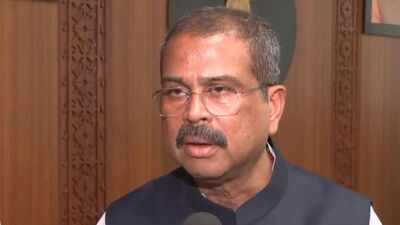
NEW DELHI: In what is going to make millions of them breathe easy, students returning to schools after the summer break in July will not be forced into an abrupt language switch midway through schooling. Union education minister Dharmendra Pradhan told TOI on Thursday that the requirement of studying two Indian languages under the three-language policy will begin with Class 6 and progress gradually, instead of being applied retrospectively to students already in Classes 7, 8 and 9 in CBSE schools.This means students who had opted for two foreign languages under the existing system can continue with their current combination until their Class 10 board examination, which for Class 7 would be in 2030 and for Class 9 in 2028. CBSE is expected to issue an amended order after deliberations in its governing council.This answers a concern schools and parents raised after CBSE asked affiliated schools to roll out the policy from July. The fear was that a student who had studied a foreign language for years could suddenly be told to drop it in Class IX for an Indian one — which would have meant academic stress for children and operational strain for schools.Pradhan said the board’s earlier communication had not clearly spelt out the transition for students already in the system. “CBSE could not give a clear order,” he said, adding that the ambiguity would now be removed. “No child will face any difficulty. Those already studying two foreign languages will be allowed to continue till they pass Class X,” he said, adding that the policy would apply from Class 6 and then advance with each cohort.Under the National Education Policy 2020, students from classes VI to VIII are expected to study three languages. Pradhan said this was already the norm across most school boards in the country. Of India’s nearly 25 crore school students, he said, about 90% study three languages, and barring CBSE and Tamil Nadu, most boards follow the pattern up to Class X. Within CBSE, nearly 99% already study two Indian languages; only about 1.3% have combinations involving two foreign languages — the group now left untouched.Students now entering Class VI will study three languages, of which two will have to be Indian languages.Pradhan said class-appropriate books in 22 Indian languages would be made available, and issues relating to teachers and resources would have to be addressed by CBSE. “This is CBSE’s challenge, not the country’s challenge, not the state board’s challenge,” he said. Class-appropriate textbooks in 22 languages would be ready on time, he said, easing confusion over books, teachers and timelines that had reached the courts.A fourth language stays optional, and nothing in the policy bars foreign languages. The insistence, Pradhan said, is only on Indian languages anchoring schooling, part of a wider push to pull the country out of what he called a colonised mindset.Besides the language question, there is now a parallel push on skills. From classes VI to VIII, vocational exposure is compulsory, with schools required to spend 110 hours a year on skill modules and set up composite skill labs. In classes IX and X, a skill subject such as Kaushal Vikas is mandatory, to be assessed through internal marks and boards; in classes XI and XII, it will stay elective but is going to be pushed hard.CBSE officials said that the Board is also examining whether a foreign language can be taken in lieu of the compulsory vocational subject up to Class X. However, this remains under discussion.


