
NEW DELHI: In a giant leap for the Indian space sector, domestic aerospace company Azista Space has demonstrated a new indigenous capability in space by taking images of objects in orbit from another satellite, a first by any space company in the country. This is often called “in-orbit snooping or space watch”.Using its 80-kg earth-observation satellite ABA First Runner (AFR), Azista Space took images of the International Space Station (ISS), which is orbiting at an altitude of around 400 km from the Earth’s surface.AFR, which was launched in space by SpaceX’s Falcon-9 as part of the Transporter-8 mission on June 13, 2023, has already completed 2.5 years in orbit.In a post of X, Azista Space, which has a manufacturing facility for satellites and payloads in Gujarat’s Sanand, said it has “successfully executed a challenging near-horizon demonstration targeting the ISS. Operating in sunlit conditions at ranges of approximately 250 km and 300 km, the AFR sensor was precisely tasked to track ISS, capturing it in 15 distinct frames. Two independent attempts were conducted, both achieving 100% success.”“The resulting acquisition resulted in the image with 2.2m sampling, validating our tracking algorithms and imaging precision. To our knowledge, AFR is the only Indian built and operated satellite to have demonstrated such a feat,” said the company, which is Asia’s first private satellite factory that annually produces 50 satellites.India currently has more than 50 operational satellites — for communication, navigation, earth observation, and surveillance purposes. Protecting these space assets requires timely information about the activities of other satellites in the vicinity, especially during heightened geopolitical tensions.The rare feat is a key step towards strengthening India’s space situational awareness (SSA), which means comprehensive monitoring, tracking and prediction of man-made satellites, space debris, and natural objects (like asteroids) in Earth’s orbit. It is critical to ensure the safety and sustainability of space activities by analysing potential collisions and enabling avoidance maneuvers. “Azista Space also brings strong electro-optical payload, image processing and satellite bus engineering capabilities, enabling the design, development, and delivery of end-to-end SSA satellites and payloads tailored to customer mission requirements,” the company said.The company undertakes design, development, manufacturing and integration of satellites, space-borne systems and payloads, and also manufactures tailored-made satellites and satellite subsystems. Its personnel are also involved in over 12 Isro missions.End of ArticleFollow Us On Social MediaVideos‘Few Political Elements Trying To Distort’: Goyal Explains India-US Trade Deal, Slams Opposition‘India Has A Preference Over…’: Piyush Goyal On US Trade Deal, Trump’s ‘Russian Oil’ Claim‘Embarrassed Himself’: Gaurav Gogoi Slams Assam CM Himanta Sarma Over ‘Pakistan Links’ Allegation‘1.25 Crore Hindus In Bangladesh’: RSS Chief Mohan Bhagwat Issues Big Unity CallUkraine to Gaza: Malaysia PM Anwar Ibrahim hails PM Modi’s unwavering global peace pushGogoi’s wife Elizabeth worked for Pakistani agent Ali Tauqeer Sheikh: Assam CM Himanta Biswa Sarma‘India’s Stand on Terrorism Is Clear’: PM Modi Speaks Firmly During Malaysia Visit”Strategic Ties And Trade Strengthened”: PM Modi Exchanges MoUs With Malaysian PM’Reasons For Reducing Russian Oil Imports Are…’ Foreign Expert Explains India-US Trade FrameworkIndia Reiterates Energy Security Priority, Signals Russia Oil Imports Will Continue123Photostories5 Vastu-approved plants you should bring home today for prosperity7 brutal truths about starting a business no one warns you about5 effective ways to keep spiders away from your home and garden (third is a magical remedy!)Top 6 cheapest destinations to travel in India in 2026The one-sided friendship problem: Why so many adult friendships feel draining now8 types of kadhi from across India to try for lunchScarlett Johansson net worth: Inside the USD 165 million fortune of Marvel’s ‘Black Widow’ starFrom Bad Bunny, Green Day to Charlie Puth: Full list of Super Bowl 60 performersFrom a massive living room to lavish bedrooms: A look at Samay Raina’s luxurious housePM Narendra Modi’s Panch Prana goal and the role of Shatavari and it’s importance in traditional Indian kitchens123Hot PicksBudget 2026Gold Silver PricesParliament Budget SessionGCC Unified Visa 2026Income Tax CalculatorPublic holidays February 2026Bank Holidays februaryTop TrendingFortnite Love EventBoston Celtics vs New York KnicksLindsey Vonn InjurySuper Bowl LX TicketSuper Bowl PredictionsJustin GaethjeLIV GolfLiam Paro vs Paddy Donovan Net WorthWinter Olympics 2026NBA Trade Update
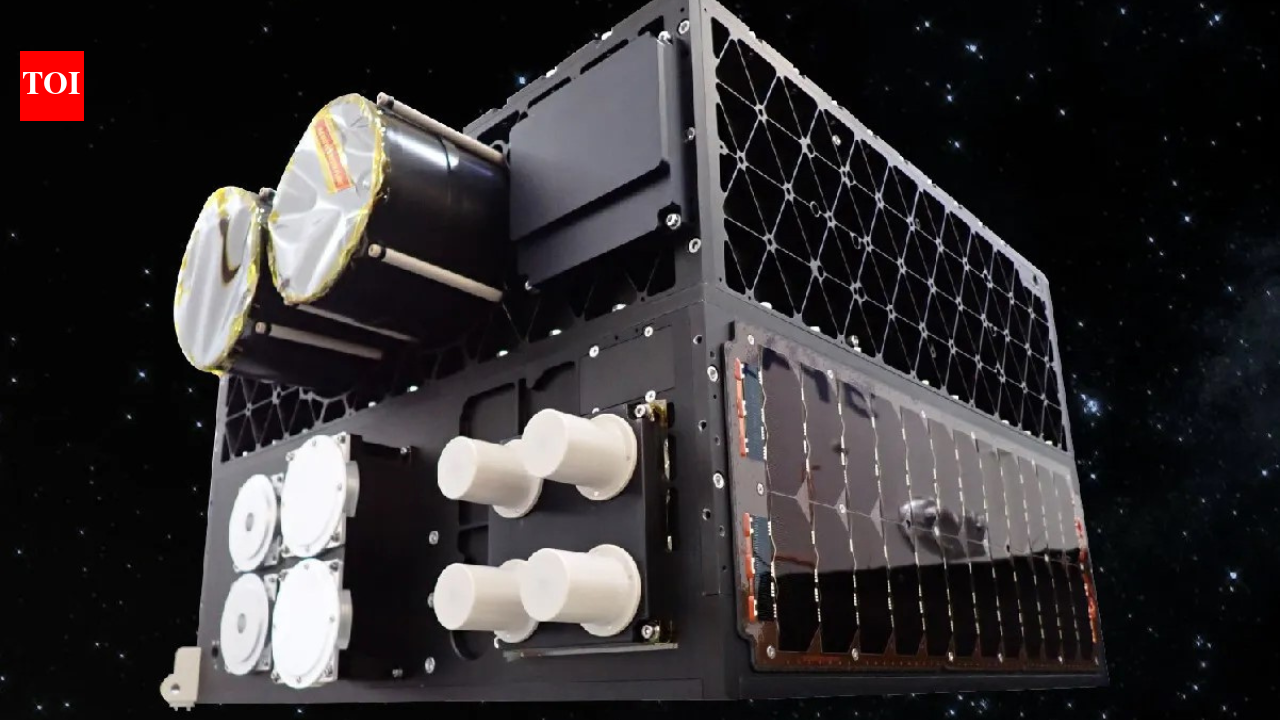
NEW DELHI: In a giant leap for the Indian space sector, domestic aerospace company Azista Space has demonstrated a new indigenous capability in space by taking images of objects in orbit from another satellite, a first by any space company in the country. This is often called “in-orbit snooping or space watch”.Using its 80-kg earth-observation satellite ABA First Runner (AFR), Azista Space took images of the International Space Station (ISS), which is orbiting at an altitude of around 400 km from the Earth’s surface.AFR, which was launched in space by SpaceX’s Falcon-9 as part of the Transporter-8 mission on June 13, 2023, has already completed 2.5 years in orbit.In a post of X, Azista Space, which has a manufacturing facility for satellites and payloads in Gujarat’s Sanand, said it has “successfully executed a challenging near-horizon demonstration targeting the ISS. Operating in sunlit conditions at ranges of approximately 250 km and 300 km, the AFR sensor was precisely tasked to track ISS, capturing it in 15 distinct frames. Two independent attempts were conducted, both achieving 100% success.”“The resulting acquisition resulted in the image with 2.2m sampling, validating our tracking algorithms and imaging precision. To our knowledge, AFR is the only Indian built and operated satellite to have demonstrated such a feat,” said the company, which is Asia’s first private satellite factory that annually produces 50 satellites.India currently has more than 50 operational satellites — for communication, navigation, earth observation, and surveillance purposes. Protecting these space assets requires timely information about the activities of other satellites in the vicinity, especially during heightened geopolitical tensions.The rare feat is a key step towards strengthening India’s space situational awareness (SSA), which means comprehensive monitoring, tracking and prediction of man-made satellites, space debris, and natural objects (like asteroids) in Earth’s orbit. It is critical to ensure the safety and sustainability of space activities by analysing potential collisions and enabling avoidance maneuvers. “Azista Space also brings strong electro-optical payload, image processing and satellite bus engineering capabilities, enabling the design, development, and delivery of end-to-end SSA satellites and payloads tailored to customer mission requirements,” the company said.The company undertakes design, development, manufacturing and integration of satellites, space-borne systems and payloads, and also manufactures tailored-made satellites and satellite subsystems. Its personnel are also involved in over 12 Isro missions.


