
NEW DELHI: Exhorting defence scientists to accelerate R&D work, defence minister Rajnath Singh on Thursday said the “battlefield of tomorrow will reward those who can shorten the time between an idea, a prototype and operational deployment”.Addressing defence strategic dialogue Kalam & Kavach 3.0 in a video message here, Rajnath said, “A nation’s strength will increasingly depend on how quickly its defence forces, labs, and industries think & act as one”, underscoring the importance of self-reliance and jointness to secure strategic autonomy & remain future-ready for emerging security challenges.“National security demands our preparedness, resilience, innovation, and strategic confidence,” he said.Rajnath described self-reliance as not only an economic goal, but also a strategic necessity, asserting that a nation that depends excessively on others for critical defence capability remains vulnerable in times of crisis.In the presence of Italian and Armenian envoys at the event, MoS defence Sanjay Seth told foreign delegates that India firmly believes that global security and progress are strengthened through cooperation, trust and shared innovation. He said India’s defence exports, which were a meagre Rs 686 crore a decade ago, have skyrocketed to a record high of Rs 38,424 crore today. He said annual defence production has touched an all-time high of Rs 1.54 lakh crore in financial year 2025-26 and reaffirmed the govt’s resolve to achieve the target of Rs 50,000 crore of defence exports and Rs 3 lakh crore of defence production by 2029-30.Talking about Operation Sindoor at a special session at the event, CDS Gen Anil Chauhan said the Indian armed forces “dominated the escalation matrix on all four days” of the conflict.On ‘JAI’ (jointness, atmanirbharta and innovation) triad, the CDS said that as far as the planned theaterisation is concerned, efforts have been made in this direction with enhanced “scale and speed” as India is lagging behind other countries by 10-15 years, which have already implemented such structures. “These joint structures, which we are trying to create, would be one of the most transformative reforms that India would be undertaking… Our model was slightly different. Some people had to introduce legislation, it was a top-down kind of approach. I tried to work through consensus. Consensus was taking everyone along,” he said.End of ArticleFollow Us On Social MediaVideosDelhi HC Judge Initiates Contempt Proceedings Against Kejriwal; Refers Case To New Bench2 Days WFH To ‘No Vehicle Day’: Delhi CM Rekha Gupta Unveils Fuel-Saving Steps After PM Modi’s CallCong Picks VD Satheesan As Kerala CM; Iran FM Lands In India For Brics Meet With ‘Minab168’ MsgSupreme Court Questions CEC Appointment Process, Raises ‘Independence’ ConcernsMan Trying To Hold Tin Shed Gets Swept Into Air During Violent Storm In Bareilly, Survives Fall’Unacceptable’: India Slams Attack On Indian-Flagged Ship Near OmanEC Announces Phase 3 Of SIR Across 16 States, 3 UTs; J&K, Ladakh, Himachal Left OutEx-Bengal CM Mamata Banerjee In Lawyer’s Gown Argues Post-poll Violence Case In High CourtKC Venugopal Backs VD Satheesan as Kerala CM, Says Congress Fully United Behind HimCongress Picks VD Satheesan as Kerala CM After 10 Days of Talks and Leadership Battle123PhotostoriesTara Sutaria looks straight out of a 1950s Hollywood dream at Cannes in this vintage Vivienne Westwood coutureHappy Birthday Vicky Kaushal: With Katrina Kaif, Sunny Kaushal and family, inside the actor’s most heartwarming momentsMilk Price Hike: Popular packaged milk prices rise across India; healthy milk alternatives to add to daily dietTop 10 fascinating facts about rhinos that make them unlike any other wild animal5 animals with giant tusks and horns that make them look prehistoricHow these 5 Indian ice creams became among the 100 Most Iconic Ice Creams of the WorldRice water vs coconut water for hair growth: Which works better in summer?5 reasons why someone dislikes you – And why is it not your problemAditi Rao Hydari just landed in Cannes and her denim airport look already screams red carpet royalty10 affirmations to attract calm and genuine love123Hot PicksCBSE class 12 resultUS Iran warPrateek YadavHaryana election resultForeign outflowNEET exam cancelledTamil Nadu assemblyTop TrendingWB Class 12 Result 2026WB Board 12th ResultIPL Points TablePM Internship SchemeCalcutta High CourtMI vs PBKS IPL MatchIPL Orange Cap 2026Haryana Board ResultAir India FlightsPrateek Yadav

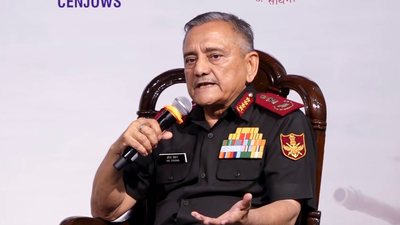
NEW DELHI: Exhorting defence scientists to accelerate R&D work, defence minister Rajnath Singh on Thursday said the “battlefield of tomorrow will reward those who can shorten the time between an idea, a prototype and operational deployment”.Addressing defence strategic dialogue Kalam & Kavach 3.0 in a video message here, Rajnath said, “A nation’s strength will increasingly depend on how quickly its defence forces, labs, and industries think & act as one”, underscoring the importance of self-reliance and jointness to secure strategic autonomy & remain future-ready for emerging security challenges.“National security demands our preparedness, resilience, innovation, and strategic confidence,” he said.Rajnath described self-reliance as not only an economic goal, but also a strategic necessity, asserting that a nation that depends excessively on others for critical defence capability remains vulnerable in times of crisis.In the presence of Italian and Armenian envoys at the event, MoS defence Sanjay Seth told foreign delegates that India firmly believes that global security and progress are strengthened through cooperation, trust and shared innovation. He said India’s defence exports, which were a meagre Rs 686 crore a decade ago, have skyrocketed to a record high of Rs 38,424 crore today. He said annual defence production has touched an all-time high of Rs 1.54 lakh crore in financial year 2025-26 and reaffirmed the govt’s resolve to achieve the target of Rs 50,000 crore of defence exports and Rs 3 lakh crore of defence production by 2029-30.Talking about Operation Sindoor at a special session at the event, CDS Gen Anil Chauhan said the Indian armed forces “dominated the escalation matrix on all four days” of the conflict.On ‘JAI’ (jointness, atmanirbharta and innovation) triad, the CDS said that as far as the planned theaterisation is concerned, efforts have been made in this direction with enhanced “scale and speed” as India is lagging behind other countries by 10-15 years, which have already implemented such structures. “These joint structures, which we are trying to create, would be one of the most transformative reforms that India would be undertaking... Our model was slightly different. Some people had to introduce legislation, it was a top-down kind of approach. I tried to work through consensus. Consensus was taking everyone along,” he said.


