
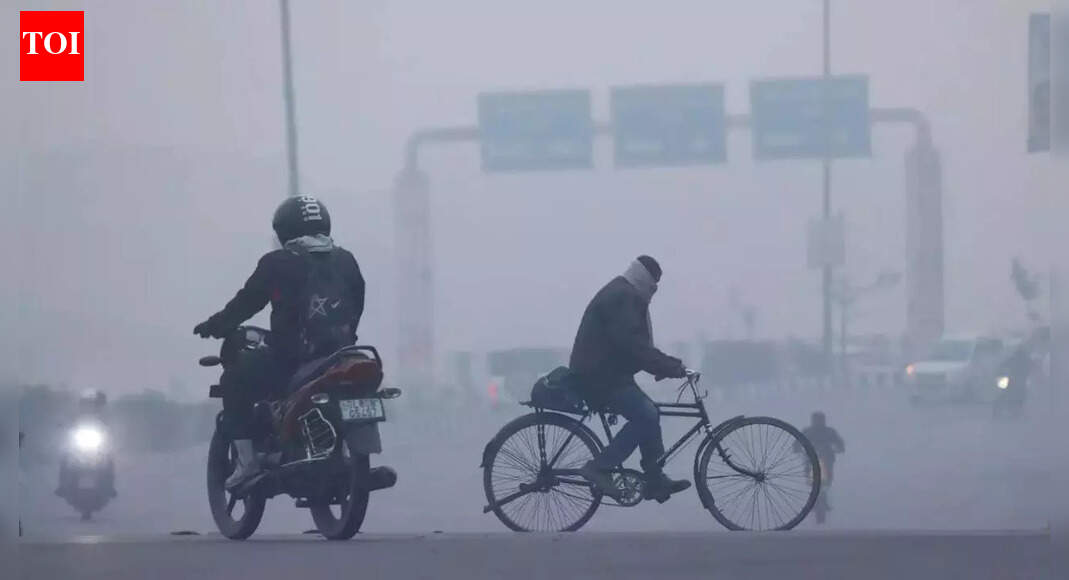
NEW DELHI: Delhi recorded the coldest morning of the winter on Saturday, with conditions expected to worsen further into a cold wave in the next two days. The city woke up to its coldest January winter morning since 2024, with the minimum temperature at the Safdarjung Observatory settling at 4.2 degrees Celsius, marking the lowest reading of the ongoing winter season so far. The maximum temperature remained below normal at 19.7 degrees Celsius, India Meteorological Department (IMD) said. The IMD has issued a yellow alert for Delhi for moderate to dense fog and a warning of cold wave conditions on Sunday and Monday. Dense to moderate fog is also likely during morning hours as the sharp drop in temperatures continues across the region. According to the IMD, cold wave conditions are declared when the minimum temperature falls about 4.5 to 6.4 degrees below normal, depending on local climatology. A sharp dip in temperatures was recorded across Delhi’s weather stations on Saturday. Station-wise maximum temperatures showed Safdarjung recording 19.7 degrees Celsius, Palam 17.2 degrees Celsius, Lodi Road 18.8 degrees Celsius, the Ridge 17.9 degrees Celsius, and Ayanagar 19.0 degrees Celsius. Minimum temperatures reflected the intensity of the cold spell, with Safdarjung at 4.2 degrees Celsius, Palam 4.5 degrees Celsius, Lodi Road 4.7 degrees Celsius, the Ridge 5.3 degrees Celsius, and Ayanagar also recording 4.5 degrees Celsius. Saturday’s readings made it the coldest winter morning for the month in three years. The previous coldest January day was observed on January 15, 2024, when the minimum temperature had plunged to 3.3 degrees Celsius, triggering cold wave conditions across the national capital. On Friday, the minimum temperature was recorded at 4.6 degrees Celsius. Before that on December 4 and December 5, the mercury had settled at 5.6 degrees Celsius, and on December 1, the minimum temperature stood at 5.7 degrees Celsius. Meanwhile, Delhi’s air quality deteriorated further with a reading of 346 at 4 pm, slipping into the “very poor” category, as unfavourable meteorological conditions continued to restrict the dispersion of pollutants. Chandni Chowk recorded the worst Air Quality Index at 395, inching close to the “severe” category. Data showed that 27 stations were in the “very poor” category, while 11 stations showed “poor” air quality, according to the Central Pollution Control Board’s Sameer app. According to the CPCB, an AQI between 0 and 50 is considered good, 51 to 100 is satisfactory, 101 to 200 is moderate, 201 to 300 is poor, 301 to 400 is very poor, and 401 to 500 falls in the severe category. According to the Decision Support System, transport emissions contributed 10.84 per cent to local pollution levels, followed by Delhi and peripheral industries at 11.089 per cent. Residential sources accounted for 6.044 per cent, while road dust contributed 0.95 per cent. As per the air quality warning system, air quality is likely to remain in the “very poor” category till January 13, with cold and calm conditions continuing to worsen pollution levels over the next few days. In the morning hours the AQI was also in the very poor category at 366.End of ArticleFollow Us On Social MediaVideosIndia-EU FTA: Piyush Goyal Wraps Up Brussels Visit; Push To Accelerate Trade Deal Talks’Hope India Backs Denmark’: Danish MP Urges Delhi’s Support Amid Trump’s Greenland ThreatsOdisha Plane Crash: Nine-Seater Aircraft Crash-Lands Near Rourkela, 6 InjuredWhy Nations Fight Wars: Ajit Doval Breaks Down Power Game, Morale, Western Fear And India’s Rise’They Amended UAPA’: Owaisi Blames Congress For Umar Khalid And Sharjeel Imam’s Jail Without Trial’No Courage, No Strength’: Lt Gen Katiyar Ridicules Pak, Exposes Terror Strategy, Warns Against War’Hijab-Clad Woman As India’s PM’: Owaisi’s Remark Gets ‘Hindu Nation’ Retort From BJP’s Nitish Rane’India Will Develop Even On Autopilot’, Says NSA Ajit Doval As He Credits PM Modi’s LeadershipHindu Farmer Killing in Sindh Triggers Protests A Day After India Exposed Pak’s Record on MinoritiesDefence Spending Can Fuel Growth, Says CDS Anil Chauhan As India Rethinks Guns Versus Butter Debate123PhotostoriesNupur Sanon and Stebin Ben’s romantic pictures together ahead of the dreamy wedding7 winter ladoos packed with protein that actually keep you fullStebin Ben’s most romantic songs that will make you fall in love with the singerTop motivational series to watch on OTTNupur Sanon best ethnic looks: A glimpse at the bride-to-be’s most stunning fashion momentsLittle verses, lasting values: Why shlokas matter in a child’s early years10 Nepali dishes trending right now and why they’re the ultimate comfort foodFrom shacks to skyline: North Chennai families get a fresh start in CMDA’s new housing hubFrom Coelacanth to Lamreys: 8 living animals that existed even before DinosaursBengaluru to West Bengal by rail: Amrit Bharat Express leads trio of new long-distance trains (In Photos)123Hot PicksTrump tariffsUS Supreme CourtGold rate todayBengaluru newsCigarette price hikePublic holidays January 2026Bank Holidays JanuaryTop TrendingCandace OwensBill KennedyDonald TrumpVanessa BryantJaipur Audi AccidentDrew McIntyreAndhra Pradesh Student Missing in USWasim AkramWPL Live ScoreStefon Diggs
NEW DELHI: Delhi recorded the coldest morning of the winter on Saturday, with conditions expected to worsen further into a cold wave in the next two days. The city woke up to its coldest January winter morning since 2024, with the minimum temperature at the Safdarjung Observatory settling at 4.2 degrees Celsius, marking the lowest reading of the ongoing winter season so far. The maximum temperature remained below normal at 19.7 degrees Celsius, India Meteorological Department (IMD) said. The IMD has issued a yellow alert for Delhi for moderate to dense fog and a warning of cold wave conditions on Sunday and Monday. Dense to moderate fog is also likely during morning hours as the sharp drop in temperatures continues across the region. According to the IMD, cold wave conditions are declared when the minimum temperature falls about 4.5 to 6.4 degrees below normal, depending on local climatology. A sharp dip in temperatures was recorded across Delhi’s weather stations on Saturday. Station-wise maximum temperatures showed Safdarjung recording 19.7 degrees Celsius, Palam 17.2 degrees Celsius, Lodi Road 18.8 degrees Celsius, the Ridge 17.9 degrees Celsius, and Ayanagar 19.0 degrees Celsius. Minimum temperatures reflected the intensity of the cold spell, with Safdarjung at 4.2 degrees Celsius, Palam 4.5 degrees Celsius, Lodi Road 4.7 degrees Celsius, the Ridge 5.3 degrees Celsius, and Ayanagar also recording 4.5 degrees Celsius. Saturday’s readings made it the coldest winter morning for the month in three years. The previous coldest January day was observed on January 15, 2024, when the minimum temperature had plunged to 3.3 degrees Celsius, triggering cold wave conditions across the national capital. On Friday, the minimum temperature was recorded at 4.6 degrees Celsius. Before that on December 4 and December 5, the mercury had settled at 5.6 degrees Celsius, and on December 1, the minimum temperature stood at 5.7 degrees Celsius. Meanwhile, Delhi’s air quality deteriorated further with a reading of 346 at 4 pm, slipping into the “very poor” category, as unfavourable meteorological conditions continued to restrict the dispersion of pollutants. Chandni Chowk recorded the worst Air Quality Index at 395, inching close to the “severe” category. Data showed that 27 stations were in the “very poor” category, while 11 stations showed “poor” air quality, according to the Central Pollution Control Board’s Sameer app. According to the CPCB, an AQI between 0 and 50 is considered good, 51 to 100 is satisfactory, 101 to 200 is moderate, 201 to 300 is poor, 301 to 400 is very poor, and 401 to 500 falls in the severe category. According to the Decision Support System, transport emissions contributed 10.84 per cent to local pollution levels, followed by Delhi and peripheral industries at 11.089 per cent. Residential sources accounted for 6.044 per cent, while road dust contributed 0.95 per cent. As per the air quality warning system, air quality is likely to remain in the “very poor” category till January 13, with cold and calm conditions continuing to worsen pollution levels over the next few days. In the morning hours the AQI was also in the very poor category at 366.


