
NEW DELHI: Amid reports of two cheetahs from Madhya Pradesh’s Kuno National Park (KNP) moving into Rajasthan’s Baran district, National Tiger Conservation Authority (NTCA) Sunday said this movement reinforces the strategic rationale for the proposed 17,000 sqkm Kuno–Gandhi Sagar inter-state wildlife corridor spanning seven districts of Rajasthan and eight of MP.Calling the inter-state movement a success story of India’s Project Cheetah, NTCA said it has been actively coordinating with state forest departments and the cheetahs are under 24×7 GPS and radio-collar monitoring by an inter-state team.Sharing updates on movement of cheetahs KP-2 and KP-3, the authority said KP-2 has been tracked in the Mangrol range of Baran, while KP-3 entered the Banjh Amli Conservation Reserve after travelling 60–70 km from KNP.Israel Iran WarUS-Israel-Iran War Live Updates: Third US carrier on way as Israel launches ‘extensive strikes’ on IranFresh Food Airlifted Into UAE: LuLu flies 80,000 kg of Indian produce; more imports planned‘Xi’s world order died with Khamenei’: The good, the bad, and ugly of US-Iran war for China“Both animals are positioned approximately 6 km apart on either bank of the Parvati river,” it said while noting field teams deployed from Kishanganj and Anta ranges have been tracking them continuously.“Long-distance dispersal across landscape boundaries is a well-documented, natural territorial behaviour in cheetahs. The Project Cheetah Action Plan explicitly anticipates and provides for inter-state movement within the Kuno–Gandhi Sagar metapopulation landscape,” said NTCA in its report to the environment ministry on the cheetahs’ movement.India currently has a thriving population of 48 cheetahs, including 28 India-born cubs. Nine adult cheetahs (six females and three males), received from Botswana, were released into quarantine enclosures at KNP on Feb 28. They were the third batch of cheetahs flown into India.About the AuthorVishwa MohanVishwa Mohan is Senior Editor at The Times of India. He writes on environment, climate change, agriculture, water resources and clean energy, tracking policy issues and climate diplomacy. He has been covering Parliament since 2003 to see how politics shaped up domestic policy and India’s position at global platform. Before switching over to explore sustainable development issues, Vishwa had covered internal security and investigative agencies for more than a decade.Read MoreEnd of ArticleFollow Us On Social MediaVideos‘Good Relations With Govt Of India’: Iran’s Envoy To Delhi On Bilateral Ties Amid West Asia WarIndian Expat In UAE Opens Farmhouse For Tourists Stranded By Flight Disruptions Amid West Asia WarIran War: India Dragged In? Anand Ranganathan Cuts Through The Noise I Sunday ScrutinyIndia, China Should See Each Other As ‘Partners, Not Rivals’: Chinese FM Wang Yi Pushes Closer TiesChhattisgarh: BJP Leader Arrested After Opium Crop Found Hidden In Maize Field, Party Suspends HimDecoding BJP’s “Final Frontier” in West Bengal: Key Constituencies, Demographics, and Electoral DynamicsDecoding BJP’s Final Frontier in Tamil Nadu: Key Constituencies, Demographics, and Electoral Dynamics‘Arrogance Will Be Shattered’: PM Modi Attacks Mamata Banerjee Over Murmu’s Santhal Event Row“Grew Up In A Family Where Women Were…” Rahul Gandhi Praises School Girls On Women’s DayIndia To Operationalise Integrated Theatre Commands Before CDS General Chauhan Retires: Reports123Photostories11 traditional Gujarati breakfast dishes that are a must-tryRich vs broke mindset: 5 habits that help people make more moneyYour resting heart rate could signal future heart risk: Cardiologist explains warning signs and lifestyle changes to keep it healthy7 hyper local foods that PM Modi made popular via speeches, social media and Mann ki BaatWomen’s Day 2026: Aishwarya Rai, Kangana Ranaut, Deepika Padukone – Actresses who defined warrior royalty on-screenWomen’s Day 2026: Shefali Shah, Karishma Tanna, Kajol – Powerful female characters on OTT that redefined storytellingTop 6 tallest buildings in Hong KongFrom luxurious bungalows worth approximately Rs 70 crore to a farmhouse in Dehradun: Archana Puran Singh’s lavish lifestyle4 habits of ancient yogis while eating food that need to make a comeback5 psychology-based reasons why your brain loves bad decisions, and how to fix it123Hot PicksMiddle East Oil RisksIran Mobile Missile LauncersDwarka ExpresswayUttam Nagar murderIncome Tax CalculatorPublic holidays March 2026Bank Holidays MarchTop TrendingFortnite Wild Weeks Power Hour EventDaksh ChaudharyUPSC ResultsMiddle East ConflictNoida AirportCody RhodesWWE Smackdown HighlightsUCEED ResultBombay High CourtWhere to watch ind vs nz t20

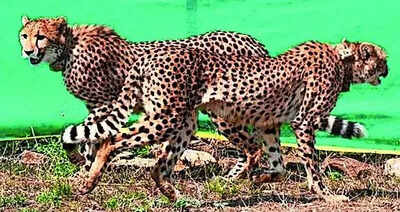
NEW DELHI: Amid reports of two cheetahs from Madhya Pradesh’s Kuno National Park (KNP) moving into Rajasthan’s Baran district, National Tiger Conservation Authority (NTCA) Sunday said this movement reinforces the strategic rationale for the proposed 17,000 sqkm Kuno–Gandhi Sagar inter-state wildlife corridor spanning seven districts of Rajasthan and eight of MP.Calling the inter-state movement a success story of India’s Project Cheetah, NTCA said it has been actively coordinating with state forest departments and the cheetahs are under 24×7 GPS and radio-collar monitoring by an inter-state team.Sharing updates on movement of cheetahs KP-2 and KP-3, the authority said KP-2 has been tracked in the Mangrol range of Baran, while KP-3 entered the Banjh Amli Conservation Reserve after travelling 60–70 km from KNP.“Both animals are positioned approximately 6 km apart on either bank of the Parvati river,” it said while noting field teams deployed from Kishanganj and Anta ranges have been tracking them continuously.“Long-distance dispersal across landscape boundaries is a well-documented, natural territorial behaviour in cheetahs. The Project Cheetah Action Plan explicitly anticipates and provides for inter-state movement within the Kuno–Gandhi Sagar metapopulation landscape,” said NTCA in its report to the environment ministry on the cheetahs’ movement.India currently has a thriving population of 48 cheetahs, including 28 India-born cubs. Nine adult cheetahs (six females and three males), received from Botswana, were released into quarantine enclosures at KNP on Feb 28. They were the third batch of cheetahs flown into India.


