
– NEW DELHI: A rationalist organisation raised eyebrows in the Supreme Court by asserting that Article 25 of the Constitution, which guarantees freedom of conscience and right to freely profess, practice and propagate religion, permits a person to wake up as a Hindu, have lunch as a Muslim and go to sleep as a Christian.Arguing for rationalists Hamid Dabholkar and Nandini Jadhav, office bearers of Maharashtra Andhashraddha Nirmoolan Samiti, senior advocate Sanjay Hegde told a nine-judge bench led by CJI Surya Kant that every person as per his conscience can profess and practice any religion at any given time of a day.Justice Ahsanuddin Amanullah termed that such an interpretation of Article 25(1) could lead to an absurdity as a person can say I am a Muslim but would become a Hindu to enter a temple to worship a deity at a given time of the day.“Can one profess Islam, practice Hinduism and propagate Christianity all at once? It is a dangerous proposition,” Justice Amanullah said. Undeterred, Hegde said if the place of worship is kept out, then a person in exercise of his right to freedom of conscience can do this.Hegde said God does not discriminate and cited a folklore about how devotion of a Muslim – ‘Bhakta Salabega’ – stalled the march of Lord Jagannath’s chariot after he was denied permission to participate in the annual Rath Yatra. Justice B V Nagarathna said, “The morale of these stories is the unqualified devotion of the person. Can a non-devotee challenge the validity of a religious practice or custom?”Hegde said, “Tradition cannot trump the Constitution. A rationalist holds that reason is the proper test of belief… He rejects the proposition that what is old must be true, and that what is sacred must be exempt from inquiry. The Constitution protects religious autonomy in matters that are intrinsically religious – doctrine, rite, ceremony – but not in matters that are secular though associated with religion.”Supporting the SC’s 2018 judgment, which quashed the restriction on entry of women in the 10-50 age bracket into Sabarimala Ayyappa temple, Hegde said a denomination cannot continue with a practice that is per se discriminatory towards women in their prime years.“Where the equal worship right of an individual under Article 25(1) collides with a denomination’s claim of exclusion under Article 26(b), the individual right prevails. Article 25(1) is in terms made ‘equally’ available to ‘all persons’,” he said.End of ArticleFollow Us On Social MediaVideosEx-Army Chief Naravane Backs People-To-People Ties To Improve India Pak RelationsAir India Cuts 29 International Routes As West Asia War Drives Up Fuel Costs And DisruptionsVijay Reverses Astrologer Appointment; PM Modi Orders Nearly 50% Convoy | Headlines@9EPS Removes Rebel Leaders Backing Vijay Government As AIADMK Internal Crisis DeepensPostmortem Reveals Massive Blood Clot In Lungs Caused Prateek Yadav’s Death | WatchHimanta Biswa Sarma Announces UCC Bill For Assam As State Moves Towards Uniform Civil LawNEET UG 2026 Cancellation Sparks Rajasthan Political Storm As BJP And Congress Clash Over LeakPosters Against Rahul Gandhi Surface As KC Venugopal Emerges Frontrunner For Kerala CMSuvendu Adhikari Chooses Bhabanipur Over Nandigram, Sparks Fresh Political Battle In BengalCM Vijay Revokes Astrologer Vettrivel’s OSD Appointment Amid Political Storm In Tamil Nadu123PhotostoriesStop throwing away mango peel: 6 delicious ways to use them in your kitchen5 weird things people do in love and why, as per psychologyWhy these 5 vegetable DIY remedies are harmful for your skin8 Indian states where women can travel free on government buses; West Bengal becomes the latest to join the list5 deadliest insects on the planet: Small creatures with a massive global impactThe silent vitamin deficiency experts say could increase your cancer risk over timeCommon snakes found in Florida and how to keep them away from home and gardenThe hygiene myths experts are trying to break5 summer morning drinks that beat hunger and keep you energized for longerLate nights, high stress, rising BP: Why poor sleep is becoming India’s new urban health emergency123Hot PicksCBSE class 12 resultUS Iran warPrateek YadavHaryana election resultForeign outflowNEET exam cancelledTamil Nadu assemblyTop TrendingNashik AstrologerTamil Nadu NewsIPL Points TablePM Internship SchemeIPL Match TodayHimanta Biswa SarmaIPL Orange Cap 2026Aparna YadavAir India FlightsPrateek Yadav

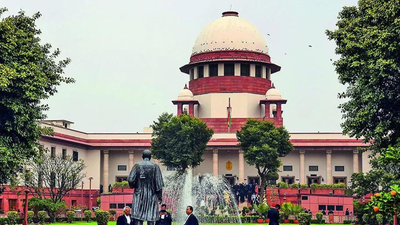
NEW DELHI: A rationalist organisation raised eyebrows in the Supreme Court by asserting that Article 25 of the Constitution, which guarantees freedom of conscience and right to freely profess, practice and propagate religion, permits a person to wake up as a Hindu, have lunch as a Muslim and go to sleep as a Christian.Arguing for rationalists Hamid Dabholkar and Nandini Jadhav, office bearers of Maharashtra Andhashraddha Nirmoolan Samiti, senior advocate Sanjay Hegde told a nine-judge bench led by CJI Surya Kant that every person as per his conscience can profess and practice any religion at any given time of a day.Justice Ahsanuddin Amanullah termed that such an interpretation of Article 25(1) could lead to an absurdity as a person can say I am a Muslim but would become a Hindu to enter a temple to worship a deity at a given time of the day.“Can one profess Islam, practice Hinduism and propagate Christianity all at once? It is a dangerous proposition,” Justice Amanullah said. Undeterred, Hegde said if the place of worship is kept out, then a person in exercise of his right to freedom of conscience can do this.Hegde said God does not discriminate and cited a folklore about how devotion of a Muslim – ‘Bhakta Salabega’ – stalled the march of Lord Jagannath’s chariot after he was denied permission to participate in the annual Rath Yatra. Justice B V Nagarathna said, “The morale of these stories is the unqualified devotion of the person. Can a non-devotee challenge the validity of a religious practice or custom?”Hegde said, “Tradition cannot trump the Constitution. A rationalist holds that reason is the proper test of belief… He rejects the proposition that what is old must be true, and that what is sacred must be exempt from inquiry. The Constitution protects religious autonomy in matters that are intrinsically religious – doctrine, rite, ceremony – but not in matters that are secular though associated with religion.”Supporting the SC’s 2018 judgment, which quashed the restriction on entry of women in the 10-50 age bracket into Sabarimala Ayyappa temple, Hegde said a denomination cannot continue with a practice that is per se discriminatory towards women in their prime years.“Where the equal worship right of an individual under Article 25(1) collides with a denomination’s claim of exclusion under Article 26(b), the individual right prevails. Article 25(1) is in terms made ‘equally’ available to ‘all persons’,” he said.


