
. “Natural”, “healthy”, “organic”, “heart-friendly”, “high protein” and “zero maida” often persuades a shopper before the packet is even turned over. In a spate of notices sent in the past month, Food Safety and Standards Authority of India (FSSAI) has asked several brands whether their front-of-pack promises say more than the product can support.FSSAI has issued notices to food businesses across categories including breads, chocolates, juices, cooking oils, noodles, supplements, packaged water and caffeinated drinks. The claims questioned range from “100% natural” and “organic” to immunity, detoxification, disease reduction and energy-boosting promises. Since these are notices rather than final rulings, the issues remain subject to the companies’ replies and regulatory examination. TOI reached out to FSSAI over e-mail, but was yet to receive a response.The scrutiny comes as India’s health-and-wellness food market expands and brands compete for shoppers seeking healthier choices. Experts say the front of a packet increasingly functions as advertising, while the information needed to judge the product — ingredients, sugar, fat, sodium and additives — is usually on the back.Former FSSAI CEO Pawan Kumar Agarwal says consumers rarely read or fully understand the mandatory information panel. Marketing teams therefore have a powerful incentive to foreground attractive words, sometimes stretching the meaning permitted by regulation. For large companies, he argues, penalties may need to be linked to turnover or the commercial gain from a misleading claim rather than treated as a routine cost.Nutrition experts call this the “health halo” effect: one positive phrase can make the entire product appear healthier and reduce the buyer’s inclination to examine it critically. A packet labelled “natural” can still be high in sugar or sodium. “Sugar-free” does not automatically mean low-carbohydrate. “Organic” requires certification; it is not merely a lifestyle description. Disease-treatment or prevention claims require scientific and regulatory support.AIIMS dietician Monita Gahlot advises shoppers to start with the ingredient list, which records ingredients in descending order by weight. The nutrition panel should then be checked for total and added sugars, saturated and trans fats, sodium, protein and carbohydrates. Serving sizes deserve particular attention: a modest-looking number can be based on a portion far smaller than what people normally consume.Join conversationView All Comments →Share your thoughts in the commentsInsightfulAgreeDisagreeSkepticalConcerningPromisingWorth ReadingBig DevelopmentPost CommentBe respectful · TOI community guidelinesThe clearest warning sign, food-testing expert Ashwin Bhadri says, is a bold front claim that is not supported or adequately explained elsewhere on the label. The simplest consumer rule is therefore to turn the packet over before deciding.Food author Krish Ashok argues that companies are not acting in a vacuum. Consumers increasingly seek a purchasable shortcut to good health. Products labelled “high protein”, “low GI”, “A2” or “heart-healthy” can offer the feeling of making a healthy choice without the slower work of eating fewer ultra-processed foods, increasing fibre and protein, exercising and sleeping well.That is why tighter enforcement alone will not end the health halo. Brands must make precise, evidence-backed claims, but consumers must also stop treating the front of a packet as nutritional advice.Get the latest India News and Live updates. Download the TOI app.About the AuthorAnuja JaiswalAnuja Jaiswal is a Senior Assistant Editor at The Times of India, with an impressive 18-year career in narrative journalism. She specializes in health and heritage reporting, expertly simplifying complex health information to make it engaging and understandable for readers. Her deep dives into heritage topics are well-researched, resulting in captivating narratives that resonate with her audience. Over the years, she has worked in Chandigarh, Chhattisgarh and West UP, gaining diverse on-ground experience that shapes her storytelling.Read MoreEnd of ArticleFollow Us On Social MediaVideosOMCs Say E20 Petrol Meets Quality Standards After Nationwide Testing, Reject Contamination ClaimsNeha Bora Inked During Jharkhand Student Protest: AISA Alleges Political Attack, Accused DetainedJharkhand JPSC Protest: Hunger Striker Hospitalised After Four Days As Students Continue AgitationTamil Nadu CM Vijay’s Wife Sangeetha Withdraws Divorce Petition, Family Court Allows Withdrawal’Proof Of Corruption?’ JPSC Aspirant Makes Explosive Claims As Student Protests Intensify In RanchiExplained: Why PM Modi Asked NDA MPs To Avoid The ‘Lutyens’ Web’ And Stay Focused On Public OutreachBeyond BrahMos: Why Drones And Smart Weapons Could Become India’s Next Defence Export Boom?Gen-Alpha Grabs Spotlight At Ranchi JPSC-JSSC Protest As 13-Year-Old Zaid’s Appeal Goes ViralCentre Opposes Creamy Layer For SC-ST Quota, Says Discrimination Goes Beyond Economic StatusIAF’s : Bhawana Kanth Earns ‘Top Gun’ Title, Shivani Sehrawat Becomes Army Chief’s ADC123PhotostoriesVitamin B12 deficiency is not just a vegetarian problem: The lesser-known reasons your levels can fall10 wedding desserts from around the world that are rich in tradition and symbolismYour date of birth reveals your secret lucky charm for August 2026Starting strength training after 40? The biggest mistakes beginners make and what to do insteadEven with the same diet, why do some people develop kidney disease while others don’t? Doctor explains what really makes the differenceExclusive – Farrhana Bhatt on Khatron Ke Khiladi 15, Shagun Sharma’s bullying claims against Gaurav Khanna and his divorce from Akanksha Chamola9 traditional South Indian Chicken Curries perfect for weekend dinnerHow to Wear a Tulsi Mala: 7 Important Things to Remember10 unique baby girl names that sound modern yet timelessKriti Sanon owns the night in a midnight-blue Gaurav Gupta couture gown embellished with 5,500 striking crystals123Hot PicksThailand School ShootingUPI TransactionsAsk Me AnythingJharkhand protestGurgaon rainNICL Assistant RecruitmentAnkur WarikooIndia Labour CodesGold rate todayTop TrendingJapanese Quote of the dayNagpur Rape CaseAbhijeet DipkeGujarat Mystery WellJPSC ProtestDelhi RainDelhi Wife MurderEknath ShindeTamil Nadu BudgetPraveen Nettaru Murder Case


“Natural”, “healthy”, “organic”, “heart-friendly”, “high protein” and “zero maida” often persuades a shopper before the packet is even turned over. In a spate of notices sent in the past month, Food Safety and Standards Authority of India (FSSAI) has asked several brands whether their front-of-pack promises say more than the product can support.FSSAI has issued notices to food businesses across categories including breads, chocolates, juices, cooking oils, noodles, supplements, packaged water and caffeinated drinks. The claims questioned range from “100% natural” and “organic” to immunity, detoxification, disease reduction and energy-boosting promises. Since these are notices rather than final rulings, the issues remain subject to the companies’ replies and regulatory examination. TOI reached out to FSSAI over e-mail, but was yet to receive a response.The scrutiny comes as India’s health-and-wellness food market expands and brands compete for shoppers seeking healthier choices. Experts say the front of a packet increasingly functions as advertising, while the information needed to judge the product — ingredients, sugar, fat, sodium and additives — is usually on the back.
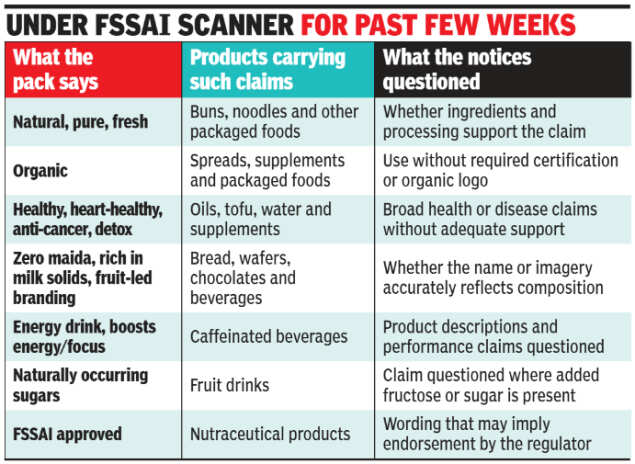
Former FSSAI CEO Pawan Kumar Agarwal says consumers rarely read or fully understand the mandatory information panel. Marketing teams therefore have a powerful incentive to foreground attractive words, sometimes stretching the meaning permitted by regulation. For large companies, he argues, penalties may need to be linked to turnover or the commercial gain from a misleading claim rather than treated as a routine cost.Nutrition experts call this the “health halo” effect: one positive phrase can make the entire product appear healthier and reduce the buyer’s inclination to examine it critically. A packet labelled “natural” can still be high in sugar or sodium. “Sugar-free” does not automatically mean low-carbohydrate. “Organic” requires certification; it is not merely a lifestyle description. Disease-treatment or prevention claims require scientific and regulatory support.AIIMS dietician Monita Gahlot advises shoppers to start with the ingredient list, which records ingredients in descending order by weight. The nutrition panel should then be checked for total and added sugars, saturated and trans fats, sodium, protein and carbohydrates. Serving sizes deserve particular attention: a modest-looking number can be based on a portion far smaller than what people normally consume.
Share your thoughts in the comments
Be respectful · TOI community guidelines
The clearest warning sign, food-testing expert Ashwin Bhadri says, is a bold front claim that is not supported or adequately explained elsewhere on the label. The simplest consumer rule is therefore to turn the packet over before deciding.Food author Krish Ashok argues that companies are not acting in a vacuum. Consumers increasingly seek a purchasable shortcut to good health. Products labelled “high protein”, “low GI”, “A2” or “heart-healthy” can offer the feeling of making a healthy choice without the slower work of eating fewer ultra-processed foods, increasing fibre and protein, exercising and sleeping well.That is why tighter enforcement alone will not end the health halo. Brands must make precise, evidence-backed claims, but consumers must also stop treating the front of a packet as nutritional advice.


