
National Medical Commission on Monday issued new guidelines NEW DELHI: Students with benchmark disabilities seeking admission to MBBS courses will now undergo an individual assessment of their functional abilities to determine whether they can acquire the essential competencies required for the course with reasonable accommodation. The National Medical Commission (NMC) on Monday issued new guidelines requiring medical boards to evaluate each candidate’s functional ability rather than relying solely on the type or extent of disability.Under the new framework, designated Medical Assessment Boards will carry out an individual assessment of every candidate. The guidelines state that applicants cannot be declared ineligible solely on the basis of their diagnosis or the percentage of benchmark disability. Instead, boards must assess a candidate’s functional abilities, the essential competencies required under the Competency-Based Medical Education (CBME) curriculum, and whether reasonable accommodation can enable them to complete the course.”After the Supreme Court’s constant follow-up and directions, the NMC has finally amended its interim guidelines and issued revised guidelines for MBBS admissions of students with disabilities. The biggest change is the shift from assessing eligibility on the basis of the percentage of disability to evaluating functional competency. Clinical accommodations are reasonable modifications that enable medical students with benchmark disability to participate in clinical training and patient care without compromising academic standards or patient safety,” said Prof Satendra Singh, Coordinator of the Enabling Unit at UCMS and GTB Hospital.The guidelines also require medical boards to consider assistive devices, adaptive technology, communication support and other reasonable accommodations before arriving at a decision. Any finding of ineligibility must be supported by objective medical and functional evidence and recorded in writing.While emphasising inclusion, the NMC has said patient safety will remain an important consideration. However, it has directed that decisions should be based on objective medical and functional assessment rather than assumptions or stereotypes about disability.The regulator has also introduced a uniform assessment process, standard eligibility certificates and an appeal mechanism for candidates aggrieved by the decision of the Medical Assessment Board. The guidelines have been issued under the National Medical Commission Act, 2019, read with the Graduate Medical Education Regulations, 2023, and come into force with immediate effect.Get the latest India News and Live updates. Download the TOI app.About the AuthorAnuja JaiswalAnuja Jaiswal is a Senior Assistant Editor at The Times of India, with an impressive 18-year career in narrative journalism. She specializes in health and heritage reporting, expertly simplifying complex health information to make it engaging and understandable for readers. Her deep dives into heritage topics are well-researched, resulting in captivating narratives that resonate with her audience. Over the years, she has worked in Chandigarh, Chhattisgarh and West UP, gaining diverse on-ground experience that shapes her storytelling.Read MoreEnd of ArticleFollow Us On Social MediaVideosSonam Wangchuk’s Wife Slams BJP And Congress, Says Both Use ‘Identical Tactics’ Against CriticsBig Setback For Vijay Govt, Madras High Court Cancels Jobs Order For Karur Victims’ FamiliesKangana Ranaut Slams Gen Z-led CJP Protests, Calls Viral Protest Reels “Puke Inducing” OnlineDelhi Fast Track Court Directs Prosecutor Appointment, Adjourns NEET Accused Bail Pleas Till Aug 3Delhi-Haridwar Highway Traffic Alert: Major Restrictions Announced Ahead of Kanwar Yatra 2026Bombay HC Allows Gadkari To Sue Meta, Google, X Corp Over Defamatory AI Deepfake ContentWhy PM Modi Handed The Education Ministry To Pralhad Joshi?Bihar Police Officer Seen Firing AK-47 At Student Protestors Suspended; Opposition Mounts AttackMEA Debunks Viral Claim Misquoting Randhir Jaiswal On Alleged Foreign Funding Of CJP Protests’Breach Of Trust’: CJP Slams Centre, Says ‘Protesters Arrested In Assam, Bengal, Bihar’123PhotostoriesIs it anxiety or something else? 7 medical conditions that can mimic anxiety symptomsFrom maharanis to modern royals: The evolution of Indian royal ethnic fashionYour lymphatic system depends on movement: Here’s how lymphatic walking may help support better healthDengue can look like a simple viral fever at first: Doctor reveals the warning signs that help tell the difference before complications beginHandloom vs powerloom: Here’s how to tell the difference before you buyWhy ancient Indian brides didn’t use soap before their wedding: The science behind the haldi traditionOptical illusion personality test: The first thing you spot in this picture reveals your true inner power9 must-try Omelettes from around the world and what makes them so popularStudy says screen time may damage brain development in kids under two: 5 simple ways to keep toddlers happy without screensMonsoon Alert: 6 Signs there might be a snake near your home123Hot PicksUP Police Constable ResultB Architecture admissionGold price predictionIndian rupeeUmar KhalidRupaidiha border crossingUP electionsTN supplementary resultsCBSE 12 supplementary examTop TrendingDelhi US Student DeathBihar Bandh ViolenceCWG ScheduleDelhi Metro New Interchange StationsBengaluru Mother SuicideNEET Aspirant SuicideMumbai ProtestJantar Mantar ProtestHarbhajan singhIND U19 vs Sri Lanka U19

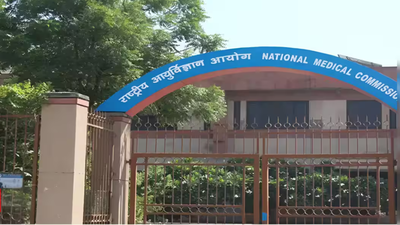
NEW DELHI: Students with benchmark disabilities seeking admission to MBBS courses will now undergo an individual assessment of their functional abilities to determine whether they can acquire the essential competencies required for the course with reasonable accommodation. The National Medical Commission (NMC) on Monday issued new guidelines requiring medical boards to evaluate each candidate’s functional ability rather than relying solely on the type or extent of disability.Under the new framework, designated Medical Assessment Boards will carry out an individual assessment of every candidate. The guidelines state that applicants cannot be declared ineligible solely on the basis of their diagnosis or the percentage of benchmark disability. Instead, boards must assess a candidate’s functional abilities, the essential competencies required under the Competency-Based Medical Education (CBME) curriculum, and whether reasonable accommodation can enable them to complete the course.“After the Supreme Court’s constant follow-up and directions, the NMC has finally amended its interim guidelines and issued revised guidelines for MBBS admissions of students with disabilities. The biggest change is the shift from assessing eligibility on the basis of the percentage of disability to evaluating functional competency. Clinical accommodations are reasonable modifications that enable medical students with benchmark disability to participate in clinical training and patient care without compromising academic standards or patient safety,” said Prof Satendra Singh, Coordinator of the Enabling Unit at UCMS and GTB Hospital.The guidelines also require medical boards to consider assistive devices, adaptive technology, communication support and other reasonable accommodations before arriving at a decision. Any finding of ineligibility must be supported by objective medical and functional evidence and recorded in writing.While emphasising inclusion, the NMC has said patient safety will remain an important consideration. However, it has directed that decisions should be based on objective medical and functional assessment rather than assumptions or stereotypes about disability.The regulator has also introduced a uniform assessment process, standard eligibility certificates and an appeal mechanism for candidates aggrieved by the decision of the Medical Assessment Board. The guidelines have been issued under the National Medical Commission Act, 2019, read with the Graduate Medical Education Regulations, 2023, and come into force with immediate effect.


