
Nasa races to save a falling space telescope in a first-of-its-kind rescue mission using robotic spacecraft

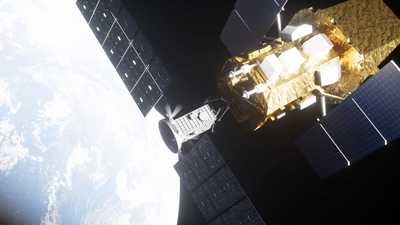
For more than two decades, Nasa’s Neil Gehrels Swift Observatory has acted as one of astronomy’s fastest responders, detecting powerful cosmic explosions and alerting telescopes around the world to investigate them further. But after years in orbit, the spacecraft is now facing an unexpected threat from Earth itself. Increased solar activity has expanded the planet’s upper atmosphere, creating more drag and causing Swift’s orbit to decay much faster than expected. With the observatory losing altitude every month and at risk of burning up in the atmosphere within months, Nasa has launched an ambitious effort to save it. The agency has partnered with Arizona-based Katalyst Space to attempt a pioneering robotic rescue mission that could extend Swift’s life by up to a decade.
Nasa turns to robotic spacecraft to rescue ageing telescope
Launched in November 2004, the Neil Gehrels Swift Observatory was originally designed to study gamma-ray bursts, the most energetic explosions known in the universe. The mission was expected to operate for only two years, but it far exceeded expectations and became one of Nasa’s most valuable space observatories. Over time, however, satellites in low Earth orbit naturally lose altitude due to atmospheric drag. Swift’s problem became more serious during the recent peak in the Sun’s activity cycle. Increased solar radiation heated and expanded Earth’s upper atmosphere, exposing the telescope to greater drag than mission planners had anticipated. Nasa says Swift has already fallen from its original orbit of roughly 600 kilometres above Earth to less than 400 kilometres. The spacecraft is currently descending at a rate that threatens its long-term survival. To prevent the observatory from being lost, Nasa partnered with Katalyst Space in 2025 to develop a robotic servicing spacecraft called LINK. Unlike many modern satellites designed for servicing, Swift was never built to be captured by another spacecraft. That makes the mission significantly more challenging. Engineers had to create a system capable of safely approaching, docking with and moving an ageing spacecraft that lacks dedicated servicing hardware. Katalyst Space completed the roughly 424-kilogram LINK spacecraft in less than a year, an unusually rapid development timeline for a complex orbital mission.
How the rescue mission will work
The mission is scheduled to launch aboard a Northrop Grumman Pegasus XL rocket carried beneath the company’s Stargazer aircraft. Instead of launching from a traditional pad, the aircraft will take off from Kwajalein Atoll in the Pacific Ocean and climb to approximately 40,000 feet. Once released, Pegasus XL will ignite its rocket motors and place LINK into orbit within minutes. After launch, LINK will spend several weeks gradually approaching Swift. The spacecraft will then attempt one of the most difficult manoeuvres in satellite operations: capturing an unprepared spacecraft that was never designed for docking. If successful, LINK will attach itself to Swift and use its propulsion system to slowly raise the observatory into a higher, more stable orbit over the course of several months.
A mission with little room for error
Mission managers describe the effort as a race against time. Nasa estimates Swift is losing altitude by roughly eight kilometres every month. If the observatory falls too low before LINK reaches it, the rescue attempt may become impossible. There are also significant technical risks. Rendezvous operations are among the most complex tasks in spaceflight, requiring extreme precision. Any unexpected movement by Swift, navigation error or mechanical issue could jeopardise the mission. Solar activity remains another major uncertainty. Additional atmospheric expansion caused by solar storms could accelerate Swift’s descent even further while the rescue mission is underway.
Why Swift remains important after 22 years
Despite its age, Swift continues to play a critical role in modern astronomy. The observatory carries instruments capable of observing the universe in gamma-ray, X-ray, ultraviolet and visible light. Astronomers use Swift as an early warning system for sudden cosmic events. When the telescope detects a gamma-ray burst, supernova, black hole flare or other transient phenomenon, it rapidly determines the object’s location and sends alerts to observatories worldwide. The telescope has contributed to thousands of scientific studies and helped researchers investigate everything from distant supernovae and black holes to comets within our own Solar System. According to Swift principal investigator Brad Cenko, the observatory receives more community observation requests each year than any other Nasa astrophysics facility
A potential blueprint for future satellite rescues
Beyond saving a single observatory, the mission could demonstrate a new way of managing spacecraft in orbit. Thousands of satellites currently circle Earth, and many eventually become unusable because they run out of fuel or experience technical problems. If LINK succeeds, similar spacecraft could one day refuel, repair, upgrade or reposition satellites rather than allowing them to become space debris. Industry experts see the mission as a possible turning point in satellite operations, replacing the traditional model of launching spacecraft and abandoning them once their useful lives end.
A historic test for orbital servicing
The Swift Boost mission represents far more than an attempt to save an ageing telescope. It is a test of whether robotic spacecraft can routinely service satellites that were never designed to be touched again after launch. If LINK successfully captures Swift and lifts it into a higher orbit, Nasa will not only preserve one of its most productive observatories but also demonstrate a technology that could transform how humanity manages spacecraft in the decades ahead. For now, however, engineers are focused on a single challenge: reaching a falling telescope before time runs out.


