
Milky Way galaxy can be seen with the naked eye across Arabian skies this August: How to spot it and the best time to watch

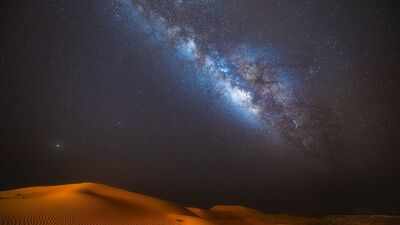
During the whole of August 2026, the night skies over the Arab world are offering a unique opportunity for residents to observe the Milky Way galaxy without any specialised equipment. According to a report by the Saudi Press Agency, this natural display is best viewed from remote locations that are free from the disturbance of light pollution.Majed Abu Zahra, head of the Jeddah Astronomy Society, said that the hazy band which is stretching across the dark sky is an ‘edge-on’ view of our galaxy. This celestial event is happening simultaneously when the absence of moonlight creates the desired conditions for a clear, uninterrupted sight of the stars. Because the summer heat exists on the ground, the cool, dark expanses of the region become prime destinations for the people who are looking to watch the core of our cosmic home with all its natural beauty.
Visibility of Milky Way in the Arabian sky during August
The Saudi Gazette recently highlighted that the striking band of the Milky Way is present over the skies throughout the Arab region, but the quality of the view depends majorly on the surroundings of an observer. The reports say that the most vivid views are found in dark locations which are situated far away from the glow of city lights.‘Ajel English’ suggests that the naked eye can capture the general hazy glow of the galaxy, but using a simple pair of binoculars can reveal a much higher density of clustered stars that might remain hidden to a casual observer. This makes the rural and desert areas of the Arabian Peninsula highly valuable for amateur stargazers, who wish to experience the true scale of the universe without the need for high-tech telescopes.
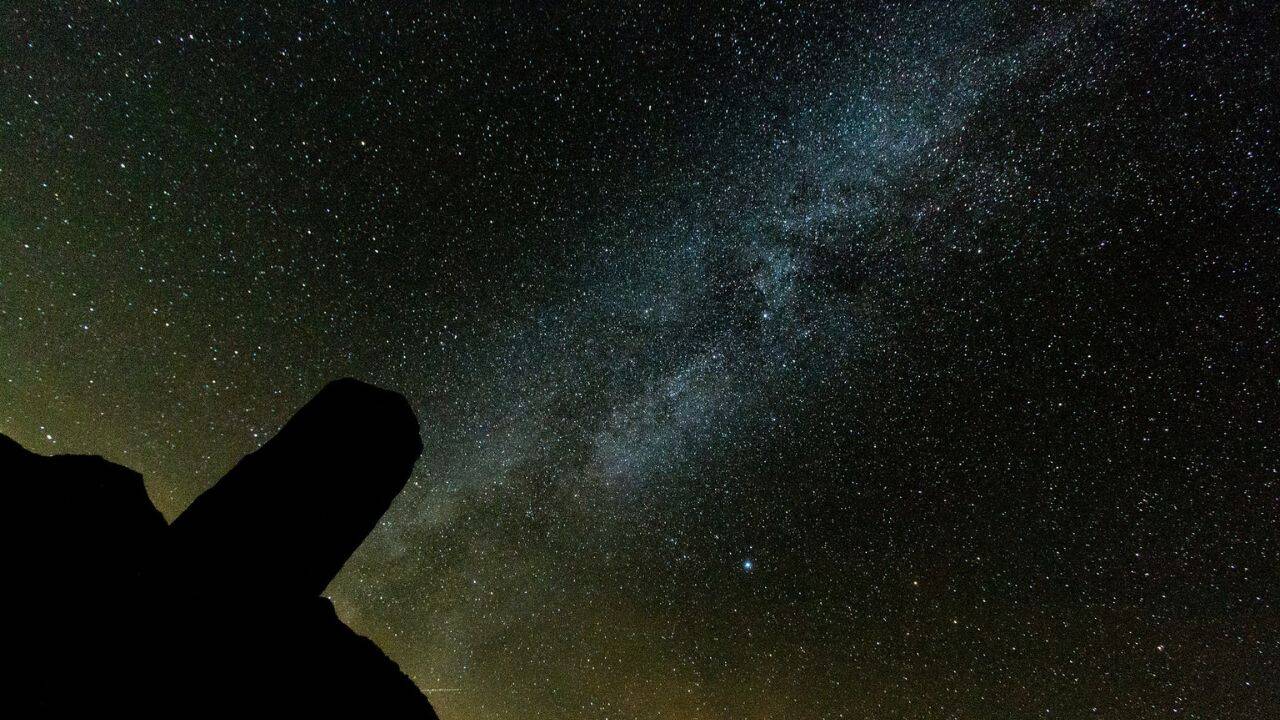
Milky Way. Image Credit: Dario Stalder/Wikipedia
What does the Milky Way look like to a human eye
There is sometimes a clear difference between what we see in professional space photography and what is visible to the human eye. Majed Abu Zahra explained that to a person standing in a dark area, the Milky Way appears as a faint, bright band crossing the sky, but it does not always match the vibrant colours seen in popular images.As per the Ajel English report, cameras are capable of capturing minute details and light that the human eye simply cannot detect, and many of these astronomical images are digitally enhanced for clarity. Despite this, the physical experience of seeing the galaxy’s core(a dense concentration of stars, gas, and cosmic dust) is still a powerful sight for those watching from the ground during these clear August nights.
Why is August such a special time for witnessing the core of galaxy
According to the Saudi Press Agency, summer nights are considered the prime season for looking toward the galaxy. The Jeddah Astronomy Society’s official account on X, clarifies that this is the time of year when the Earth is positioned to offer a direct line of sight towards the most crowded part of the Milky Way galaxy, known as the ‘galactic centre.’Furthermore, the phase of the moon in the coming evenings will make sure that there is very little interference by natural light, which allows the hazy light of millions of stars to stand out clearly against the darkness of space. Stargazers are encouraged to plan their outings during these specific windows to ensure that they can see the hazy band of Milky Way spreading from one horizon to the other, without the glare of the moon hiding the faint light from the galactic core.
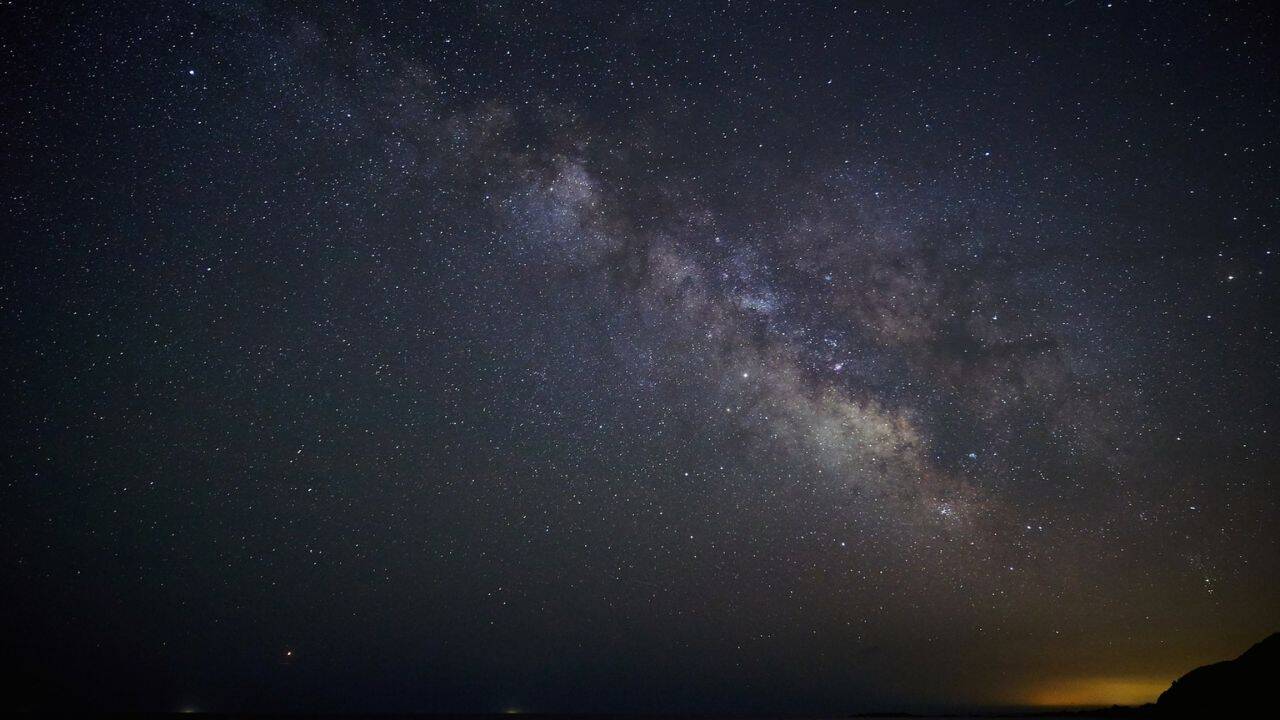
The milky way over the mediterranean sea. Image Credit: Oliver Griebl/Wikimedia commons
How does the Arab region provide such a unique perspective
The Arab world is particularly well-suited for this type of observation because it contains many large, dark areas that are not yet affected by significant light pollution. As reported by the Saudi Press Agency, these locations provide the necessary darkness important to see the ‘side view’ of the galaxy when it cuts across the night sky. The Jeddah Astronomy Society highlights that this phenomenon is a result of looking towards the centre of the Milky Way galaxy, where the density of stars, gas clouds, and cosmic dust is at its highest.


