
Meet Laika: The Moscow stray dog who became the first animal to orbit Earth in 1957, but was never meant to come home

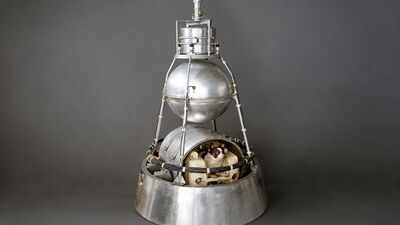
On a cold November morning in 1957, a small stray dog that had wandered the streets of Moscow became part of one of the defining moments of the early Space Age. Her name was Laika. She was placed inside Sputnik 2, a spacecraft built in haste after the Soviet Union’s successful launch of Sputnik just weeks earlier. The mission would make history by carrying the first living creature into Earth orbit, but there was one fact hidden from the public for decades. The capsule had never been built to bring its passenger home. While the Soviet Union presented the flight as a scientific success and later maintained that Laika had survived for several days before dying peacefully, a very different account eventually emerged. Together, official records from Nasa and later admissions from those involved reveal how the mission unfolded behind the headlines. According to PETA, that explanation remained accepted for decades until a scientist involved in Sputnik 2 acknowledged in 2002 that Laika had actually died within hours after the spacecraft’s thermal control system failed.
Why was Laika chosen for the historic Sputnik 2 space mission
Sputnik 2 lifted off on 3 November 1957, less than a month after Sputnik 1 had stunned the world by becoming the first artificial satellite. According to Nasa, the spacecraft weighed around 508 kilograms and was assembled rapidly to maintain the Soviet Union’s momentum in the growing space race. Unlike later missions, there was no recovery system for the animal aboard because the spacecraft had not been designed for a return journey.Laika had been chosen from Moscow’s population of stray dogs. The decision reflected the belief among Soviet scientists that street dogs would be more accustomed to harsh conditions than household pets. She underwent weeks of preparation before launch, but the destination was never intended to include a safe landing. Nasa notes that no provisions existed to recover her after orbit had been achieved, making the mission a one-way experiment from the outset.
What Soviet officials said about Laika’s fate after the Sputnik 2 mission
As Sputnik 2 circled Earth, Soviet officials released updates suggesting that Laika had remained alive for several days before dying without suffering. That explanation became widely accepted and appeared repeatedly in historical accounts for decades.Nasa’s mission summary reflects what was later established. The spacecraft continued operating only briefly before its batteries stopped transmitting scientific data on 10 November 1957. Sputnik 2 itself stayed in orbit for several months before burning up during its return through Earth’s atmosphere on 14 April 1958.For much of the second half of the twentieth century, however, the details of Laika’s final hours remained unknown outside the Soviet programme.
How Laika really died just hours after the Sputnik 2 launch
The official version unravelled in 2002 when one of the scientists associated with the mission publicly acknowledged what had actually happened. Rather than surviving for days, Laika had died only hours after launch because the spacecraft’s cooling system failed, allowing temperatures inside the capsule to rise dramatically.That admission overturned a narrative that had stood for roughly 45 years. Instead of a carefully managed end after several days in orbit, the failure of the thermal control system meant the mission ended almost immediately for its only passenger.As per Nasa, the environmental control system had not been adequately developed for an extended mission and states that Laika most likely survived only a few hours after reaching orbit. The later disclosure brought the agency’s historical account into line with what those directly involved eventually acknowledged.
How Laika’s Sputnik 2 mission changed the future of space exploration
Although Laika did not survive, Sputnik 2 marked another milestone in the early years of space exploration. Nasa records that the flight helped accelerate American efforts to organise a human space programme. Robert Gilruth, who later became the first director of Nasa’s Manned Spacecraft Centre, recalled that seeing the Soviet Union send a dog into orbit underscored how serious the competition had become.The Soviet Union did not immediately repeat the experiment. Nasa notes that it was almost three years before Soviet missions again carried animals into orbit, this time returning them safely to Earth. Those later flights became part of the preparations that eventually led to human spaceflight.Laika’s mission remains tied to two histories at once. It was a landmark in the race beyond Earth’s atmosphere.


