
MEA says passport not a travel document NEW DELHI: A clarification by the ministry of external affairs (MEA) that a passport is “primarily a travel document” and not proof of citizenship has renewed attention on a longstanding legal question – what documents establish Indian citizenship?Speaking at an event marking the 14th Passport Seva Divas, senior MEA official said a passport attests the nationality of Indians when they are abroad but should not be treated as a citizenship document. The remarks come amid wider debates around citizenship documentation and electoral roll verification.Last September, the Supreme Court declined requests from political parties seeking a direction to the Election Commission (EC) to treat Aadhaar as a standalone document for establishing citizenship during the special intensive revision (SIR) of electoral rolls in Bihar. The court observed that Aadhaar’s legal status could not be expanded beyond what is provided under existing law and refused to mandate its acceptance as sole proof of citizenship for voter enrolment.Some FAQs on citizenship:Q. How can Indian citizenship be acquired?According to a PIB Q&A on the National Register of Citizens (NRC), Indian citizenship can be acquired in five ways under the Citizenship Act, 1955:Citizenship by BirthCitizenship by DescentCitizenship by RegistrationCitizenship by NaturalisationCitizenship by Incorporation of TerritoryQ. Is there a single document that proves Indian citizenship?No. India does not issue a single, universally held document that serves as definitive proof of citizenship for all citizens. Citizenship is established based on how it was acquired and the supporting records available under the Citizenship Act.Q. What is direct proof of Indian citizenship?For people who became Indian citizens through registration or naturalisation, a citizenship certificate issued by the government serves as direct proof of citizenship.Q. Is a citizenship certificate issued to every Indian citizen?No. Citizenship certificates are generally issued to people who acquire Indian citizenship through registration or naturalisation. Most Indians who are citizens by birth or descent do not possess a citizenship certificate.Q. What about Indians who acquired citizenship by birth or descent?Most Indians acquire citizenship by birth or descent and may never possess a citizenship certificate. In such cases, citizenship is established through a combination of documents relating to date and place of birth, parentage and nationality.Q. Which documents can help establish citizenship?Depending on the case, these may include:Birth certificatesCitizenship certificates of parentsRecords showing a parent’s Indian citizenshipIndian passports of parentsOther records relating to birth, parentage and nationalityQ. Can an Indian passport be used in citizenship-related applications?Yes. The ministry of home affairs’ citizenship guidelines refer to Indian passports and citizenship certificates as proof of Indian citizenship in applications involving spouses, children or parents of Indian citizens.Q. Are Aadhaar, voter ID and driving licence proof of citizenship?No. Aadhaar cards, voter IDs and driving licences primarily establish identity, residence or electoral registration. They are not considered conclusive proof of citizenship on their own.Q. Why don’t identity documents automatically prove citizenship?Documents such as Aadhaar, voter ID and driving licence are issued for specific purposes such as identity verification, electoral registration or driving privileges. They are not designed to determine citizenship status and therefore are not treated as conclusive proof of citizenship on their own.Q. Why did the MEA say a passport is not proof of citizenship?The MEA clarified that a passport is primarily a travel document that attests the holder’s nationality abroad. Legally, citizenship is determined under the Citizenship Act, while a passport is issued under the Passports Act and does not by itself constitute definitive proof of citizenship in all circumstances.Get the latest India news and live updates. Download the TOI App.About the AuthorTOI News DeskThe TOI News Desk comprises a dedicated and tireless team of journalists who operate around the clock to deliver the most current and comprehensive news and updates to the readers of The Times of India worldwide. With an unwavering commitment to excellence in journalism, our team is at the forefront of gathering, verifying, and presenting breaking news, in-depth analysis, and insightful reports on a wide range of topics. The TOI News Desk is your trusted source for staying informed and connected to the ever-evolving global landscape, ensuring that our readers are equipped with the latest developments that matter most.”Read MoreEnd of ArticleFollow Us On Social MediaVideosEmergency Added to NCERT Class 9 Curriculum, Described as a Major Democratic ChallengeKerala Government Faces Massive Backlash Over Proposed Tax Cut On Low-Alcohol Beverages30 India-Bound Vessels Cross Strait Of Hormuz As 26 More Await Safe PassageAir India Flight AI479 Briefly Crosses Into Pakistan Airspace, DGCA Orders InvestigationTMC MP Mahua Moitra Clarifies After Praise For Suvendu Adhikari Sparks Political Buzz In BengalBengaluru Metro Breakdown Triggers Commuter Chaos As Stranded Passengers Climb Lorries”They Saved Their Goods And Left Us To Die”: Survivor’s Explosive Claims Rock Aliganj Fire ProbeMumbai Local Train Horror: 22-Year-Old Stabbed To Death After Door Dispute, Accused On The RunKolkata Warehouse Roof Collapse: 3 Dead, Several Injured, Rescue Ops UnderwayPM Modi Invited To Ayatollah Khamenei’s Funeral? Tehran Plans Massive Funeral For Khamenei123PhotostoriesIs the world’s coldest town tourist-friendly? Here’s what travellers should knowInland Taipan vs Eastern Brown snake: Which is more commonly seen in the wild and how can you identify them?From letting go Padam Shri to refusing MasterChef India: 3 times Chef Sanjeev Kapoor proved his passion and respect for his professionWhy Danish parents leave babies outside cafés to sleep, even in the snow, and why they believe it’s safeWhat would you do? My partner tracks my location all day and says it’s because he cares; 5 women share what happened nextFrom Gucci store meeting to engagement: Cristiano Ronaldo and Georgina Rodriguez relationship timelineHouse names inspired by the Bhagavad Gita: Meaningful Sanskrit names and their deeper significance60-second money lesson: Why buying in bulk doesn’t always save you money7 South Indian mangoes that stand out for their flavour and aroma’It’s probably something I ate’: Why doctors say this common assumption can sometimes delay a cancer diagnosis123Hot PicksVenezuela earthquakesKetan Agrawal MurderH1-B rowAashna DoshiVinod DoddamaniBihar school timingsTS SSC Supplementary ResultRVUNL RecruitmentMamata BanerjeeTop TrendingDelhi Rape MurderUS-Iran WarITR filing 2025-26FIFA World Cup 2026Venezuela earthquakeICAI CA Inter May resultLucknow coaching fireGold rate todayWho was Ketan AgarwalMumbai rain

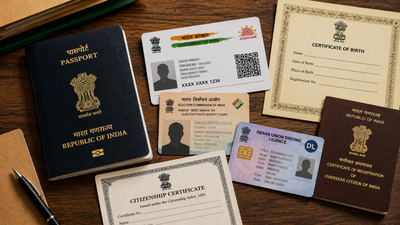
NEW DELHI: A clarification by the ministry of external affairs (MEA) that a passport is “primarily a travel document” and not proof of citizenship has renewed attention on a longstanding legal question – what documents establish Indian citizenship?Speaking at an event marking the 14th Passport Seva Divas, senior MEA official said a passport attests the nationality of Indians when they are abroad but should not be treated as a citizenship document. The remarks come amid wider debates around citizenship documentation and electoral roll verification.
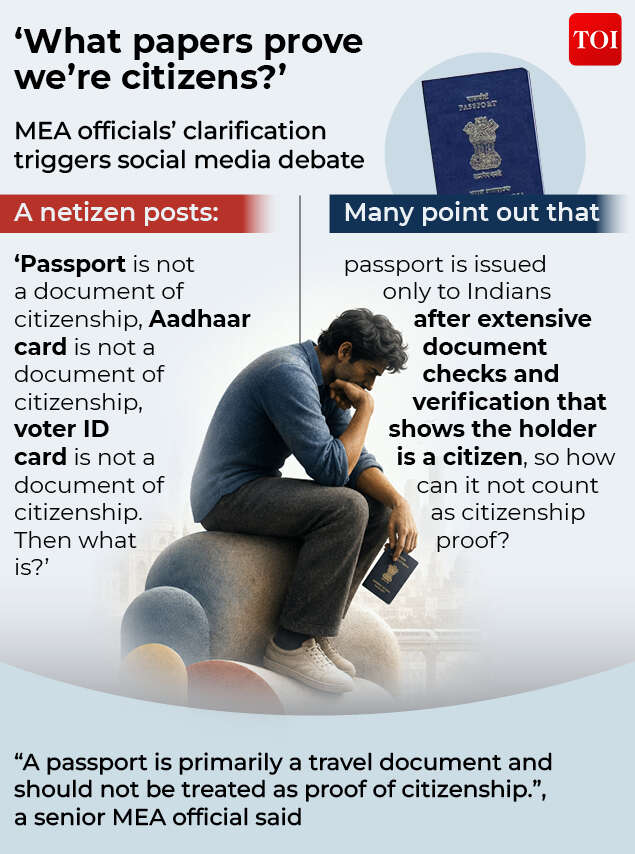
Last September, the Supreme Court declined requests from political parties seeking a direction to the Election Commission (EC) to treat Aadhaar as a standalone document for establishing citizenship during the special intensive revision (SIR) of electoral rolls in Bihar. The court observed that Aadhaar’s legal status could not be expanded beyond what is provided under existing law and refused to mandate its acceptance as sole proof of citizenship for voter enrolment.
Some FAQs on citizenship:
Q. How can Indian citizenship be acquired?
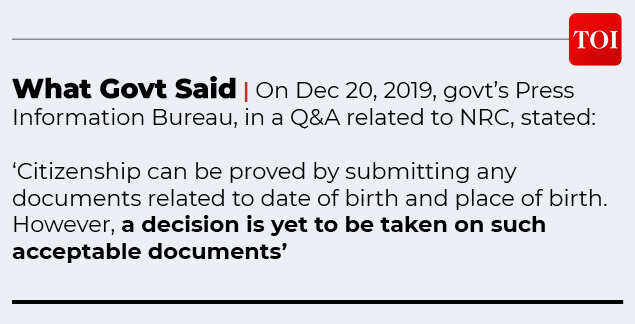
According to a PIB Q&A on the National Register of Citizens (NRC), Indian citizenship can be acquired in five ways under the Citizenship Act, 1955:
Q. Is there a single document that proves Indian citizenship?
No. India does not issue a single, universally held document that serves as definitive proof of citizenship for all citizens. Citizenship is established based on how it was acquired and the supporting records available under the Citizenship Act.
Q. What is direct proof of Indian citizenship?
For people who became Indian citizens through registration or naturalisation, a citizenship certificate issued by the government serves as direct proof of citizenship.
Q. Is a citizenship certificate issued to every Indian citizen?
No. Citizenship certificates are generally issued to people who acquire Indian citizenship through registration or naturalisation. Most Indians who are citizens by birth or descent do not possess a citizenship certificate.Q. What about Indians who acquired citizenship by birth or descent?Most Indians acquire citizenship by birth or descent and may never possess a citizenship certificate. In such cases, citizenship is established through a combination of documents relating to date and place of birth, parentage and nationality.
Q. Which documents can help establish citizenship?
Depending on the case, these may include:
Q. Can an Indian passport be used in citizenship-related applications?
Yes. The ministry of home affairs’ citizenship guidelines refer to Indian passports and citizenship certificates as proof of Indian citizenship in applications involving spouses, children or parents of Indian citizens.
Q. Are Aadhaar, voter ID and driving licence proof of citizenship?
No. Aadhaar cards, voter IDs and driving licences primarily establish identity, residence or electoral registration. They are not considered conclusive proof of citizenship on their own.
Q. Why don’t identity documents automatically prove citizenship?
Documents such as Aadhaar, voter ID and driving licence are issued for specific purposes such as identity verification, electoral registration or driving privileges. They are not designed to determine citizenship status and therefore are not treated as conclusive proof of citizenship on their own.
Q. Why did the MEA say a passport is not proof of citizenship?
The MEA clarified that a passport is primarily a travel document that attests the holder’s nationality abroad. Legally, citizenship is determined under the Citizenship Act, while a passport is issued under the Passports Act and does not by itself constitute definitive proof of citizenship in all circumstances.


