
LUCKNOW: Former Western army commander Lt Gen Manoj Katiyar on Tuesday said Pakistan’s military establishment continues to view proxy warfare as a low-cost strategic tool against India and is unlikely to abandon terrorism as an instrument of state policy despite repeated setbacks.Delivering an address on “Op Sindoor 2.0: Lessons, Strategy and Prognosis”, organised by Lucknow-based strategic think tank STRIVE India with the support of HQ Central Command, Lt Gen Katiyar said the Pakistan army sustains terrorism because it reinforces the military’s internal relevance and fuels its anti-India narrative.In May 2025, the Indian military carried out Op Sindoor, in which formations under the Western Command played a substantial role while Lt Gen Katiyar was serving as general officer commanding-in-chief. He retired from service on March 31, 2026, after completing 40 years in the Army.Referring to India’s progressively escalating responses after terror attacks such as Uri, Pulwama and Pahalgam, Lt Gen Katiyar pointed out that Indian military actions had steadily increased in scale, depth and duration.He emphasized that future Indian responses should go beyond tactical punishment and impose sustained military, political and psychological costs on Pakistan. “Deterrence must gradually evolve into compliance, where the cost of supporting proxy warfare becomes too heavy for Pakistan to sustain,” he said.Hinting at the perception battle surrounding the outcome of Op Sindoor on social media and international platforms, Lt Gen Katiyar further said that in modern conflicts, “victory should be seen to be believed”, stressing the importance of perception management in warfare. “There must be special emphasis on information warfare and cyber warfare, these capabilities would play a decisive role in shaping the perception of victory and degrading the enemy’s war-waging capability,” he said.Highlighting the changing character of warfare, the former army commander said future conflicts would increasingly be multi-domain in nature, unfolding simultaneously across land, air, cyber, space, information and the electromagnetic spectrum.Drawing lessons from Op Sindoor and ongoing global conflicts, he stressed the growing importance of drones, precision strikes, electronic warfare, intelligence fusion and compressed decision-making cycles.He also emphasised about the urgent need for improving military diplomacy to strengthen relations with friendly foreign countries and neighbours.About the AuthorArvind ChauhanWhen he’s not chasing stories, you’ll likely find him exploring food lanes, indulging in mutton delicacies and sundaes. He is a journalist with a can-do spirit and a flair for compelling storytelling. From railways and aviation to defence, infrastructure, social development and various other diverse beats, his reportage reflects depth. His work has earned him the Times Scribe Award four times.Read MoreEnd of ArticleFollow Us On Social MediaVideosGovt Hikes Gold & Silver Import Duty To 15% | Modesty Push Or Economic Warning?PM Modi Pushes Major Austerity Drive, Orders Reduction In Convoy Size And Fuel Consumption MeasuresPM Modi Pushes Major Austerity Drive, Orders Reduction In Convoy Size And Fuel Consumption MeasuresRahul Gandhi Submits Dissent Note On CBI Chief Selection After Key Meet At PM Modi’s Residence‘India Should Not Close Doors For Dialogue With Pakistan’: RSS General Secretary HosabaleVijay Appoints Astrologer As OSD In Tamil Nadu Govt, TVK Allies Call It ‘Unacceptable’Kerala CM Race Heats Up, KC Venugopal Emerges Frontrunner As Rahul Gandhi Holds KeyNEET-UG 2026 Cancelled: NTA Confirms WhatsApp Leak, Announces Refunds & CBI ProbeVijay Meets AIADMK Rebels As EPS Faces Internal Revolt Before Key Assembly VoteIndia Has 60 Days Of Crude Oil LNG; 45 Days Of LPG; Oil Firms Losing ₹1,000 Cr A Day: Hardeep Puri123PhotostoriesSurviving Snake Island in Brazil; 5 disturbing facts about the world’s most dangerous island every traveller should knowInside Shah Rukh Khan and Gauri Khan’s lavish house Mannat: Rare art collection and striking paintingsCan motherhood and career truly go together? This is what Sadhguru says7 ancient temple dishes that have survived for centuries8 easy-to-grow wildflowers that attract butterflies and bees for natural pollination7 days, 7 Hindu gods: The spiritual meaning behind every day of the weekWhy milk-moisturising can irritate certain skin types10 baby boy names inspired by mythological heroes and cosmic warriorsThrowback to Aishwarya Rai Bachchan’s Cannes saree looks that outslayed every gown on the red carpetWalking 10,000 steps every day? Orthopedic doctors reveal when this popular fitness goal may secretly damage your knees and joints123Hot PicksCBSE class 12 resultUS Iran warBandi Sanjay KumarPune child rape-murder caseLPG stockNEET exam cancelledModi on Gold and WFHTop TrendingOil Price TodayTamil Nadu NewsIPL Points TableFifa World Cup 2026 ScheduleVijay AstrologerHimanta Biswa SarmaIPL Orange Cap 2026AIADMK splitICE CrackdownPrateek Yadav

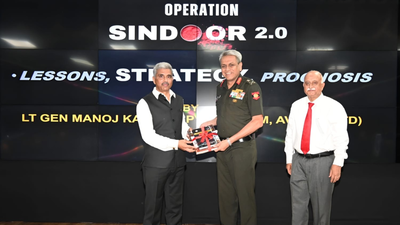
LUCKNOW: Former Western army commander Lt Gen Manoj Katiyar on Tuesday said Pakistan’s military establishment continues to view proxy warfare as a low-cost strategic tool against India and is unlikely to abandon terrorism as an instrument of state policy despite repeated setbacks.Delivering an address on “Op Sindoor 2.0: Lessons, Strategy and Prognosis”, organised by Lucknow-based strategic think tank STRIVE India with the support of HQ Central Command, Lt Gen Katiyar said the Pakistan army sustains terrorism because it reinforces the military’s internal relevance and fuels its anti-India narrative.In May 2025, the Indian military carried out Op Sindoor, in which formations under the Western Command played a substantial role while Lt Gen Katiyar was serving as general officer commanding-in-chief. He retired from service on March 31, 2026, after completing 40 years in the Army.Referring to India’s progressively escalating responses after terror attacks such as Uri, Pulwama and Pahalgam, Lt Gen Katiyar pointed out that Indian military actions had steadily increased in scale, depth and duration.He emphasized that future Indian responses should go beyond tactical punishment and impose sustained military, political and psychological costs on Pakistan. “Deterrence must gradually evolve into compliance, where the cost of supporting proxy warfare becomes too heavy for Pakistan to sustain,” he said.Hinting at the perception battle surrounding the outcome of Op Sindoor on social media and international platforms, Lt Gen Katiyar further said that in modern conflicts, “victory should be seen to be believed”, stressing the importance of perception management in warfare. “There must be special emphasis on information warfare and cyber warfare, these capabilities would play a decisive role in shaping the perception of victory and degrading the enemy’s war-waging capability,” he said.Highlighting the changing character of warfare, the former army commander said future conflicts would increasingly be multi-domain in nature, unfolding simultaneously across land, air, cyber, space, information and the electromagnetic spectrum.Drawing lessons from Op Sindoor and ongoing global conflicts, he stressed the growing importance of drones, precision strikes, electronic warfare, intelligence fusion and compressed decision-making cycles.He also emphasised about the urgent need for improving military diplomacy to strengthen relations with friendly foreign countries and neighbours.


