
Kerala’s Sabarimala Temple (File photo) New Delhi: Midway through the ‘faith vs fundamental right’ debate emanating from the customary ban on entry of women in the 10-50 years age group into the Sabarimala Ayyappa temple, a Hindu party on Tuesday requested a nine-judge Supreme Court bench to review its 30-year-old judgment declaring Hinduism as a “way of life”.Articulating the objection to the ruling in the 1996 Ramesh Yeshwant Prabhoo judgment by a three-judge bench that Hinduism “may broadly be described as a way of life and nothing more”, a lawyer appearing for the Hindu party said Hinduism is not a way of life, but a oceanic confluence and assimilation of infinite number of distinct religious beliefs and faiths.During the ninth day of proceedings before a bench of CJI Surya Kant and Justices B V Nagarathna, M M Sundresh, A Amanullah, Aravind Kumar, A G Masih, P B Varale, R Mahadevan and J Bagchi, advocate D V Singh said that in order to decide what constituted an essential Hindu religious practice, the court must decide what is “Hinduism and Hindu Dharma”, and suggested that SC could take help of the Bhagavad Gita for this.This mirrored senior advocate M R Shamshad’s request on Thursday to the nine-judge bench to review the 1994 Ismail Faruqui judgment by a five-judge bench, which while rejecting the challenge to govt acquisition of the then-disputed Ram Janmabhoomi-Babri Masjid site had ruled that mosque is not essential for offering namaz. He had said masjid is the spirit of Islam and constituted core belief of Muslims.In the Ramesh Yeshwant Prabhoo judgment, SC had said, “When we think of Hindu religion, we find it difficult, if not impossible, to define Hindu religion or even adequately describe it.””Unlike other religions in the world, Hindu religion does not claim any one prophet; it does not worship any one God;it does not believe in any one philosophic concept; it does not follow any one set of religious rites or performances; in fact, it does not appear to satisfy the narrow traditional features of any religion or creed. It may broadly be described as a way of life and nothing more,” the court had said.”Ordinarily, Hindutva is understood as a way of life or a state of mind, and it is not to be equated with or understood as religious Hindu fundamentalism… The words ‘Hinduism’ or ‘Hindutva’ are not necessarily to be understood and construed narrowly, confined only to the strict Hindu religious practices unrelated to the culture and ethos of the people of India, depicting the way of life of the Indian people,” it has said in the judgment.In the Ismail Faruqui judgment, SC had ruled, “A mosque is not an essential part of practice of the religion of Islam and Namazby Muslims can be offered anywhere, even in the open. Accordingly, its acquisition (of disputed site) is not prohibited by the provisions in the Constitution of India.”End of ArticleFollow Us On Social MediaVideosBengal Phase 2 Polls: 142 Constituencies Vote Today, Over 3.21 Crore Voters to DecideChokepoints of Power: how India can ‘trump’ China on the seasSwati Maliwal’s Explosive Exit: Assault Allegations, ‘Betrayal’ Charges Rock AAP As She Joins BJPIndian Aviation Sector Warns Of Possible Shutdown Amid Soaring Fuel CostsUNGA Chief Hails India’s Global Role, Calls India’s Leadership Central To MultilateralismIndia To Receive Fourth Unit Of S-400 Missile Systems From Russia, To Be Deployed In RajasthanISRO-s Big Shift- Civilians To Join Gaganyaan Missions – India-s Space Programme Expands”Online Radicalisation Led To…” Maharashtra CM On ISIS-Inspired AttackIndia’s Defence Spending Hits $92 Bn, Becomes World’s 5th Largest Amid Global Military SurgeIs Rafale deal with France stuck? Will India’s demand for access scuttle fighter deal?123Photostories10 royal baby boy names inspired by kings and warriorsSuhana Khan returns in liquid gold in an Arpita Mehta saree that refuses to be ignoredMorning affirmation at 5am: Feeling lost? This might helpFrom tasting success and popularity after playing Samar to being ousted overnight from Anupamaa: Paras Kalnawat on his journeyKate Middleton dips into Princess Diana’s 1995 Germany look with sapphire earrings from the royal jewellery archivesAhead of ‘The Devil Wears Prada 2,’ buzz around the threequel adds to fans’ anticipation – here’s what we knowWhy BTS K-pop star Jungkook’s basic bodyweight routine may be more effective than your gym plan5 longest train journeys in the world: Did you know India has one?10 things you should walk away from— No regrets, no looking back5 simple brain exercises that can boost memory without apps or tools123Hot PicksAmit ShahMamata BanerjeeBengal Women VotersPM Rally GunfireAssembly Election 2026Bengal Oath CeremonyTrinamool CongressTop TrendingSaeed Sheikh AfridiExit Poll results 2026PM modiSalim DolaAssam HS 12th ResultManish SisodiaMumbai Watermelon Poisoning newsBengal PollsJack GrealishIPL Orange Cap

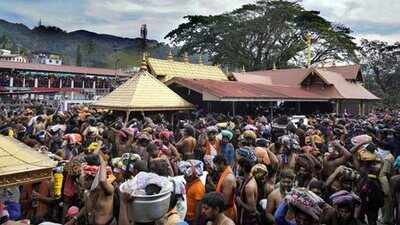
New Delhi: Midway through the ‘faith vs fundamental right’ debate emanating from the customary ban on entry of women in the 10-50 years age group into the Sabarimala Ayyappa temple, a Hindu party on Tuesday requested a nine-judge Supreme Court bench to review its 30-year-old judgment declaring Hinduism as a “way of life”.Articulating the objection to the ruling in the 1996 Ramesh Yeshwant Prabhoo judgment by a three-judge bench that Hinduism “may broadly be described as a way of life and nothing more”, a lawyer appearing for the Hindu party said Hinduism is not a way of life, but a oceanic confluence and assimilation of infinite number of distinct religious beliefs and faiths.During the ninth day of proceedings before a bench of CJI Surya Kant and Justices B V Nagarathna, M M Sundresh, A Amanullah, Aravind Kumar, A G Masih, P B Varale, R Mahadevan and J Bagchi, advocate D V Singh said that in order to decide what constituted an essential Hindu religious practice, the court must decide what is “Hinduism and Hindu Dharma”, and suggested that SC could take help of the Bhagavad Gita for this.This mirrored senior advocate M R Shamshad’s request on Thursday to the nine-judge bench to review the 1994 Ismail Faruqui judgment by a five-judge bench, which while rejecting the challenge to govt acquisition of the then-disputed Ram Janmabhoomi-Babri Masjid site had ruled that mosque is not essential for offering namaz. He had said masjid is the spirit of Islam and constituted core belief of Muslims.In the Ramesh Yeshwant Prabhoo judgment, SC had said, “When we think of Hindu religion, we find it difficult, if not impossible, to define Hindu religion or even adequately describe it.”“Unlike other religions in the world, Hindu religion does not claim any one prophet; it does not worship any one God;it does not believe in any one philosophic concept; it does not follow any one set of religious rites or performances; in fact, it does not appear to satisfy the narrow traditional features of any religion or creed. It may broadly be described as a way of life and nothing more,” the court had said.“Ordinarily, Hindutva is understood as a way of life or a state of mind, and it is not to be equated with or understood as religious Hindu fundamentalism… The words ‘Hinduism’ or ‘Hindutva’ are not necessarily to be understood and construed narrowly, confined only to the strict Hindu religious practices unrelated to the culture and ethos of the people of India, depicting the way of life of the Indian people,” it has said in the judgment.In the Ismail Faruqui judgment, SC had ruled, “A mosque is not an essential part of practice of the religion of Islam and Namazby Muslims can be offered anywhere, even in the open. Accordingly, its acquisition (of disputed site) is not prohibited by the provisions in the Constitution of India.”


