
Kentucky family rejects $26 million offer to buy portion of their farm land for ‘poison’ AI data center, says ‘we know we’ve had it’

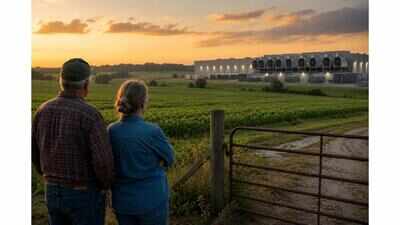
A Kentucky family has reportedly rejected an anonymous company’s approach to turn a part of their farmland into an AI data centre. According to a report by WKRC (via Tom’s Hardware), land owner Ida Huddleston and her family were offered an extraordinary $26 million by the company which is presumed to be one of the major players in the industry. Despite the huge offer, the family refused to sell the land, which they have owned and farmed for generations. Huddleston said protecting farmland, food and natural resources was more important than the money.“They call us old stupid farmers, you know, but we’re not,” Huddleston said. “We know whenever our food is disappearing, our lands are disappearing, and we don’t have any water—and that poison. Well, we know we’ve had it.”
Kentucky family says $26 million ‘doesn’t mean anything’
The Huddleston family owns around 1,200 acres of farmland in Mason County in Northern Kentucky. According to the report, the AI company wanted to buy roughly half of the property to build a large data centre.The offer was significantly higher than typical land prices in the area. Farmland in Mason County reportedly sells for around $6,000 per acre, but the company offered the family $26 million – nearly 10X the local land value for the land it wanted to acquire.However, the family said its connection to the property goes beyond its financial value. Huddleston’s daughter, Delsia Bare, said generations of their family have farmed the land and produced food for other families. She said their ancestors also grew wheat during the Great Depression and helped supply food when many Americans were struggling.“Stay and hold and feed a nation,” Bare told WKRC. “$26 million doesn’t mean anything.”
AI data centres lead to concerns over land, electricity and water
The offer comes as technology companies are rapidly expanding AI infrastructure across the US. The growing use of generative AI requires companies to build large data centres packed with computing equipment.However, the expansion has also faced opposition in some communities because data centres can require large amounts of electricity and water. Residents in some areas have raised concerns about their possible impact on local power grids, water supplies and surrounding land.The company that approached the Huddleston family has not been identified. According to the report, however, it has also approached other landowners in the surrounding area. Bare said some nearby property owners have agreed to sell their land. This means that despite the Huddleston family’s refusal to accept the $26 million offer, the company could still potentially build its proposed AI data centre elsewhere in the area.


