
Kazakhstan’s Caspian tiger was declared extinct due to hunting by the military and prey reduction, now the country has released its first tiger in the wild after 70 years


The last individual tiger in Kazakhstan was documented in 1948 near the Ili River and Lake Balkhash before the animal went extinct from the country. Till then, the country had been home to the native Caspian (Turan) tiger, but a combination of factors led to their extinction from their homeland.Now, it seems the land of the great steppe may soon be filled with roars from tigers as the country has released adult Amur tigers into the wild after a whopping 70 years. According to the Kazakh Ministry of Ecology and Natural Resources, two adult tigers transferred from Russia are expected to be released within the next month if they successfully complete the final stage of behavioural assessment.
A loss of a lifetime
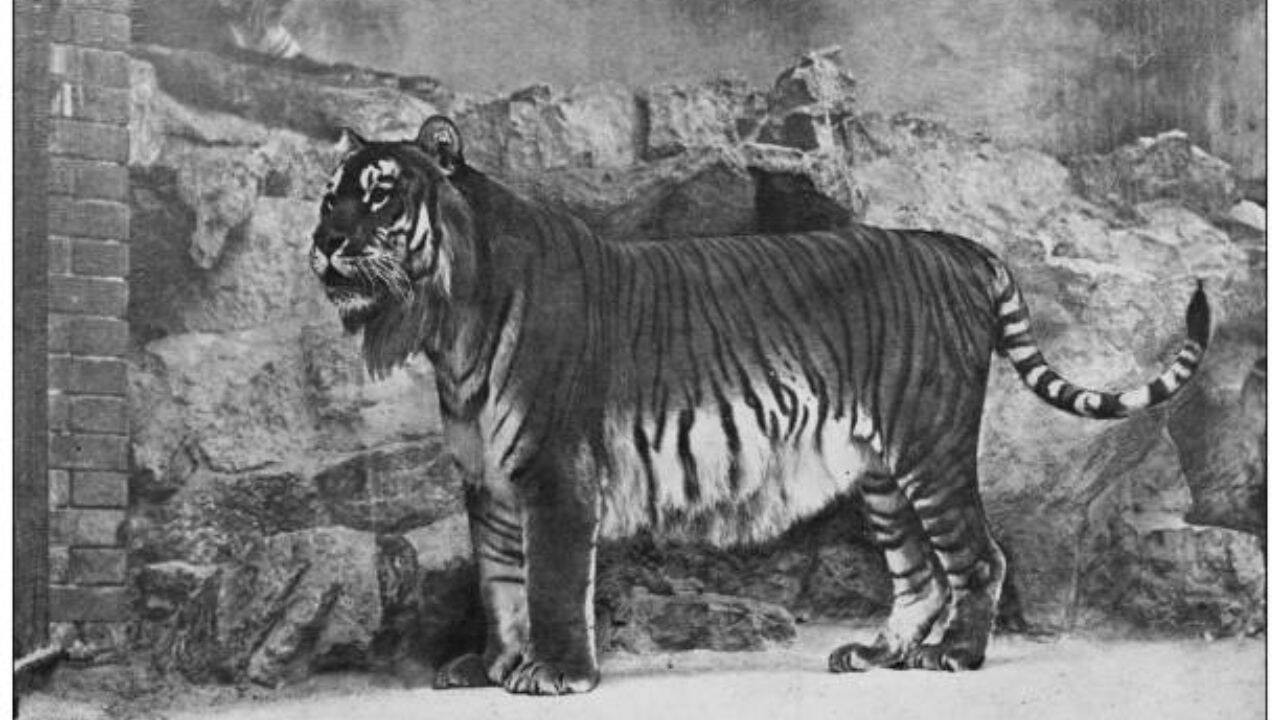
Caspian tigers went extinct from Kazakhstan
Tigers once roamed across Central Asia, part of their historic range, an area that once extended from Turkey in the west to the Korean peninsula in the east, and from the northern Siberian territories of Russia to the equatorial tropical islands of Indonesia.However, by the 1940s, tigers had completely disappeared from Kazakhstan. This was due to the conversion of land into cotton fields and the mass extermination of tigers, which were then considered harmful predators. Other factors contributing to the decline and eventual disappearance of tigers were the construction of railways and widespread hunting by settlers for trophies. Scientists identify human expansion into natural tiger habitats, such as the steppes, as the main reason for the Turanian tiger’s extinction.In Kazakhstan, tigers were also actively hunted and persecuted. Since 1891, special hunts involving soldiers and dedicated units were conducted, leading to the extermination of tigers and the destruction of their habitat. Moreover, prey populations were also decimated by unregulated hunting. The Bukhara deer, for instance, went extinct in the region in 1912.By the mid-1960s, the Turanian tiger was listed in the Red Book of the International Union for Conservation of Nature (IUCN).
Bringing the tigers back
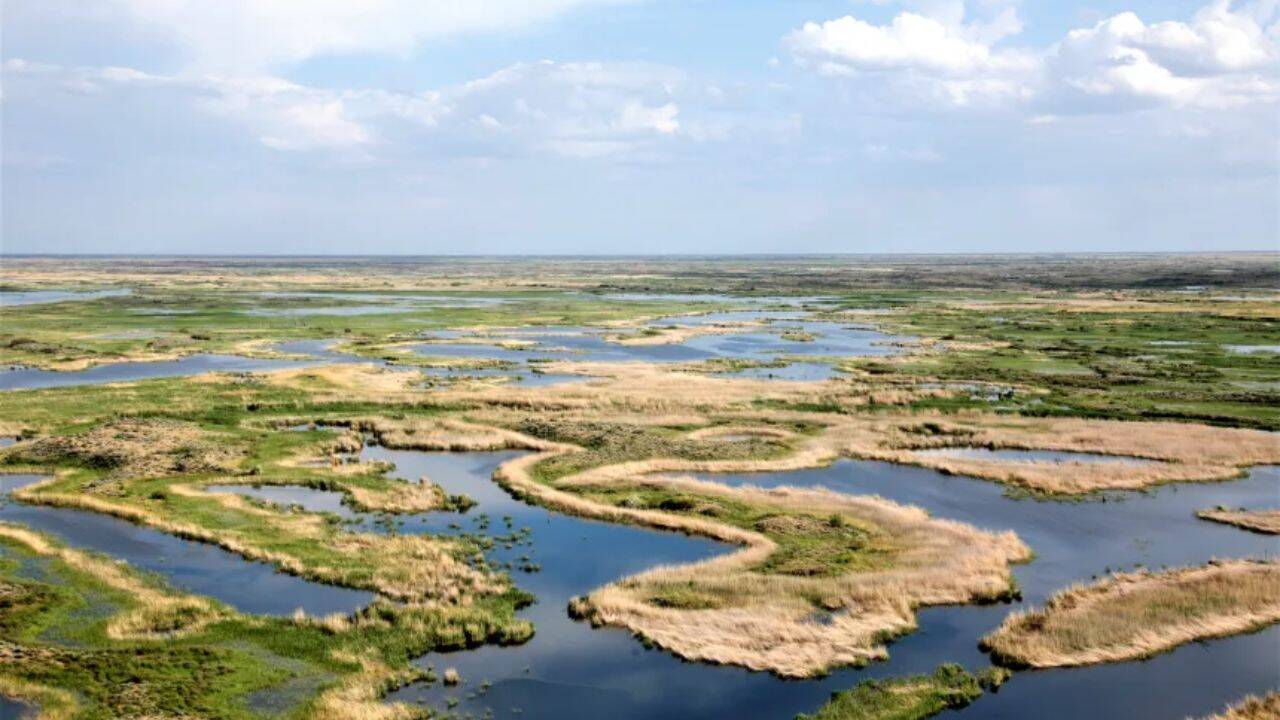
In 2010, the International Tiger Conservation Summit was held in St. Petersburg. At this forum, attended by heads of governments, a Global Tiger Recovery Program was adopted, aiming to double the number of wild tigers by 2022. It was here that Kazakhstan first announced its intention to bring back tigers in 2010. The country’s Ile-Balkhash State Nature Reserve which was established by the government in 2018, had still been devoid for years. The delta ecosystem which occupies around 4,151 square kilometres across the country’s Almaty and Balkhash region was devoid of large mammals, and its scrub, marshland and woodland were degraded.The efforts, supported by WWF and the United Nations Development Programme, included large release programs of tiger prey such as the endangered Bukhara deer and Kulan, some of which hadn’t been seen in the region in a century. Strict hunting regulations were also put in place, which allowed the wild pig population to bounce back, too.According to WWF, the entire effort was mapped across 15 years, including three key stages. First was habitat preparation that began in 2018 and lasted till 2024. Then, began the release phase which will last another nine years, until 2033. Finally, the programme monitoring will start in 2033 and continue for at least 15 years. This involves control and population monitoring, developing sustainable management, ecological tourism and so on.
The Amur tigers
A female Amur tiger, Umit was released at the Ile-Balkhash State Nature Reserve, the Ecology Ministry announced on August 3.
In 2009, an international team of biologists conducted genetic research (Driscoll et al., 2009) on DNA samples of tigers from Central Asian museum collections. By comparing these samples with those of other tiger populations, scientists concluded that the DNA of the Turan and Amur tiger populations are identical.Before launching a program, scientific studies were required to identify suitable habitats for the predator’s return and to assess potential outcomes of reintroduction under various scenarios. Seven years later, a Reintroduction Program was developed, and in September 2017, a Memorandum of Understanding between WWF and the Government of Kazakhstan was signed to implement the tiger restoration program in Central Asia. The signing ceremony took place at the Kingdom of the Netherlands Pavilion during EXPO-2017 in Kazakhstan.On July 31, a female Amur tiger, Umit was released at the Ile-Balkhash State Nature Reserve, the Ecology Ministry announced on August 3. “Today we witnessed a truly historic event,” Ecology Minister Yerlan Nysanbayev said. He described the release as the result of more than a decade of work by Kazakhstan, Russian specialists, scientists, and international conservation partners. The adult male tiger, also named Amur, remains under observation and must complete further behavioural assessments before any release. Two cubs, Turan and Ussuri, will remain in prepared enclosures until they are at least 18 months old. Officials will assess each animal separately.The four wild-caught tigers arrived from Russia’s Khabarovsk region in May. They joined Bogdana and Kuma, two captive Amur tigers transferred from the Netherlands in September 2024 for breeding. The Dutch pair will remain in an enclosure, while suitable offspring may later be prepared for release.As of now, veterinarians and wildlife specialists are assessing whether the adult tigers can consistently hunt live prey while avoiding human interaction. According to the ministry, both animals remain in good physical condition and have demonstrated behaviour consistent with wild predators.
Coexisting with local communities
According to wildlife experts, releasing the tigers is only half the challenge. Long-term success depends equally on preventing conflict between predators and nearby communities. Recognising this, Kazakhstan has developed an extensive conflict-prevention system before the first release takes place.Every released tiger will carry satellite and radio collars allowing specialists to monitor movements around the clock. A dedicated anti-conflict team has already been established within the reserve to respond should an animal approach populated areas. Local residents will receive individual notifications whenever a tiger approaches within five kilometres of a settlement or residence. A dedicated hotline has also been operating since May 2025.Authorities have also established a livestock compensation mechanism supported by international partners. If a tiger attacks domestic animals, owners will be compensated through a specially created compensation herd, reducing the financial burden on local communities and lowering incentives for retaliation against predatorsIn the coming months, the project will be most closely watched in order to ensure the success of the scientifically significant phase.
![Jana Nayagan Full Movie Collection: ‘Jana Nayagan’ box office collection day 14 [Live]: Vijay and Pooja Hegde starrer eyes Rs 215 crore milestone despite weekday dip | Tamil Movie News](https://vknewstoday.in/wp-content/uploads/1785921335_photo.jpg "Jana Nayagan Full Movie Collection: ‘Jana Nayagan’ box office collection day 14 [Live]: Vijay and Pooja Hegde starrer eyes Rs 215 crore milestone despite weekday dip | Tamil Movie News")

