
Inside China’s new $517 million natural history museum that takes visitors from the cosmos to human evolution, featuring meteorites, dinosaurs and a river-inspired design | World News

The Shenzhen Natural History Museum was finally opened to the public on 28 July 2026, which makes it the first large-scale institution of its kind in southern China, dedicated to natural history. Located in the Pingshan District, this world-class facility is part of the ‘Ten Cultural Facilities of the New Era’ initiative, representing a total investment of approximately US$517 million, as reported by the South China Morning Post.According to the Shenzhen Government, the museum occupies a site of roughly 42,000 square metres, featuring a total floor area of 105,300 square metres, which also includes 35,200 square metres dedicated to exhibitions. This project aims to be a centre for collecting, researching, and delivering natural science education to visitors from across the world. The museum serves as a connection between the history of our planet and the modern urban landscape of Shenzhen.
What is the inspiration behind China’s new $517 million natural history museum
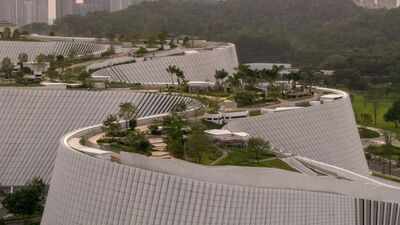
According to the South China Morning Post, the building was designed by a consortium including the Danish firm 3XN, the Canadian firm B+H Architects, and the Chinese firm Zhubo Design. This team was selected through an international competition that collected over 70 proposals from around the world. This winning design is inspired by a river delta, resulting in a free-flowing, curvilinear structure that appears to flow through the landscape.The Shenzhen Government reports that the ‘river’ concept is central to the project’s identity, putting the foundational idea of water into the layout and functional design. One of the most remarkable features of this building is the green rooftop park, which allows the facility to blend smoothly with the surrounding natural environment. Inside, the building contains not only permanent and temporary galleries but also research labs, a 1,100-seat nature theatre, and three separate cinemas. This combination of science and design creates a ‘living educational landscape’.
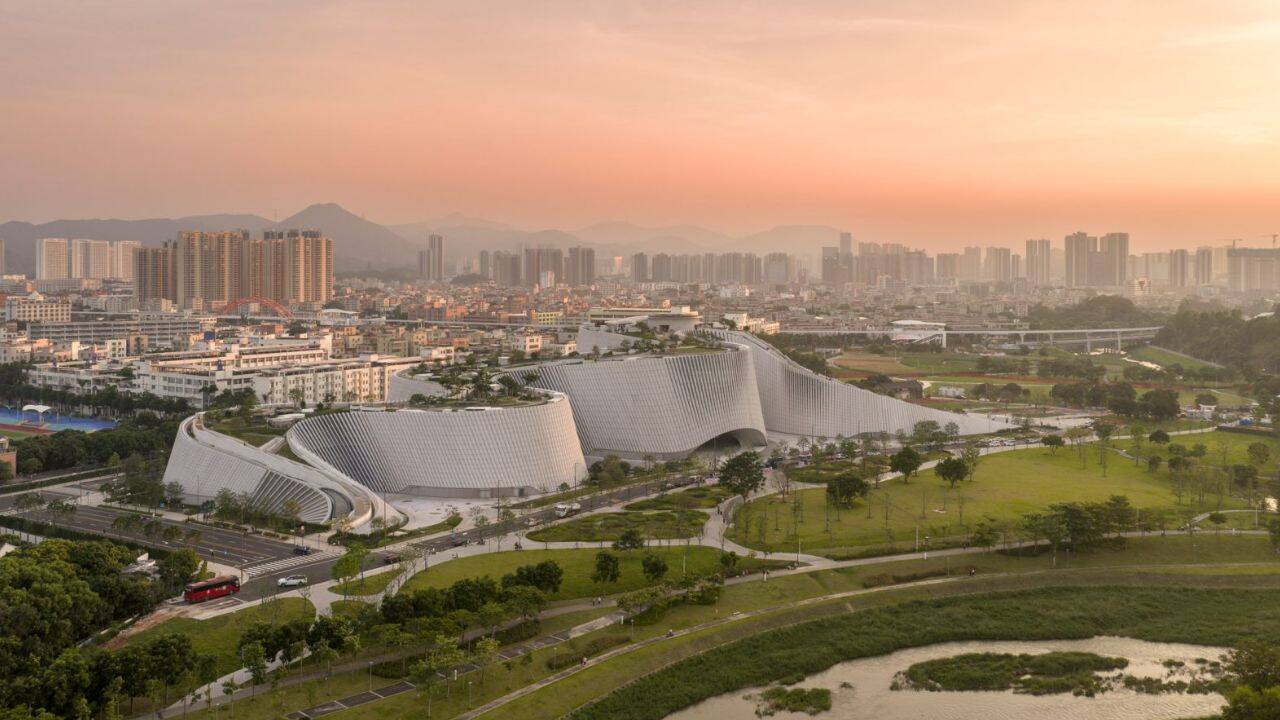
Image Credit: dezeen.com
Journey starts from the Cosmos and returns back to Earth
The museum exploration begins at the very start of time. As per the Shenzhen Government, the journey commences in the Cosmos Hall. This gallery displays humanity’s long-standing quest to understand the universe through ancient star charts, astrolabes, and telescopes. One of the most significant features of this hall is the collection of ‘real meteorite samples’ from outer space, allowing visitors to see objects that have travelled millions of miles to reach Earth.Next stop is the Earth Hall which focuses on the 4.6-billion-year journey of our planet. This gallery highlights how plate tectonics and natural forces have shaped the landforms of China. It also examines the rocks and minerals that provided the foundations of development of early human civilisation.
What secrets lie within the Dinosaur Hall of the museum
The Dinosaur Hall is one of the museum’s most awaited sections, focusing on creatures that dominated the Earth during the Mesozoic era. While dinosaur exhibitions are popular worldwide, Shenzhen Government points out that this hall specifically highlights local research stories and major discoveries from the Guangdong and Jiangxi regions. This provides a regional perspective on these ancient animals, showing fossils and body structures that were found in the soil of southern China.Instead of simply displaying the bones, the hall explores the habits and environments of dinosaurs. It also provides scientific theories about their extinction and the current state of dinosaur studies in China.
Story of human life portrayed by the museum
The Evolution Hall and the Human Hall takes the focus to the development of life as we know it today. The Evolution Hall traces a 3.8-billion-year history, covering the origin of life and the birth of evolutionary thinking, including Darwin’s breakthrough ideas on genetic adaptation. This gallery displays how life transformed from its earliest, simplest traces into the complex world we live in today.The Human hall covers the history of primates and the arrival of humans. This hall connects fossils found in Africa and Eurasia with those found in China, providing a detailed view of the human journey. It contains fossils from the Guangdong and Guangxi areas.
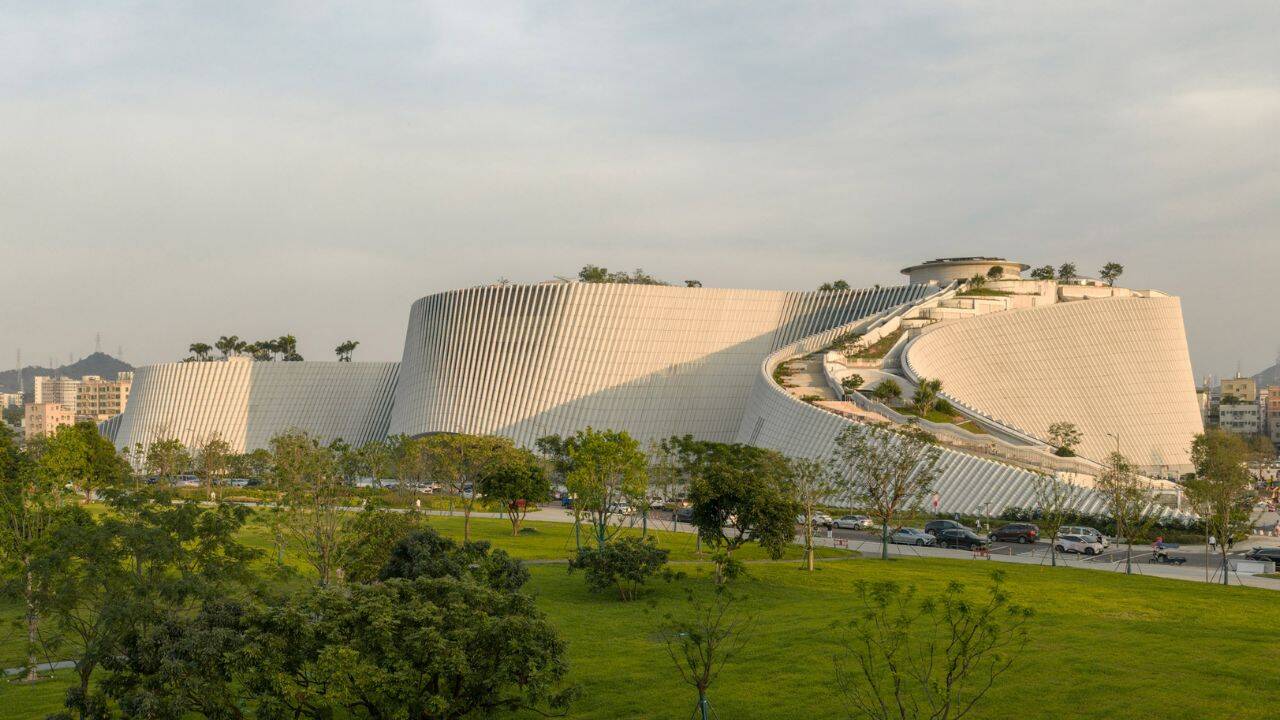
Image Credit: dezeen.com
Galleries displaying the delicacy and balance of our natural world
The Biology Hall examines survival strategies such as flight, camouflage, and cooperation along with extinction and the vulnerability of life. The Ecology Hall covers the relationship between organisms and environments like forests, oceans, and polar regions. It reminds the visitors that no habitat can exist in isolation and the balance within nature should be protected.The Homeland hall focuses on the city of Shenzhen. This gallery displays the city’s geography, including its mountains, seas, and subtropical habitats. It highlights the various species that live alongside the human population, from migratory birds to protected local animals. This hall serves as a reminder that a modern city can become sustainable by living in harmony with nature.


