
Indians once threw away their hair, now it’s exported to China as ‘black gold’: Inside the billion-dollar industry operated by the two countries


The hair that you comb out every day and throw in the dustbin might as well be worth millions. There was a time when this was all that was supposed to be. But now, selling your hair in the market is an option that yields a return based on the amount you sell.This entire operation is centred around two countries, India and China. While the two might fight on the borders, when it comes to business, it seems they get right down to it.
From hair to wigs
The wig capital of the world, Xuchang, is located in the heart of Henan province in China. This is not just a modern business, but stems from an old tradition. The city has a history of working with hair that spans generations and has grown stronger in recent decades, coming to dominate the global market.Slowly, local entrepreneurs gathered small workshops and created large manufacturers, including Rebecca Hair, which is the largest wig manufacturer in the world.In Xuchang, hair is called ‘black gold’. The best hair, long and untreated, reaches extremely high prices and is sought after by buyers who travel the world in search of raw material. The hair is sorted by length, colour and texture and the rarer and better in quality it is, the higher the price. A good natural hair wig can cost the equivalent of an entire salary.Earlier, wigs were an accessory of the nobles and a symbol of power, donned by kings and judges to impose respect. But now, it has become an item of mass consumption linked to fashion, beauty and entertainment, but also health.
From hair to head
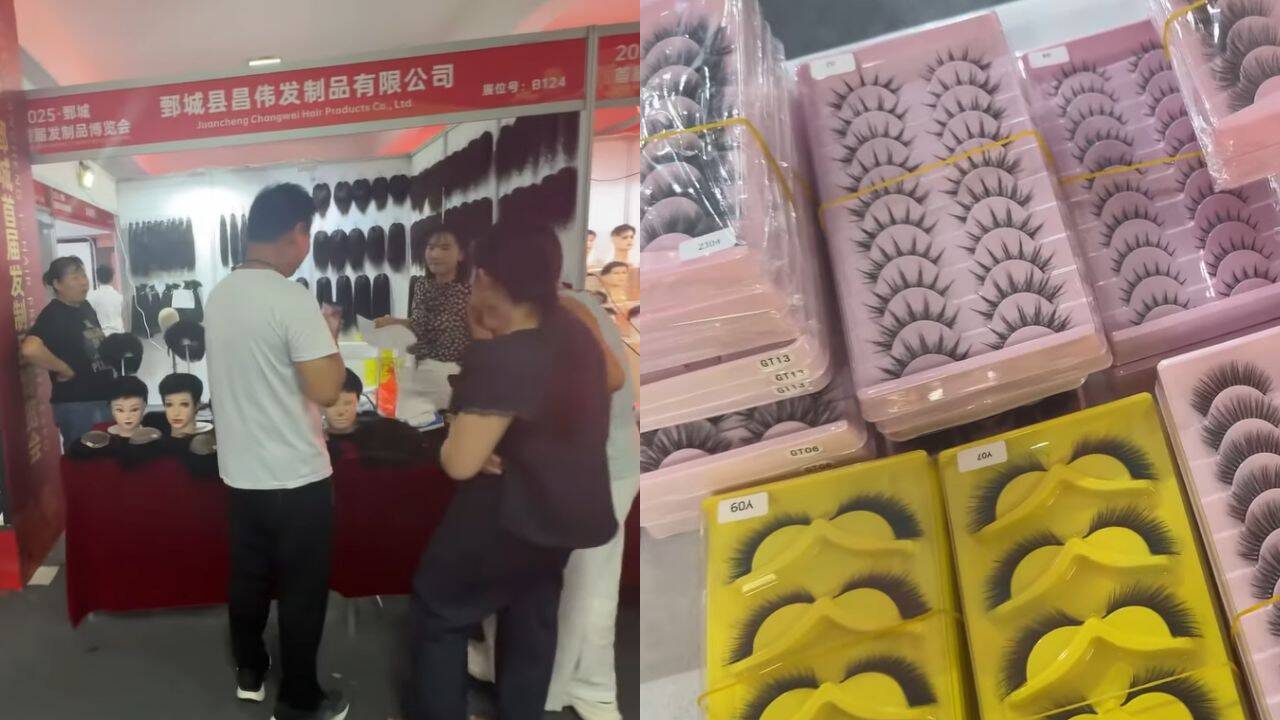
From head wigs to eyelashes, the hair market in Xuchang offers it all
Thousands of workshops and factories in the same region form the entire ecosystem producing the world’s wigs and hair extensions. It includes hair suppliers, dyeing facilities, wig assemblers and exporters all situated in nearby factories. This cuts costs and speeds up production in a way that is yet to be replicated anywhere else on the planet.The heart of this industry is in a neighbouring country, India. What most don’t know is that Indian hair is the most used type to make wigs and hair extensions. As fewer and fewer Chinese people sell their own hair, the local industry has started importing the raw material from abroad. As per the People’s Daily, many manufacturers in the city have begun buying it from countries like India, Indonesia and Myanmar.Interestingly, the largest company in the sector claims that more than 60% of its hair comes from India. Workers in the country work painstakingly to untangle cast-off hair, sort it into strands and make “balls” with pieces longer than six inches. The majority of the industry in the country lies in West Bengal, which accounts for about half of the nation’s human hair export. Thus, strands cut in India across the continent are exported to China to be assembled and sold worldwide. The hair export industry in India is worth roughly $700 million as per a 2025 report by Statista.Hair traders collect hair balls, known as goli or chutti, from sorters, then have them semi-processed including washing, splitting and arranging them by size before straightening them using strands of the same length and thickness from root to tip. “A diligent collector might gather 1–5 kilograms of hair in a day, earning anywhere from 59 cents to $6 per day. This income level is often below minimum wage standards, particularly in rural areas,” said Kolachi Venkatesh, based in Avadi, Chennai, who has been collecting hair for 20 years.A single strand of hair crosses two continents before it reaches someone’s head as a wig. According to Africanews, Xuchang produces about 60% of the world’s wigs, gathers more than 4,100 companies in the sector and employs 300,000 people. The chain operates from raw hair treatment to the final wig stitching. It is a classic case of a city that specialised in a single product and came to dominate it on a global scale, even while being unknown to the general public.The reach of this industry is global, but its most important customer is Brazil. The country has a huge market for hair extensions, megahair and wigs widely used in beauty salons. This shows that even sectors such as beauty and fashion depend on invisible global industrial chains.An extension bought in the neighbourhood salon might have started as a haircut in India and was assembled in a Chinese factory, before arriving there.


