
India takes next step to develop the next generation of space age rail guns

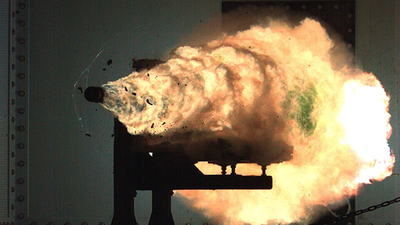
India has taken a fresh step towards building an indigenous electromagnetic launcher capability, with Heavy Vehicles Factory, Avadi floating expressions of interest for the design, development and supply of key components of an Electromagnetic Launcher, or EML, system. The move signals that the country is now looking to move the technology beyond laboratory research and into industrial-scale development.The first expression of interest, issued by Armoured Vehicles Nigam Limited, seeks an industry partner for the design, development and supply of an EM launch barrel assembly along with electrical accessories. A second notice issued the very next day seeks partners for the barrel’s platform and drives. While the final weapon configuration and performance requirements have not been disclosed, the two tenders together point towards simultaneous work on the launcher, its electrical systems and its mechanical mounting.An electromagnetic railgun works fundamentally differently from conventional artillery, using electrical energy rather than chemical propellants to fire a projectile. A high-current pulse passed through two conducting rails and a moving armature generates the electromagnetic force needed to accelerate the projectile down the barrel at extremely high speed, well beyond what conventional guns can achieve. The DRDO has been developing this capability around high-power energy systems, specialised rails, protective coatings, switching devices and targeting systems.The scale of ambition is significant. DRDO’s programme has envisaged a 100-megajoule railgun capable of firing an 18-kg projectile at speeds exceeding 2,000 metres per second, as reported by Jane’s. For reference the highest velocity tank round can only reach speeds of up to 1,780 metres per second. Potential calibres up to 155 mm and ranges between 100 and 400 km, though these remain development goals rather than proven capabilities. The technology is being explored for naval strike roles, anti-ship warfare and air defence, given its potential to reduce flight time and simplify ammunition storage. The US has taken steps to operationalise these guns on naval platforms.The challenges to operationalise this system are substantial, chief among these challenges are generating and delivering such enormous electrical energy in a short pulse demands high-capacity capacitor banks and advanced switching technology. Barrel and rail wear from extreme electrical and thermal stress is another major hurdle, which is why DRDO is focusing on friction-reduction coatings and erosion-resistant materials, alongside recoil systems and high-mobility vehicle mounting, which are to be developed by the Armament Research and Development Establishment (ARDE). Learnings from this project can also be used in the Electromagnetic Aircraft Launch System (EMALS), which can be used to launch fixed wing aircraft from aircraft carriers.India joins a small group of nations, which includes the US, China, Japan, Turkey, France and Germany, that are publicly known to be pursuing military railgun technology at various stages. For India, the expression of interest marks a meaningful shift from laboratory demonstration towards industrial partnership, though the real test will lie in overcoming the power, durability and repeat-fire challenges needed to turn the technology into an operationally deployable weapon.


