
India is advocating for the expansion of a bilateral Joint Crediting Mechanism (JCM) as a vital tool for global climate action. Spearheaded by Japan, this model allows countries to jointly develop mitigation projects and transparently allocate emission reduction credits, reinforcing multilateral climate objectives. Image: X@/byadavbjp NEW DELHI: Pitching for expanding a unique model where bilateral cooperation can reinforce multilateral objectives, India has called an existing ‘joint crediting mechanism’ a key tool for global climate action, and urged countries to join this cooperative approach to collectively reduce their carbon footprints.The benefit of the mechanism was flagged by Union environment minister Bhupender Yadav on the sidelines of the ongoing 30th session of the UN climate conference (COP30) in Belem, Brazil on Wednesday.India is one of the 31 partner countries of the Joint Crediting Mechanism (JCM), spearheaded by Japan, which provides a clear framework for both governments and the private sector to jointly develop mitigation projects, mobilise finance, deploy advanced technologies, and transparently allocate the resulting emission reductions credit among themselves.It’s a bilateral mechanism which is being implemented in accordance with Article 6 of the Paris Agreement that facilitates the creation and functioning of carbon markets as an emission reduction tool. India had joined the mechanism with Japan in August as part of the country’s first bilateral cooperation under the Paris Agreement. JCM is expected to serve as a model for achieving rapid economic growth while simultaneously addressing environmental challenges.Participating in the 11th JCM partner countries’ meeting, chaired by Japan’s environment minister Hirotaka Ishihara, Yadav highlighted the importance of cooperative mechanisms at a time when the world seeks scalable, equitable and technology-driven climate solutions. He underlined that the mechanism represents “a significant approach in strengthening efforts for climate action while supporting national priorities, particularly for developing countries”.Noting that the JCM would contribute directly to India’s Nationally Determined Contributions (NDCs) and long-term low emission development strategy, Yadav said the move would help develop a domestic ecosystem and localise high-technology interventions, while also contributing to the country’s sustainable development goals.About the AuthorVishwa MohanVishwa Mohan is Senior Editor at The Times of India. He writes on environment, climate change, agriculture, water resources and clean energy, tracking policy issues and climate diplomacy. He has been covering Parliament since 2003 to see how politics shaped up domestic policy and India’s position at global platform. Before switching over to explore sustainable development issues, Vishwa had covered internal security and investigative agencies for more than a decade.Read MoreEnd of ArticleFollow Us On Social MediaVideosMEA Outlines Agenda For PM Modi’s South Africa Visit For G20 Summit In JohannesburgPenny Wong’s Cricket Banter With Jaishankar Highlights Warm, Confident India-Australia PartnershipJaishankar, Penny Wong Send A Strong India-Australia Message To China And The World on Indo-PacificIFFI 2025 Opens With A Surprise As Korean Minister Sings Vande Mataram And Wins Standing OvationPiyush Goyal’s 10 D’s Pitch in Israel Recasts India As Future-Ready for Worldwide InvestmentsDelhi Student Suicide Case: Massive Protest Outside School After Note Alleges Harassment By TeachersPiyush Goyal Links India, Israel Through Shared Adversities, Predicts 7% Percent GDP Growth For FY26Bangladesh Backs India On Delhi Blast At Security Dialogue As Sheikh Hasina Exile Tensions IntensifyBengaluru Cash Van Robbed Of ₹7 Crore After Fake RBI Officers Trick Staff In A Filmy-Style HeistNSA Ajit Doval Declares Regional Stability And Security India’s Duty At Colombo Security Dialogue123Photostories10 countries with the most unique flags (and how many you guessed right!)Ranveer Singh to Arjun Rampal: Today’s most viral Bollywood-style momentsSadhguru recommends 7 home remedies for constipation7 baby names that mean ‘winter’ in different languages10 simple ways to avoid misunderstandings in a relationship, as per psychologyTop 7 parenting rules that will simplify your life as a parentHow to make South Indian Chicken Chettinad Curry at home’Vilayaath Budha’, ‘Mask’, to ‘Middle Class’: 9 South releases that are set to storm theatres on November 21World Philosophy Day: 10 quotes by famous philosophers that explain the meaning of life7 manures from your kitchen which work like magic in plant growth123Hot PicksDelhi AQI TodayBihar Minister List 2025Bihar CM Oath CeremonyGold rate todaySilver rate todayPublic Holidays NovemberBank Holidays NovemberTop TrendingTrevon DiggsTom BradyMLB SignsDraymond GreenCanara Bank Manager RobberyFortnite DownTop Stock RecommendationsGold Silver Price PredictionStefon DiggsBaker Mayfield Wife
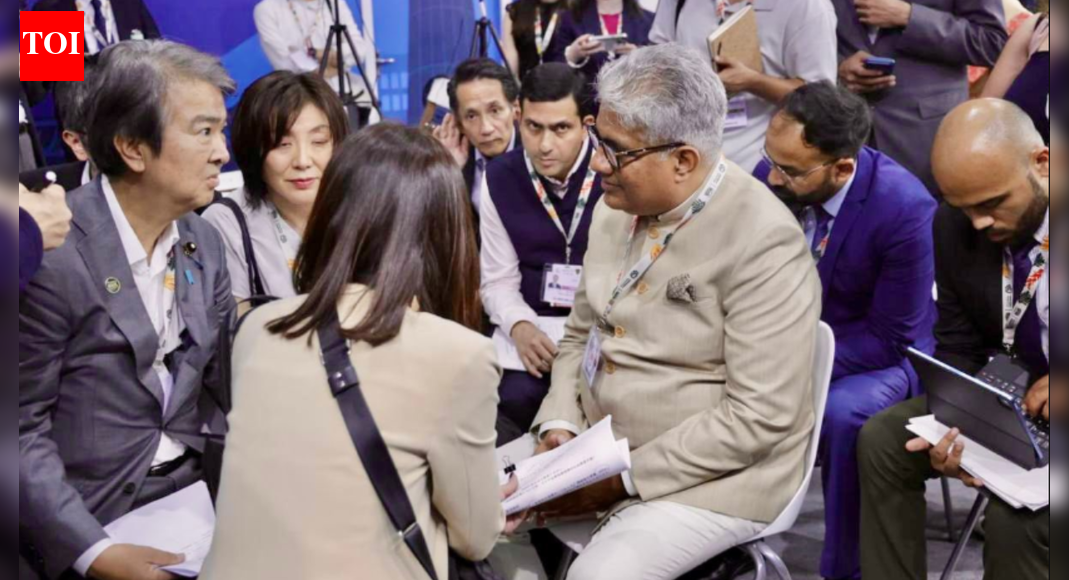
NEW DELHI: Pitching for expanding a unique model where bilateral cooperation can reinforce multilateral objectives, India has called an existing ‘joint crediting mechanism’ a key tool for global climate action, and urged countries to join this cooperative approach to collectively reduce their carbon footprints.The benefit of the mechanism was flagged by Union environment minister Bhupender Yadav on the sidelines of the ongoing 30th session of the UN climate conference (COP30) in Belem, Brazil on Wednesday.India is one of the 31 partner countries of the Joint Crediting Mechanism (JCM), spearheaded by Japan, which provides a clear framework for both governments and the private sector to jointly develop mitigation projects, mobilise finance, deploy advanced technologies, and transparently allocate the resulting emission reductions credit among themselves.It’s a bilateral mechanism which is being implemented in accordance with Article 6 of the Paris Agreement that facilitates the creation and functioning of carbon markets as an emission reduction tool. India had joined the mechanism with Japan in August as part of the country’s first bilateral cooperation under the Paris Agreement. JCM is expected to serve as a model for achieving rapid economic growth while simultaneously addressing environmental challenges.Participating in the 11th JCM partner countries’ meeting, chaired by Japan’s environment minister Hirotaka Ishihara, Yadav highlighted the importance of cooperative mechanisms at a time when the world seeks scalable, equitable and technology-driven climate solutions. He underlined that the mechanism represents “a significant approach in strengthening efforts for climate action while supporting national priorities, particularly for developing countries”.Noting that the JCM would contribute directly to India’s Nationally Determined Contributions (NDCs) and long-term low emission development strategy, Yadav said the move would help develop a domestic ecosystem and localise high-technology interventions, while also contributing to the country’s sustainable development goals.


![Zoji La [Ladakh] SRINAGAR: Zoji La tunnel, an upcoming strategic corridor that will provide all-weather connectivity between Kashmir and Ladakh, is nearing a defining moment, with engineers inching towards a “breakthrough” final blast expected around May 30.Work is progressing at about four meters per day from both ends — Sonamarg (Baltal) in Kashmir and Minamarg in Ladakh — using controlled drilling and blasting. Only 300 meters of the 13.155km tunnel is left to excavate, Harpal Singh, chief operating officer (COO) of Megha Engineering and Infrastructure Ltd (MEIL), told TOI. The Hyderabad-based company is executing the project.“The final blast will bring the excavation phase to a close, completing the tunnel’s core structure,” Singh said, adding the blast will signal the physical connection between Kashmir and Ladakh.According to Singh, this historic milestone will be achieved by reducing tunnel excavation to zero within 30 to 35 days. “Breakthrough will ensure speedy construction of the remaining works, including concrete lining, permanent tunnel drainage, installation of surveillance equipment, control buildings, underground transformers and (traffic) smoke control systems,” Singh explained.The tunnel is still another two-and-a-half years from completion. Before it is opened to the public, the breakthrough will allow construction teams and machines to move seamlessly between two ends, streamlining work. “The teams and equipment can move through the tunnel without any hassle,” Singh said, adding this will help sustain construction through winters when heavy snowfall in Sonamarg halts surface movement.The tunnel will reduce distance between the two ends (Sonamarg and Minamarg) from 49km to 43km and increase vehicle speeds from 30kmph to 70kmph, officials said.End of ArticleFollow Us On Social MediaVideosSamrat Chaudhary Becomes Bihar CM: A Political Journey Marked by Setbacks and ReinventionIran Expresses Confidence In India’s BRICS Presidency Amid West Asia ConflictPM Modi, Donald Trump Hold 40-Min Phone Call, Discuss Strait Of Hormuz, West Asia SituationPak Enters Noida? Stunning Twist To Wage War As Workers Riot In NCR; Yogi Minister Drops BombshellFuel Price Freeze Amid Hormuz Crisis Is Costing Oil Companies Thousands of Crores DailyChina Defends Renaming Places In Arunachal After India Slams Beijing’s ‘Mischievous Attempt’Bihar DY CM Puzzle for JDU, Nishant Kumar Reluctance Complicates NDA MathNitish Kumar Resigns After 20 Years as Bihar CM; BJP Names Samrat Choudhary as SuccessorWomen’s Reservation Bill Explained: How 850-Seat Lok Sabha Plan Promises To Change Indian PoliticsExplained: Supreme Court Backs Right to Vote but Denies Relief to Bengal’s Deleted Voters123PhotostoriesWhy this new rice variety is called ‘Designer Rice’ and how it will impact your protein intake10 free things to do in Noida that are actually worth your timeHow to make Chef Sanjeev Kapoor-style Langarwali Dal6 essential real estate investment strategies for first-time buyers9 unique food etiquette rules from around the worldTop 5 IT hubs in India driving real estate demandArgue without breaking up: 5 simple rules every couple needs to know‘Bhooth Bangla’, ‘Dacoit’ To ‘The Drama’: What to watch in theatres this Week5 things you can bake beyond bread in an OTGIsrael–Lebanon tensions flare again: Inside Hezbollah’s arsenal and Lebanon’s military hand against Israel123Hot PicksIran warStock market holidayPurple cap winnerOrange cap winnerIPL Points TablePublic holidays April 2026Bank Holidays AprilTop TrendingDelhi-Dehradun ExpresswayStock market holidayBank holiday todayKaty PerryAnna Kepner murderDon TzuPraful HingeIPL Points TableKavya MaranNFL news roundup](https://vknewstoday.in/wp-content/uploads/1776198165_photo.jpg "Zoji La [Ladakh] SRINAGAR: Zoji La tunnel, an upcoming strategic corridor that will provide all-weather connectivity between Kashmir and Ladakh, is nearing a defining moment, with engineers inching towards a “breakthrough” final blast expected around May 30.Work is progressing at about four meters per day from both ends — Sonamarg (Baltal) in Kashmir and Minamarg in Ladakh — using controlled drilling and blasting. Only 300 meters of the 13.155km tunnel is left to excavate, Harpal Singh, chief operating officer (COO) of Megha Engineering and Infrastructure Ltd (MEIL), told TOI. The Hyderabad-based company is executing the project.“The final blast will bring the excavation phase to a close, completing the tunnel’s core structure,” Singh said, adding the blast will signal the physical connection between Kashmir and Ladakh.According to Singh, this historic milestone will be achieved by reducing tunnel excavation to zero within 30 to 35 days. “Breakthrough will ensure speedy construction of the remaining works, including concrete lining, permanent tunnel drainage, installation of surveillance equipment, control buildings, underground transformers and (traffic) smoke control systems,” Singh explained.The tunnel is still another two-and-a-half years from completion. Before it is opened to the public, the breakthrough will allow construction teams and machines to move seamlessly between two ends, streamlining work. “The teams and equipment can move through the tunnel without any hassle,” Singh said, adding this will help sustain construction through winters when heavy snowfall in Sonamarg halts surface movement.The tunnel will reduce distance between the two ends (Sonamarg and Minamarg) from 49km to 43km and increase vehicle speeds from 30kmph to 70kmph, officials said.End of ArticleFollow Us On Social MediaVideosSamrat Chaudhary Becomes Bihar CM: A Political Journey Marked by Setbacks and ReinventionIran Expresses Confidence In India’s BRICS Presidency Amid West Asia ConflictPM Modi, Donald Trump Hold 40-Min Phone Call, Discuss Strait Of Hormuz, West Asia SituationPak Enters Noida? Stunning Twist To Wage War As Workers Riot In NCR; Yogi Minister Drops BombshellFuel Price Freeze Amid Hormuz Crisis Is Costing Oil Companies Thousands of Crores DailyChina Defends Renaming Places In Arunachal After India Slams Beijing’s ‘Mischievous Attempt’Bihar DY CM Puzzle for JDU, Nishant Kumar Reluctance Complicates NDA MathNitish Kumar Resigns After 20 Years as Bihar CM; BJP Names Samrat Choudhary as SuccessorWomen’s Reservation Bill Explained: How 850-Seat Lok Sabha Plan Promises To Change Indian PoliticsExplained: Supreme Court Backs Right to Vote but Denies Relief to Bengal’s Deleted Voters123PhotostoriesWhy this new rice variety is called ‘Designer Rice’ and how it will impact your protein intake10 free things to do in Noida that are actually worth your timeHow to make Chef Sanjeev Kapoor-style Langarwali Dal6 essential real estate investment strategies for first-time buyers9 unique food etiquette rules from around the worldTop 5 IT hubs in India driving real estate demandArgue without breaking up: 5 simple rules every couple needs to know‘Bhooth Bangla’, ‘Dacoit’ To ‘The Drama’: What to watch in theatres this Week5 things you can bake beyond bread in an OTGIsrael–Lebanon tensions flare again: Inside Hezbollah’s arsenal and Lebanon’s military hand against Israel123Hot PicksIran warStock market holidayPurple cap winnerOrange cap winnerIPL Points TablePublic holidays April 2026Bank Holidays AprilTop TrendingDelhi-Dehradun ExpresswayStock market holidayBank holiday todayKaty PerryAnna Kepner murderDon TzuPraful HingeIPL Points TableKavya MaranNFL news roundup")
