
India also cautioned against “over-reliance ” on any single model of production, arguing that such dependence could leave food systems vulnerable to geopolitical disruptions, economic coercion and weaponisation. NEW DELHI: India has called on the international community to work collectively to safeguard critical sea lanes and maritime infrastructure, saying secure and predictable shipping routes are essential to ensure the uninterrupted movement of food, fertilisers, fuel and other vital commodities amid conflicts and growing disruptions to global supply chains.Speaking at a UN Security Council high-level open debate on Tuesday on the theme ‘Food Under Fire: The Security Council’s Role in Mitigating Global and Local Food Crises’, India’s Permanent Representative to the UN, Ambassador Harish Parvathaneni, said regional conflicts were increasingly producing consequences far beyond the immediate theatres of hostilities.“Secure and predictable maritime trade routes are indispensable for the uninterrupted movement of food, fertilisers, fuel and other essential commodities,” Parvathaneni said, underscoring the need to preserve the safety and freedom of navigation for commercial shipping in accordance with international law.The call comes as conflicts and attacks on key maritime routes continue to threaten global food and energy supplies. UN Secretary-General Antonio Guterres told the Council that the Strait of Hormuz carries around a fifth of global oil supplies and a third of global fertiliser trade.“Restrictions and closures have driven up commodity prices, and made availability plummet. And attacks on commercial vessels in the Red Sea are further threatening supply chains for food and other commodities,” Guterres said.Parvathaneni warned that disruptions to commercial shipping during conflicts could have cascading effects well beyond the affected region, with food-importing developing countries and humanitarian operations bearing a disproportionate burden.“The international community must therefore work collectively to safeguard critical sea lanes and maritime infrastructure, while ensuring that legitimate commercial trade and humanitarian shipments are able to proceed without undue impediment,” he said.India said the immediate priority for the Security Council should be to reduce the humanitarian consequences of conflicts by facilitating safe, rapid and unimpeded humanitarian access, supporting de-confliction arrangements where appropriate and ensuring that Council measures, including sanctions regimes, do not inadvertently obstruct humanitarian assistance or legitimate food and agricultural trade.Parvathaneni also called for timely assessments of disruptions to critical supply chains covering food, fertiliser, fuel and humanitarian logistics, drawing on the expertise of the Food and Agriculture Organisation, the World Food Programme and other relevant agencies.“Such assessments must remain objective, evidence-based and free from politicisation,” he said.The Indian envoy said food insecurity was fundamentally a consequence of conflict, political instability and underdevelopment, rather than their root cause. He called for greater cooperation among member states, international financial institutions, regional organisations and development partners to strengthen domestic agricultural production, diversify supply chains and improve storage and logistics infrastructure.“Predictable and affordable access to fertilisers, quality seeds, technology and concessional finance remains indispensable, particularly for developing countries. Open, transparent and rules-based trade in food and agricultural inputs also remains critical to global food security,” he said.India also cautioned against “over-reliance ” on any single model of production, arguing that such dependence could leave food systems vulnerable to geopolitical disruptions, economic coercion and weaponisation.Join conversationView All Comments →Share your thoughts in the commentsInsightfulAgreeDisagreeSkepticalConcerningPromisingWorth ReadingBig DevelopmentPost CommentBe respectful · TOI community guidelines“We must encourage small and marginal farmers to enhance their productivity and contribute to ensuring food security in developing countries of the Global South. We must also encourage climate-resilient crops such as millets rather than limit conceptions of food security to the biggest staple, grain crops such as rice, wheat and corn,” Parvathaneni said.Guterres said 2025 saw the highest number of armed conflicts since World War II alongside some of the highest levels of global acute hunger on record, with at least 266 million people facing acute food insecurity.He described the simultaneous confirmation of famine in Sudan and Gaza in 2025 as a “shameful milestone”, adding that conflict and violence were the primary drivers of hunger in 12 of the 13 hunger hotspots of greatest concern identified in the UN’s latest Hunger Hotspots report.Get the latest India News and Live updates. Download the TOI app.End of ArticleFollow Us On Social MediaVideosPakistan Tried Chinese Satellites For Op Sindoor Evidence But Failed, Says Ex-CDS Anil ChauhanPak’s Nuke Storage Area Kirana Hills Hit In Op Sindoor? Ex-cds Anil Chauhan Reveals Shocking DetailsBihar BPSC Protest Explodes In Patna As Students Break Barricades, Police Use Water Cannons | WatchIndia Opens DRDO Missile Technologies To Defence Firms In Major Push For Indigenous ProductionXi-Modi Meeting In Delhi? China Prepares Massive Delegation As India-China Ties Show Fresh ThawExplained: Why Are Sugar Prices Rising In India Despite Record Sugarcane Production?Supreme Court Notice To 20 Rebel TMC MPs On Abhishek Banerjee’s Disqualification Plea’People Were Shot In The Head’: Sonam Wangchuk Seeks Inquiry Report Into 2025 Ladakh ViolenceAjeet Bharti EXCLUSIVE On ‘Reservation Hatao Andolan’, Harsh Dubey, CJP & His Criticism Of BJPTMC’s Abhishek Banerjee Moves Supreme Court Over Delay In Disqualification Of 20 Rebel TMC MPs123PhotostoriesThese idols are often said to be unsuitable for a home temple, here’s what Hindu traditions and Vastu actually say18 thoughtful Raksha Bandhan gifts for sisters in 2026Who is Sheikha Moza? The Qatari royal who made haute couture her signatureHeart disease in women is often misunderstood: Doctor busts 5 myths that could delay diagnosis and treatment5 iconic places in Maharashtra where Ganesh Chaturthi is more than a festivalChinese singer Liu Yu’s Manish Malhotra couture moment in Paris is proof that Indian craftsmanship needs no introduction10 baby girl names that sound modern but have ancient roots5 traditional Bengali sarees you probably haven’t heard ofFrom castor to coconut oil: Natural oils for faster beard growthTraitors 2: From Shalini Passi’s over Rs 2,000 crore family wealth to Mallika Sherawat’s Rs 170 crore fortune, here’s a look at the net worth of popular contestants123Hot PicksBPSC exam rowSugar priceNew Zealand social media banTrump tariffICSI CS june resultNEET UG 2026Sridhar VembuTrump’s SpaceXNEET PG 2026 admit cardTop TrendingAndy Roddick WifeSuresh GowdaRupali ChakankarKarnataka Food Licence SuspensionAllahabad High CourtMumbai Airport DemolitionRam RahimDelhi Women AccidentDelhi Gurgaon RainMaharashtra Hill Tragedy

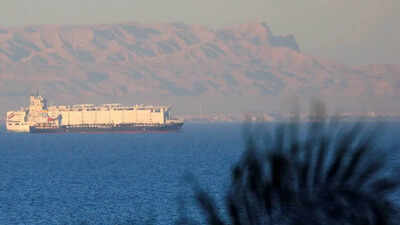
NEW DELHI: India has called on the international community to work collectively to safeguard critical sea lanes and maritime infrastructure, saying secure and predictable shipping routes are essential to ensure the uninterrupted movement of food, fertilisers, fuel and other vital commodities amid conflicts and growing disruptions to global supply chains.Speaking at a UN Security Council high-level open debate on Tuesday on the theme ‘Food Under Fire: The Security Council’s Role in Mitigating Global and Local Food Crises’, India’s Permanent Representative to the UN, Ambassador Harish Parvathaneni, said regional conflicts were increasingly producing consequences far beyond the immediate theatres of hostilities.“Secure and predictable maritime trade routes are indispensable for the uninterrupted movement of food, fertilisers, fuel and other essential commodities,” Parvathaneni said, underscoring the need to preserve the safety and freedom of navigation for commercial shipping in accordance with international law.The call comes as conflicts and attacks on key maritime routes continue to threaten global food and energy supplies. UN Secretary-General Antonio Guterres told the Council that the Strait of Hormuz carries around a fifth of global oil supplies and a third of global fertiliser trade.“Restrictions and closures have driven up commodity prices, and made availability plummet. And attacks on commercial vessels in the Red Sea are further threatening supply chains for food and other commodities,” Guterres said.Parvathaneni warned that disruptions to commercial shipping during conflicts could have cascading effects well beyond the affected region, with food-importing developing countries and humanitarian operations bearing a disproportionate burden.“The international community must therefore work collectively to safeguard critical sea lanes and maritime infrastructure, while ensuring that legitimate commercial trade and humanitarian shipments are able to proceed without undue impediment,” he said.India said the immediate priority for the Security Council should be to reduce the humanitarian consequences of conflicts by facilitating safe, rapid and unimpeded humanitarian access, supporting de-confliction arrangements where appropriate and ensuring that Council measures, including sanctions regimes, do not inadvertently obstruct humanitarian assistance or legitimate food and agricultural trade.Parvathaneni also called for timely assessments of disruptions to critical supply chains covering food, fertiliser, fuel and humanitarian logistics, drawing on the expertise of the Food and Agriculture Organisation, the World Food Programme and other relevant agencies.“Such assessments must remain objective, evidence-based and free from politicisation,” he said.The Indian envoy said food insecurity was fundamentally a consequence of conflict, political instability and underdevelopment, rather than their root cause. He called for greater cooperation among member states, international financial institutions, regional organisations and development partners to strengthen domestic agricultural production, diversify supply chains and improve storage and logistics infrastructure.“Predictable and affordable access to fertilisers, quality seeds, technology and concessional finance remains indispensable, particularly for developing countries. Open, transparent and rules-based trade in food and agricultural inputs also remains critical to global food security,” he said.India also cautioned against “over-reliance ” on any single model of production, arguing that such dependence could leave food systems vulnerable to geopolitical disruptions, economic coercion and weaponisation.
Share your thoughts in the comments
Be respectful · TOI community guidelines
“We must encourage small and marginal farmers to enhance their productivity and contribute to ensuring food security in developing countries of the Global South. We must also encourage climate-resilient crops such as millets rather than limit conceptions of food security to the biggest staple, grain crops such as rice, wheat and corn,” Parvathaneni said.Guterres said 2025 saw the highest number of armed conflicts since World War II alongside some of the highest levels of global acute hunger on record, with at least 266 million people facing acute food insecurity.He described the simultaneous confirmation of famine in Sudan and Gaza in 2025 as a “shameful milestone”, adding that conflict and violence were the primary drivers of hunger in 12 of the 13 hunger hotspots of greatest concern identified in the UN’s latest Hunger Hotspots report.


