
In 2015, two men bought live sea turtles from a Papua New Guinea food market and set them free instead of letting them become food

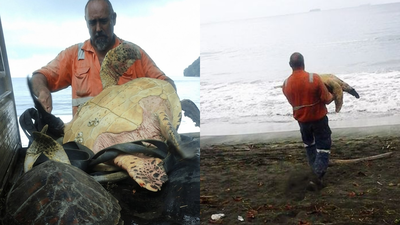
In 2015, a simple act of compassion by two men in Papua New Guinea won hearts after they rescued two live sea turtles that were being sold at a local food market. Rather than leaving the animals to be bought for consumption, Arron Culling and his coworker Mark used their own money to purchase the turtles and transport them back to the sea. After travelling around five kilometres, they released the threatened marine animals into the ocean, where they swam away safely. The rescue, captured in a series of photographs, continues to be widely shared online as a reminder of how individual actions can make a difference to wildlife conservation.
How two men rescued live sea turtles from a Papua New Guinea food market
The rescue began when Arron Culling and Mark came across two live sea turtles being sold at a food market in Papua New Guinea. Instead of walking away, they decided to buy both turtles themselves to prevent them from becoming food.After purchasing the turtles for about $50, the pair carefully transported them by boat to a suitable release site roughly five kilometres away. Photographs from the rescue show the turtles being handled with care before they were returned to the ocean and disappeared into their natural habitat.The images attracted widespread attention at the time and have continued to circulate over the years, with many people praising the pair for their compassion towards threatened marine wildlife.
It wasn’t their first sea turtle rescue
According to Culling, rescuing sea turtles was not a one-off act. He said he and Mark had previously saved around 10 turtles after finding them in similar situations.Rather than relying on donations or conservation organisations, the two used their own money whenever they encountered turtles they believed could be rescued. Their efforts focused on giving individual animals another chance in the wild, even though they recognised that the broader conservation challenges facing sea turtles require long-term solutions.
Why sea turtles are sold in Papua New Guinea
Sea turtles have long formed part of the traditional diet of some coastal communities in Papua New Guinea. In certain areas, customary harvesting for subsistence and cultural purposes remains legal under local regulations.At the same time, Papua New Guinea is home to several threatened sea turtle species, making conservation a complex issue. Governments and conservation groups continue to balance Indigenous traditions, local livelihoods and the protection of vulnerable marine wildlife.The market where the turtles were found reflects this reality, where internationally protected species may still be sold legally under customary practices in some communities.
Why sea turtles are important to marine ecosystems
Sea turtles play an important role in maintaining healthy marine ecosystems. Green turtles graze on seagrass beds, keeping them healthy and creating habitat for many other marine species. Hawksbill turtles feed mainly on sponges, helping coral reefs remain diverse and resilient.Leatherback turtles help control jellyfish populations, contributing to the balance of ocean food webs. Despite their ecological importance, sea turtles continue to face threats from habitat loss, plastic pollution, fishing gear, climate change and illegal hunting.
A reminder that small actions can make a difference
Although conservation is often led by governments and environmental organisations, stories like this show that individuals can also have a meaningful impact. By purchasing the two turtles and returning them to the ocean, Arron Culling and Mark prevented them from ending up as food and gave them another opportunity to survive in the wild.Wildlife experts note that buying wild animals is not always considered a long-term conservation strategy because it can unintentionally encourage wildlife trade. Nevertheless, this rescue highlighted the difficult choices people sometimes face when encountering animals already destined for sale.


