
In 2014, an American town was known as the ‘food desert’, but one man turned a college football field into a farm that generates 60,000 pounds of produce

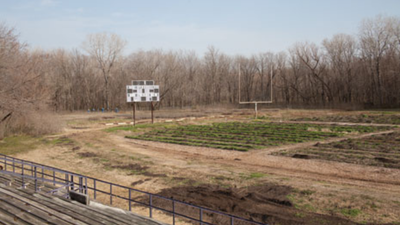
Eight miles south of downtown Dallas, there lies an area that is federally recognised as a food desert, meaning there are no grocery stores or restaurants where fresh, nutritious food can be obtained for those devoid of the luxury of cars. This 95% minority, poverty-stricken area surrounds the rolling 146 acres of Paul Quinn College, a private, faith-based liberal arts college.Set in a valley on the northeast corner of campus, the field is everything you might expect at a tiny NAIA school. Bright white goalposts. A fading, antiquated scoreboard. A yellow and purple shack where fans can purchase tickets. And, tucked behind one end zone, a pair of navy blue blocking sledges for training. But there is no football practice happening on this ground, no whistles, no tackling drills and no sprints. All because no team calls this place home. Instead, the 20-yard line is occupied by bulging sweet potatoes, radishes, hens laying eggs and fresh tilapia swimming in a state-of-the-art aquaponics system, according to a report by ESPN.
A pipe dream
It was in 2007, that college President Michael Sorrell, a former college basketball player, decided to kill Paul Quinn’s cash-strapped football program. Two years later, he transformed the old field into an organic farm. Yes, people said he was insane and his plan would fail, but 19 years on, the farm continues to produce.“You know the Apple commercial ‘Here’s to the crazy ones?'” Sorrell said to the outlet back in 2014. “Well, that’s us. We’re proud to be the crazy ones. We weren’t supposed to make it. No one thought this would work. But here we are. And I’m telling you, we think — no, we know — this is only the beginning. We are going to change the world with this farm.”When Sorrell took the job at the college in fall 2007, it was in a financial crisis with a 1% graduation rate. He had no experience running a college, and had previously worked as a lawyer and White House special assistant. But he soon realised the healthy food scarcity the surrounding area faced. By spring, he had gained 15 pounds, thanks to lunch and dinner options that were limited to chicken shacks, convenience stores and fast food. The healthiest choice was Subway, three miles down the road.He was determined to make change and began talking with community leaders in the hope of getting a grocery store on or near campus. No one was interested, even when he offered free land. The words of his final prospective owner left a scathing mark. “He said to a friend of mine that the people in this neighbourhood don’t look like his clients,” Sorrell said. “And I just got furious at the injustice of it all. In the back of my mind, I may have thought that. But to hear someone say it, to have someone tell you that, basically, poor, black and brown people don’t deserve what you provide? I was livid.”That’s when he had the idea to turn the field into a farm. He scrapped the football program, saving the university $600,000 a year. When the alumni of the program protested, he challenged them to raise $2 million to save football and none raised a dime.At a luncheon with a local entrepreneur who had been interested in community gardens, Sorrell suggested investing in the idea of farming on the field. The man said yes. Sorrell went to his board, insisting he had found the idea that was going to save the cash-strapped school, which had lost its accreditation a year earlier amid financial and academic concerns. “They said, ‘It’s going to make that much money?'” Sorrell recalled. “I said, ‘No, it’s going to serve notice as to who we are going to be. A voice for those without voices and hope for the hopeless. And if no one else wants to stand up for what’s right, we will.”He asked one of his employees, Elizabeth Wattley, to run the farm with absolutely no experience but an open mind. “I started reading books and Googling,” Wattley said.
A resounding success
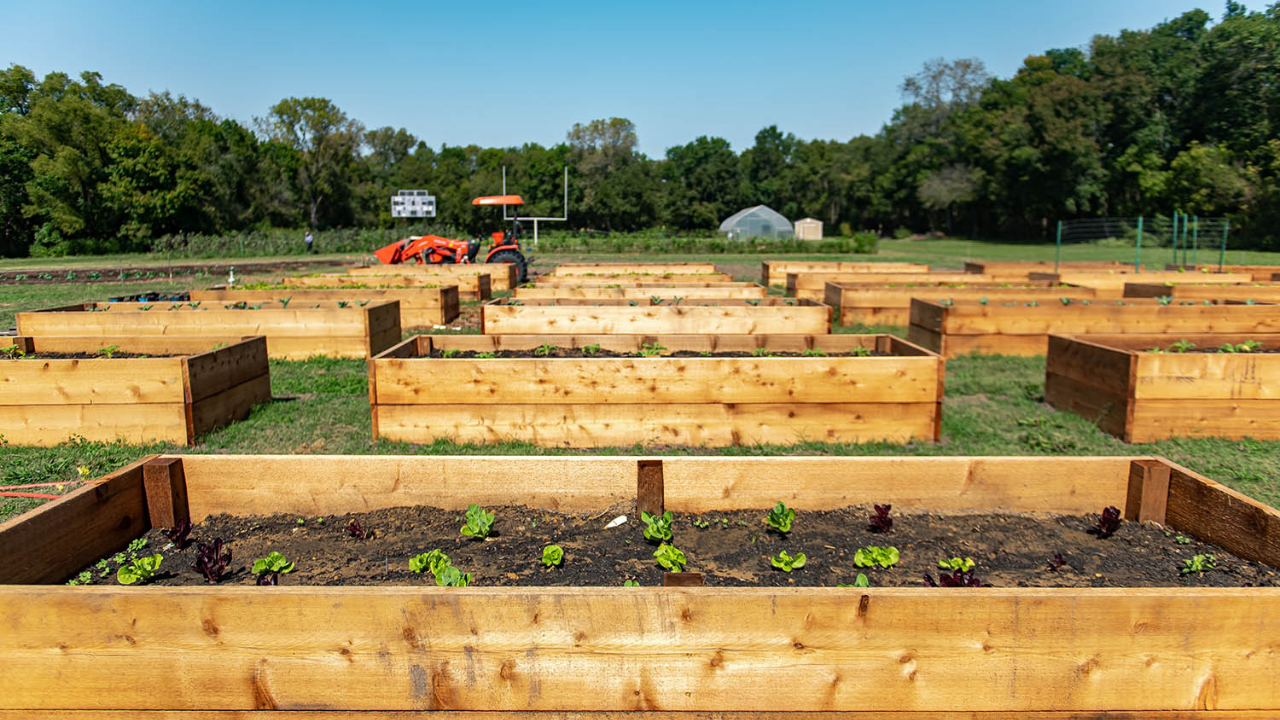
It has produced more than 50 varieties of vegetables totalling more than 30,000 pounds of produce.
Slowly but strongly, the farm succeeded. Through fundraising and a partnership with PepsiCo and its Food for Good initiative, a few training beds turned into the entire field. Students worked on the field as part of a work-study program that decreased their tuition. The farm became a cornerstone of the school’s required social entrepreneurship program, which teaches students to become leaders and generate wealth through breaking the cycle of poverty and giving back to the community. And at minimum, 10 per cent of the farm’s yield went back to the community it called home.Chanson Goodson, a member of the community, had grown up seeing posters of the football team around town but had never seen a game. Instead, when he roamed around, he would see children covered in dirt and wonder what they were doing. That is, until he became a student at Paul Quinn and took a work-study job at the farm for $10 an hour. “It was a job,” he said. “Just a regular job. I would just go there and try to knock it out. I didn’t want to touch dirt. I didn’t want no bugs. If it was too cold, I didn’t want to work. If it was too hot, I didn’t want to work. It was a paycheck.”But eventually, something happened. Goodson started planting vegetables, watering them, taking care of them and watching them grow. He started to show up for work early. Leave late. And take pride in the planting he had done. He pushed others to do the same. “I became absorbed in it,” he said. “It became more of a responsibility than a job.”Every semester, the faculty sees the same transition. The kids who don’t want to be there and those who succeed. Soon, it transforms into a competition. “They’re taking potatoes in the dorm. I’ve heard students in the dorm defending their tomatoes,” Wattley said at the time.Sorrell believes it all comes back to a simple premise: the human desire to achieve. “When you are used to losing, winning seems a million miles away,” he said. “What the farm does is, when you plant something, it grows. It’s a simple and tangible example of your success. And you can’t beat that.”Since its creation in March 2010, the farm has been renamed the “WE Over Me” farm. It has produced more than 50 varieties of vegetables totalling more than 30,000 pounds of produce. It now includes a chicken coop, four active beehives and a greenhouse that houses an aquaponics system to raise tilapia. The farm sells directly to local restaurants and grocery stores as well as at farmers’ markets. The farm’s success has helped Paul Quinn restore its accreditation and build new partnerships with Yale, Duke and the University of Pennsylvania. The school has been named an HBCU of the Year. And Sorrell was named the HBCU President of the Year.
Partnerships and future
In 2011, Wattley was watching the annual Dallas Cowboys Thanksgiving Day game when she nearly lost her mind. During a break in the action, cameras showed owner Jerry Jones looking down from his private suite as his Cowboys were beating the Miami Dolphins. He was nibbling on a radish. “That was our radish,” Wattley said. “I’m sure that was the radish we harvested.”Four years earlier, George Wasai, a football player in the 1980s at Bishop College, which used to occupy the campus where Paul Quinn is now, was among those fighting to keep the PQC football program alive. But when Sorrell turned the field into a farm, Wasai had an idea. He was the food and beverage director for the hospitality division of Legends, at the old Texas Stadium and at the newly constructed AT&T Stadium. Wasai mentioned the farm to one of his executive chefs, and a partnership was established.Now, an entire section of the farm is dedicated to the Cowboys. The team is Paul Quinn’s largest client. Each year, Koski and Legends chefs work together to determine what high-value crops the stadium could use that will also help maximise the farm’s revenue.According to a 2022 Penn University report, more than 60,000 pounds of produce are used in the dining halls and sold to local restaurants and grocery stores.The spirit of the game has not completely vanished from the field. The scoreboard with chipping paint still stands, the sledges are swallowed in bees and the light stands stand a bit crooked, all a reminder of what made way for what once was.


