
In 2011, conservationists dropped 75 tonnes of poisoned bait on Henderson Island; only about 60–80 rats survived, but within two years their population was back to roughly two-thirds of its former level

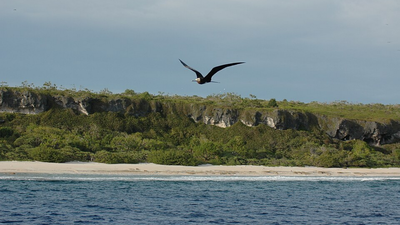
In 2011, Henderson Island, a remote and uninhabited island in the South Pacific, became the site of one of the largest rodent-eradication attempts ever undertaken on an island of its size. Conservationists spread about 75 tonnes of poisoned bait across the island in an effort to eliminate invasive Pacific rats, which had been preying on native wildlife for generations. Yet the operation did not achieve its ultimate goal. According to research published in Bird Conservation International, a small number of rats survived the campaign, and their population recovered with remarkable speed. Within two years, rat numbers had recovered dramatically, highlighting how even a seemingly successful operation can unravel when a few animals remain behind.
A remote island under pressure
Henderson Island is a small, isolated coral island in the Pitcairn Islands group and is internationally important for its wildlife. Several land-bird species found there occur nowhere else in the world. But the island’s ecosystem has long faced pressure from Pacific rats (Rattus exulans), which are believed to have arrived with Polynesian visitors centuries ago.The rats feed on a wide range of natural resources, including insects, seeds, and the eggs and young of birds. On an island with species that evolved in relative isolation, this introduced predator created an especially serious problem. Researchers estimated that rats were responsible for the deaths of large numbers of seabird chicks each year and were also a major threat to Henderson’s endemic land birds. By the late 2000s, conservationists concluded that removing the rats could give the island’s wildlife a significant chance to recover.
The 75-tonne operation
The eradication attempt was carried out in 2011. Conservation teams distributed approximately 75 tonnes of brodifacoum-laced bait across Henderson Island. The operation was designed to reach rats throughout the island and eliminate the population entirely. At first, the results appeared highly encouraging. Follow-up monitoring found that the rat population had been reduced dramatically. The research later suggested that only around 60 to 80 rats may have survived the operation.For an eradication project, however, reducing a population to a few dozen animals is not enough. The goal is not control but complete removal. If even a small number of rats survive and are able to reproduce, the population can eventually rebuild. That is exactly what happened on Henderson Island.
A rapid return
Research examining the outcome of the eradication found that the surviving rats recovered far more quickly than conservationists had hoped. Within two years, the rat population had recovered to roughly two-thirds of its pre-eradication abundance. The findings showed just how difficult it can be to permanently remove invasive rodents from remote, rugged islands. With the population reduced to a very small number, the surviving rats were able to rebuild their numbers rapidly. The exact factors behind this recovery were likely complex, but the case demonstrated how quickly a small surviving population can rebound.The research on Henderson Island also examined the impact on the island’s endemic land birds following the failed eradication. Although the dramatic reduction in rats temporarily changed conditions on the island, some endemic land birds showed signs of recovery during the following years. Researchers cautioned, however, that these changes could also have been influenced by environmental factors such as recovery from a prolonged drought.The study published in Bird Conservation International is particularly important because it documents what happened after an eradication campaign fell short, rather than simply reporting the initial reduction in rat numbers. Such cases can provide valuable information for planning future conservation efforts.
Why did the eradication fail?
The failure was not because the operation had little effect. On the contrary, it killed the overwhelming majority of rats. The problem was that eradication requires a success rate of 100%.Scientific analysis of the project, including research published in Royal Society Open Science, investigated possible reasons why a small number of rats survived. The study explored factors that could have affected bait uptake and survival, including the behaviour of individual rats and variation in how animals responded to the eradication effort.On a remote and environmentally complex island, ensuring that every individual encounters and consumes a lethal dose of bait is an enormous logistical challenge. Some rats may avoid bait, while others may have access to alternative food sources. Small differences in behaviour can therefore have major consequences when the objective is complete eradication. The Henderson Island case demonstrates a crucial distinction in conservation: a campaign can be overwhelmingly effective and still ultimately fail. Eliminating more than 99% of an invasive population may sound like a major success, but for eradication, the remaining fraction matters more than the percentage removed.
Lessons for future conservation
Despite its failure to permanently eliminate rats, the Henderson Island project has provided conservation scientists with valuable lessons. The experience has helped researchers better understand the importance of planning for individual variation in animal behaviour, improving bait-delivery methods and carrying out long-term monitoring after eradication campaigns. It also underlines the importance of not declaring success too quickly. Detecting a few surviving animals on a remote island can be extremely difficult, particularly when their numbers are low. Continued monitoring is therefore essential before an eradication effort can be considered complete.Henderson Island remains an important example of both the potential and the difficulty of island restoration. The 2011 operation showed that invasive rat populations can be reduced to extraordinarily low numbers through large-scale intervention. But it also demonstrated that when even a few survivors remain, nature can quickly reverse years of planning and months of intensive work. The case of Henderson Island is not simply one of failure. It is a reminder of how resilient invasive species can be, and why conservation projects aimed at protecting isolated ecosystems must account not only for the animals that are removed, but also for the very few that manage to survive.


