
In 1992, Hurricane Andrew released Burmese Pythons into Florida’s wild, sparking an invasion that would turn the giant snakes into one of the Everglades’ biggest ecological threats

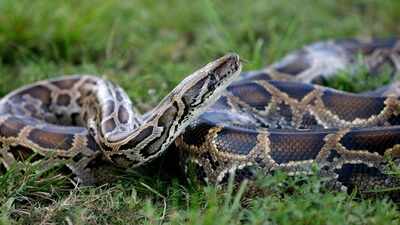
Hurricane Andrew in 1992 devastated South Florida, causing extensive damage not just to property but also creating an environmental crisis, which would prove to be a problem for decades to come. After the hurricane, many Burmese pythons, a species of large snakes, found themselves in the wild, setting off what is now regarded as one of the most critical ecological invasions, according to the U.S. Geological Survey.Prior to Hurricane Andrew, Burmese pythons had begun entering Florida due to the exotic pet trade. They had been purchased as small and docile animals but as they grew bigger, it became more difficult to keep them as pets. Some individuals simply let go of their Burmese pythons into the wild, according to the National Park Service. Hurricane Andrew caused extensive damage to breeding facilities and enclosures, thus releasing many more of the snakes into the wild, as noted by the U.S. Geological Survey, which states the hurricane likely contributed to their spread.The reason why the Everglades were their ideal habitatThese reptiles found ideal conditions for their survival and proliferation within the Florida Everglades. The region’s hot and humid climate closely resembled their native one in Southeast Asia. The wetlands provided plenty of cover, and the abundant food allowed them to easily sustain themselves. In addition, there were no natural predators that could regulate their numbers, according to the National Park Service.An increasing threat to indigenous wildlifeWith time, the consequences of their proliferation turned out to be quite serious. Research showed that some mammal species in the area suffered significant reduction in their numbers due to these snakes, according to studies by the U.S. Geological Survey. As strong constrictors, these reptiles gained control over the local ecosystem and started consuming all sorts of animals that they could catch.Ongoing measures to manage the invasionSince then, a series of projects have been started in order to limit the growth of the python population. Projects to remove these reptiles have been set up, alongside events, such as the Florida Python Challenge that allows skilled individuals to catch these snakes, as highlighted by the Florida Fish and Wildlife Conservation Commission. However, it is not possible to completely eliminate this type of python, and the emphasis now lies on controlling their population numbers.The presence of Burmese pythons in Florida has proven once again how humans and natural calamities can work together to create long-lasting effects on the environment. Starting from the exotic pets and ending up with the hurricane, it has resulted in an ongoing problem for the local ecology.


