
In 1960, a fisherman’s tip led two explorers to the grassy mounds that rewrote American history

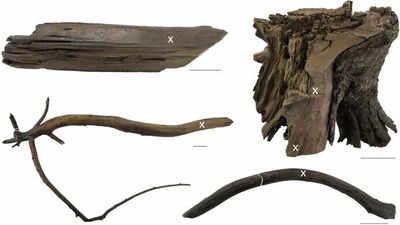
History is lurking right under our feet, buried in the rugged terrain through which we travel. It seemed almost mythical that the Vikings ever set foot upon the continent of North America. But in 1960, a man named Helge Ingstad – a Norwegian explorer and his archaeologist wife, Anne Stine Ingstad – grew tired of being unsure. These individuals were not seeking out treasure or any type of great discovery, but instead, a very specific type of “house” from the Norse sagas.The revelation did not come from some spectacular new satellite or a mysterious map. Rather, the information was provided by a local fisherman by the name of George Decker. George Decker directed the Ingstads to a series of peculiar, vegetation-covered mounds that had been known in town forever as “Old Indian Camp.” To ordinary observers, these formations were nothing more than small tufts of grass. However, the Ingstads saw much more than that; they saw the outlines of sod houses.It revealed the existence of an entire civilisation buried beneath the ground. The iron nails, a bronze pin, as well as a whorl used to spin wool, provided strong indications that this was an actual society living its life, rather than merely some scattered artefacts left behind by a few individuals. It constituted proof of how long ago Europeans arrived in America, over half a millennium before Columbus did.How modern science determined the age of the Vikings’ presence in newfoundlandThe Ingstads located when and where Vikings travelled through, but only modern science helped in determining when precisely the Vikings made their journey into Newfoundland. For a while, the age of Viking activity in Newfoundland was still rather uncertain. However, thanks to a groundbreaking study published in Nature under the title Evidence for European presence in the Americas in AD 1021, this uncertainty became a thing of the past. The dating process relied upon a major flare of the Sun in 993.This is truly groundbreaking in terms of history. By studying the impact of solar flares on tree rings, the exact year was established when the wood was harvested for the construction of the village, dating back to 1021. This moves the time period from being roughly “a thousand years ago” to being pinpointed. Such precision makes the discovery highly reliable and provides grounds for UNESCO to consider it a World Heritage Site.
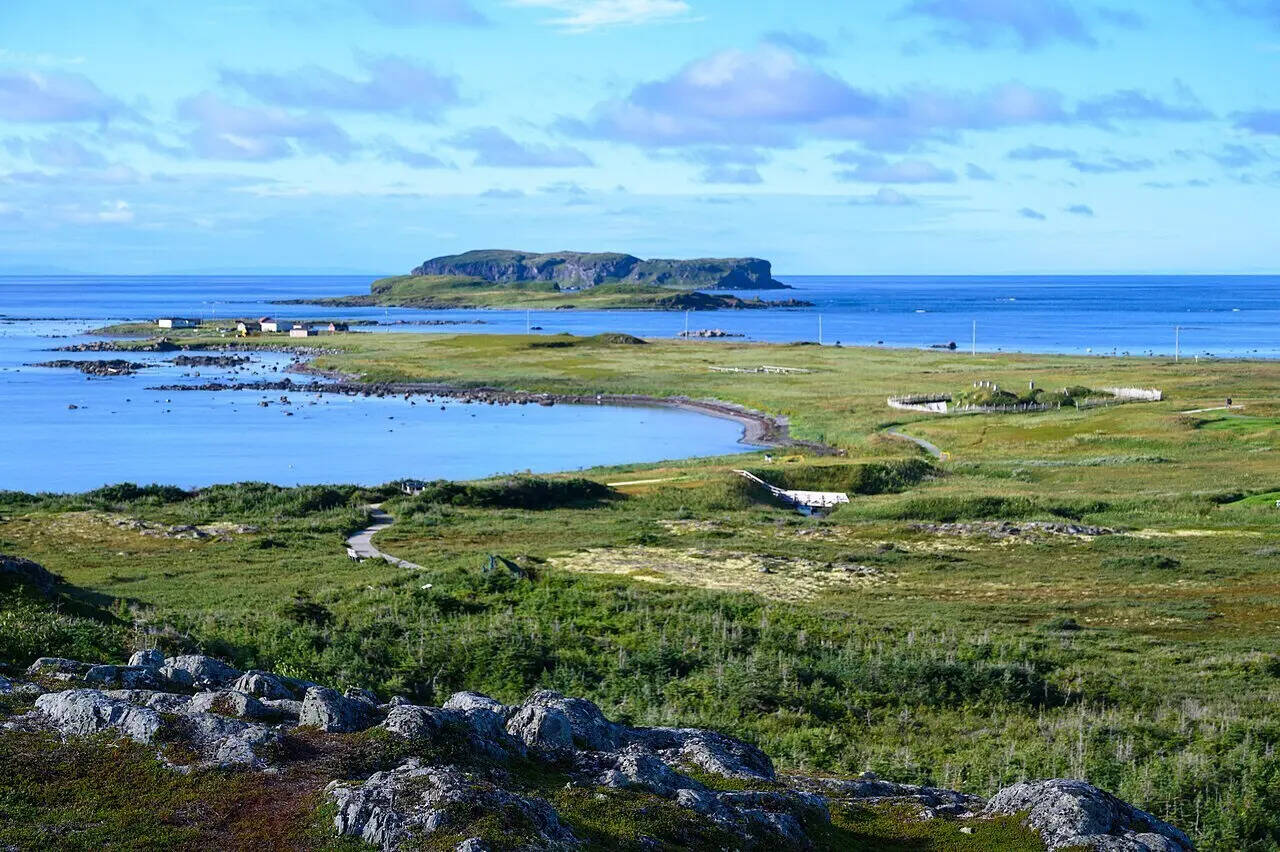
Modern scientific analysis of tree rings, influenced by a solar flare, pinpointed the year the settlement’s wood was harvested, proving European arrival centuries before Columbus. Photo Credits: Gordon Leggett / Wikimedia Commons
There is more to understand about the Vikings’ short stay. Research on Arctic explorations, focusing on Norse whaling and walrus hunting in Greenland, proves that these early settlers were not simply wandering around. Instead, they participated in an active and complex network of trading routes in search of high-value products, such as walrus ivory and timber. L’Anse aux Meadows was never intended to be a permanent settlement; it was an ad-hoc industrial centre constructed by a diligent seafaring society.The grassy mounds that altered our perspectiveAs one learns about L’Anse aux Meadows, it becomes clear that the official history is often incomplete; in other words, it is unofficial history that has yet to be discovered. It took several decades for the academic community to take the idea of the Norse sagas being of historic value seriously. However, it was precisely the Ingstads’ willingness to rely on oral tradition and faith in a fisherman’s instinct that led to the discovery of Vikings as colonisers rather than invaders.Looking at the location now, one can see the reconstructed longhouses that seem to have grown out of the ground. These structures were built to withstand the brutal Atlantic winds, using the very sod that had hidden them for nearly a millennium. It is a humble-looking place, but it represents one of the greatest maritime feats in human history.In hindsight of 1960, it is incredible how one little tidbit from a local person has solved a puzzle of more than five centuries. This shows that huge discoveries do not need to have huge financial backing; they may be made by just looking at a common piece of land and asking, “What if?” The Vikings were there, they were organised, and because of the Ingstads, here’s the proof to show for it.


