
In 1947, a shepherd boy threw a rock into a desert cave and unearthed the scrolls that rewrote history

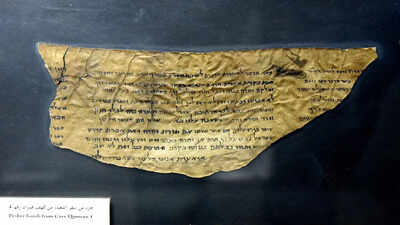
The story began in a crevice of limestone caves in the Judean Desert when an intrepid young shepherd was out looking for one of his lost goats. It was the year 1947, and under the harsh gaze of the scorching sun, he found himself searching for the goat in the vicinity of Qumran. In order to pass the time, or maybe even to see if his goat was hiding somewhere in the crevice, he flung a pebble inside. The sound of shattering pottery rather than the normal dull thud of dirt broke the silence.Once the boy and his peers made their way inside the cave, they found a few bulky tubes made of glass. There was something more inside the bottles – packets of old paper wrapped in linen. They were totally unaware that those worn-out sheets were not mere “old papers.” Those were the Dead Sea Scrolls, a secret library buried there for nearly two thousand years. That idle activity in the wilderness transformed into one of the biggest archaeological discoveries of the age – the connection between man-made objects of different ages, which nobody even hoped to find before.A library that survived timeThat secret the desert held turned out to be quite impressive. In the following ten years, a lot of researchers explored the area and managed to discover eleven caves full of fragments. Those fragments were not a collection of random notes; they constituted an archive. According to the documentation from the Library of Congress, every single book of the Hebrew Bible, except for the Book of Esther, was present among those documents.The scrolls date back some 10 centuries before any other extant Hebrew Biblical scriptures, thus providing a remarkable “time jump” which allowed researchers to trace the exact process of preservation of these scrolls over the course of many centuries. In addition to demonstrating that the text of the Bible had remained remarkably constant throughout the thousand years, an absolutely incredible discovery to both researchers and followers, the documents included community rules, hymns, and sectarian works, proving the diversity of Jewish society at the time.
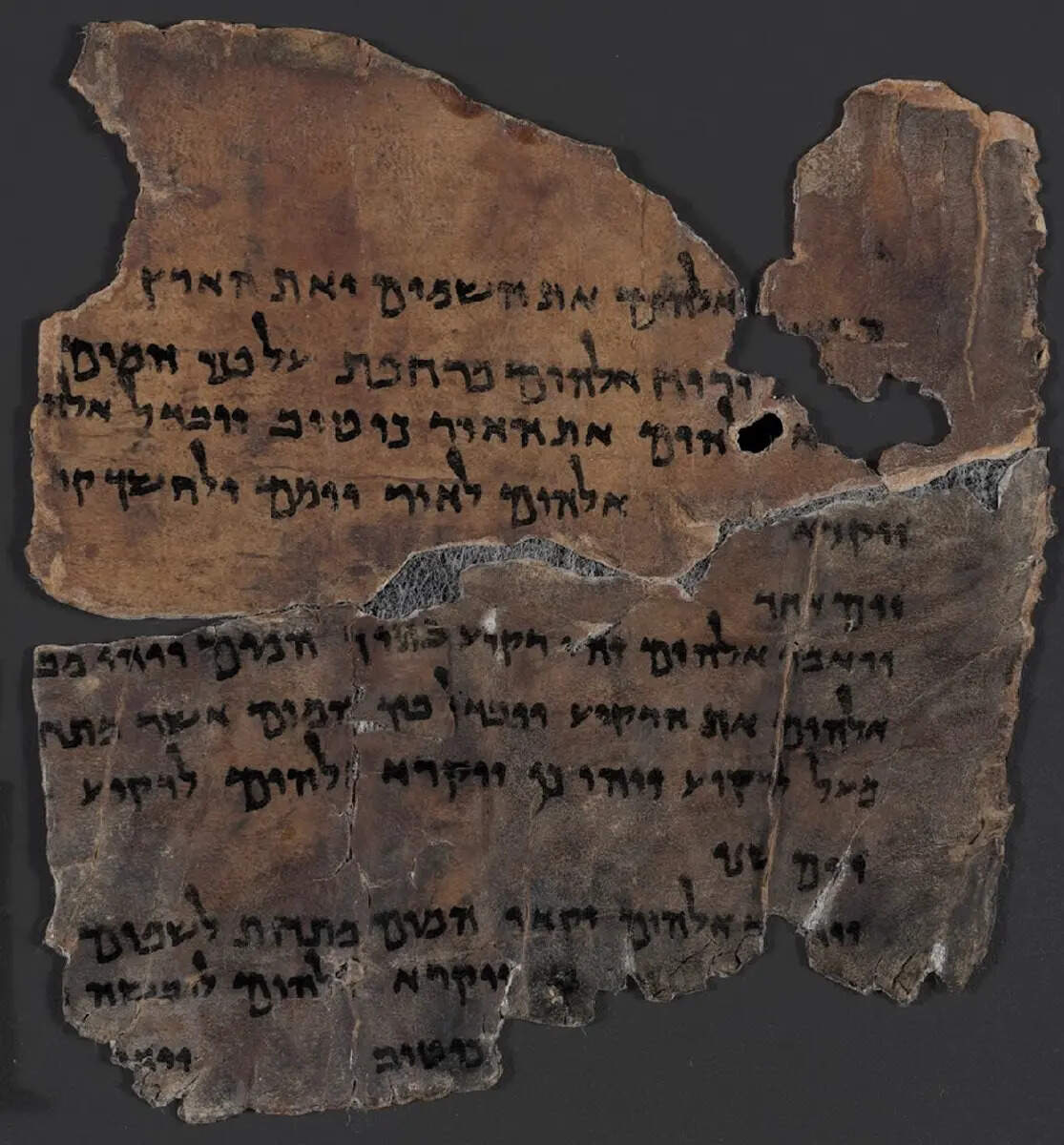
These scrolls offer a unique window into ancient Jewish life and the Bible’s history. Their preservation is a testament to nature and human effort. Image Credits: via Wikimedia Commons
Preserving the ancient religion: a science of survivalPreservation of such extremely delicate and valuable artefacts was nothing short of a miracle of natural conditions and manmade skillful effort. The pots found by the youth were far from being regular kitchen pots. As explained in the study published in Science Advances, the manufacture of the scrolls required elaborate preparation and storage. The desert conditions at the Dead Sea provided the manuscripts with an almost “vault-like environment”, while the ancient people took specific steps in order to preserve the parchments themselves.Because of good preservation practices, we have a window into the world as it was between the third century B.C.E. and 68 C.E. It is a period full of change and transition, and the Dead Sea Scrolls are proof of such transformations in politics and ideas. They have become an irreplaceable source in tracing the roots of Jewish and Christian beliefs and proving that history is not just a string of dates but rather a struggle for self-preservation and identity.Currently, the Dead Sea Scrolls are housed in the Shrine of the Book in Jerusalem, and there is ongoing research on them by scholars all over the world. They illustrate how one stone thrown into the dark can bring about illumination for an entire world. The young shepherd had been searching merely for a sheep, yet found the foundation for a shared human legacy.


