
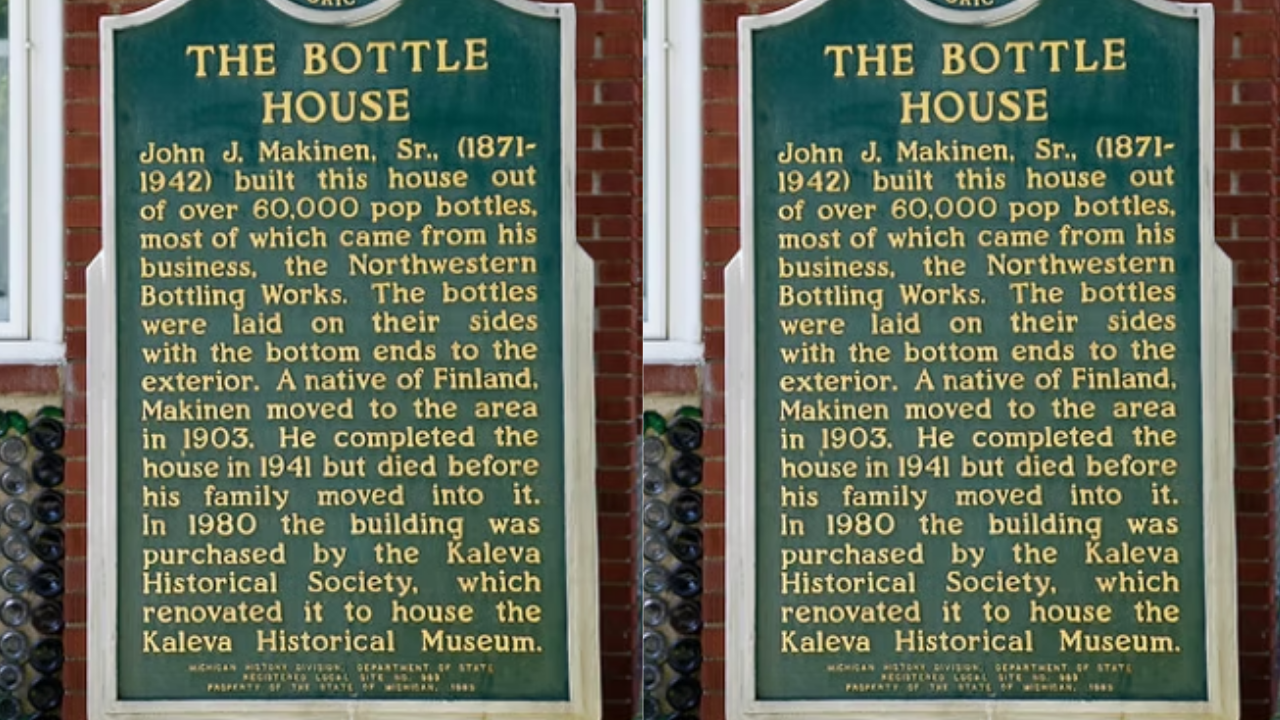
In 1941, Michigan bottler John Makinen built a house from 60,000 chipped and flawed bottles discarded by his soda factory; in 1983, the local historical society bought it for a museum

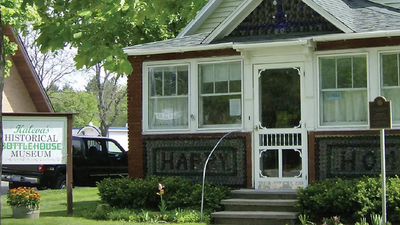
What began as a practical way to make use of unwanted glass bottles eventually became one of Michigan’s most unusual historic buildings. In 1941, Kaleva businessman John Makinen built a house using about 60,000 glass bottles that had been chipped or otherwise deemed unsuitable at his local pop bottling factory. According to the Kaleva Historical Society, Makinen arranged the bottles in different colours and patterns, turning what might otherwise have been factory waste into a distinctive home. More than four decades later, in 1983, the Kaleva Historical Society purchased the property with help from community fundraising and turned it into the home of its museum.
A house made from unwanted bottles
The Bottle House stands in the small Michigan community of Kaleva, where its unusual exterior remains difficult to miss. Makinen owned the local pop bottling factory, and the bottles used in the house came from his own business. Rather than allowing chipped or flawed bottles to go to waste, he found another use for them.Around 60,000 glass bottles eventually became part of the house. They were incorporated into the walls with their bottoms facing outward, creating an exterior made up of thousands of individual pieces of coloured glass. Different bottle shapes and colours were arranged in patterns, giving the building an appearance unlike an ordinary brick or wooden house. The design was not simply a matter of putting bottles wherever they would fit. The arrangement of the different colours became part of the building’s visual character, and the house became a curiosity for people visiting Kaleva.
John Makinen’s unusual idea
Makinen was a Finnish immigrant who had become part of the community after moving to the area in the early 20th century. He operated the Northwestern Bottling Works in Kaleva and was involved in local business life. According to the historical accounts of the building, Makinen used surplus bottles from the bottling operation to construct the house. The bottles were laid horizontally, with their bottoms facing the outside. This allowed the colourful glass bases to become a visible part of the walls.Architectural records describe the building as a one-and-a-half-storey bungalow with bottle-filled exterior walls. Different types of bottles were used, including bottles in several shapes and colours, adding decorative patterns to the structure. The result was both a home and an example of resourcefulness. Materials that had lost their original purpose at a bottling plant were given a completely different role in the construction of a house.
The bottle house became a local attraction
The building attracted attention even before it became a museum. The Kaleva Historical Society says the unusual house was already a tourist draw because of its distinctive construction and colourful bottle walls. That attention eventually helped give the building a second life.By the early 1980s, the property was available for purchase. Members of the Kaleva Historical Society saw an opportunity to preserve the unusual structure while also giving the community’s growing collection of historical objects a permanent home. The society raised money within the community and purchased the property from the Makinen family in 1983. The building subsequently became the society’s permanent museum home.
The Bottle House stands in the small Michigan community of Kaleva, where its unusual exterior remains difficult to miss (Image Credit: The Kaleva Historical Society)
From unusual home to history museum
Today, the Bottle House is much more than a building made from glass. The museum contains exhibits documenting the history of Kaleva and the people who settled there. Much of that material focuses on the area’s Finnish-American heritage, local businesses, farming and the lives of early residents.Visitors can also explore family histories and old photographs, with the collection offering a chance for people with connections to the area to look for relatives, former homes and other pieces of their family history. Other exhibits cover subjects including Kaleva’s early businesses, its school, the local bank robbery, community murals and the area’s veterans. The building itself is therefore part of the museum’s collection. Walking through it means seeing the history of the community while standing inside the unusual structure that helped preserve it.
The Makinen name lives on at the museum
The museum also has a dedicated exhibit connected to the Makinen name. The Makinen Tackle Room, which opened in 2009, showcases the history of the Makinen Tackle Company. The company began in Kaleva in the 1940s and eventually produced large numbers of fishing lures and other products.The collection includes examples of the lures made by the company, along with Mak-Kraft decorative items and other objects connected with the business. This gives visitors another connection to the local businesses and families that helped shape Kaleva.
A piece of Finnish-American history
The Bottle House also sits within a community whose identity is closely connected to Finnish immigration. Kaleva was established by Finnish immigrants around the beginning of the 20th century, and the village itself was named after the Finnish epic Kalevala. The historical society has preserved many aspects of that heritage through its museum collections and other community projects.The museum’s exhibits include material on early settlers, farming and community life, helping place Makinen’s unusual house within the larger story of Kaleva rather than treating it simply as an architectural curiosity. The Bottle House is also listed on the National Register of Historic Places, giving the unusual structure recognition beyond the local community.
A discarded bottle became part of history
What makes the Kaleva Bottle House remarkable is the simple idea behind it. Bottles that could no longer serve their original purpose were not simply thrown away. They became part of a building that has survived for generations. John Makinen’s decision in 1941 transformed thousands of unwanted bottles into walls, patterns and eventually a landmark. When the Kaleva Historical Society bought the property in 1983, it preserved not only an unusual house but also a physical reminder of the ingenuity and history of the local community.Today, the bottles that once came from a Michigan bottling factory remain embedded in the walls, turning an unconventional building project into a lasting piece of Kaleva’s history.


