
Hormuz ‘communication line’, Lebanon ‘de-confliction cell’: 5 key outcomes from first round of Iran-US talks

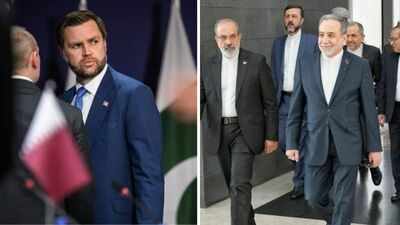
NEW DELHI: Iranian foreign minister Abbas Araghchi on Monday claimed that the first round of high-level talks between Iran and the United States in Burgenstock, Switzerland, had delivered “major progress”, with both sides agreeing to continue technical negotiations throughout the week.The talks were held under the framework of a 14-point Memorandum of Understanding (MoU) signed earlier this month, aimed at ending hostilities and laying the groundwork for a broader political settlement. While the United States has not yet issued an official statement on the outcome, negotiators agreed on several mechanisms designed to prevent renewed escalation and advance discussions on key outstanding issues.In a post on X, Araghchi said: “Mediation has delivered major progress to end Lebanon War. Oil and petrochem exports are waived, blockade lifted, some frozen assets released, and major reconstruction & development plan launched for Iran.”The Iranian foreign minister also identified the implementation of a new Lebanon monitoring mechanism as the next major challenge for both sides.Araghchi said the “first real test” of the understandings reached in Switzerland would be the establishment of a “de-confliction cell” involving Iran, the United States and Lebanon to ensure compliance with the cessation of military operations outlined in the MoU.“1st real test: Lebanon deconfliction cell,” he added.The first round of talks concluded with an agreement to continue technical discussions on unresolved issues, including regional security arrangements, sanctions-related measures and implementation mechanisms. Negotiators are expected to remain in Switzerland for further consultations over the coming days.
5 key outcomes of the first round of Iran-US talks
- Roadmap for final agreement within 60 days: The two sides agreed on a roadmap aimed at reaching a comprehensive agreement within 60 days. A High Level Committee will oversee the process and provide political direction to technical working groups handling key issues. “The High Level Committee has agreed upon a roadmap towards reaching a final deal within 60 days, laying the foundation for the immediate commencement of further technical talks,” a joint statement said
- Lebanon de-confliction mechanism established: One of the most significant outcomes was the agreement to create a de-confliction cell involving the parties and Lebanon to prevent renewed fighting. According to the joint statement, the mechanism is intended to “ensure the adherence of the termination of military operations in Lebanon”. The issue has become increasingly important after recent clashes threatened to undermine the ceasefire framework.
- Direct communication line for Strait of Hormuz: Iran and the United States also agreed to establish a direct communication channel to reduce risks of misunderstandings and ensure the safe movement of commercial shipping through the Strait of Hormuz. The statement said the communication line was created “to avoid incidents and miscommunication with the aim of safe passage for commercial vessels through the Strait of Hormuz.” The arrangement will remain in place during the 60-day negotiation period.
- Trade, oil and asset relief: Araghchi claimed the talks had already yielded economic gains for Tehran. According to the Iranian foreign minister, “Oil and petrochem exports are waived, blockade lifted, some frozen assets released, and major reconstruction & development plan launched for Iran.” However, the joint statement issued after the talks did not explicitly mention the release of frozen assets. Under the earlier MoU, the United States had committed to easing sanctions and restoring access to restricted Iranian funds.
- Technical talks to continue this week: Negotiators agreed that discussions on all unresolved issues would move to the technical level. “Technical talks will continue for the remainder of the week at the Burgenstock resort on all issues.” Working groups are expected to focus on nuclear issues, sanctions, implementation mechanisms and dispute-resolution procedures.
What happens next?
With the first round complete, negotiators will spend the rest of the week working through technical details before reporting back to political leaders. The immediate focus will be on implementing the Lebanon de-confliction mechanism, maintaining stability in the Strait of Hormuz and advancing discussions on sanctions and nuclear-related issues.The outcome of these technical talks is expected to determine whether Washington and Tehran can meet their goal of reaching a broader agreement within the next 60 days.


