
Hidden fungi discovered inside California desert moss could rewrite plant evolution history

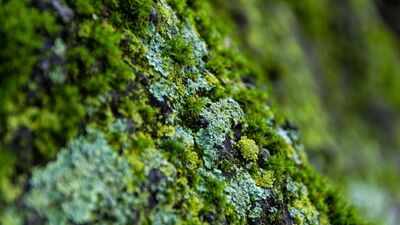
Moss is usually thought of as one of nature’s simplest plants. It carpets rocks, clings to tree trunks and quietly survives in places where many other forms of life struggle. In deserts, some mosses can dry out almost completely, remaining dormant until a brief spell of rain brings them back to life. That ability has long fascinated scientists.Now, a study from researchers at the University of California, Riverside suggests there may be more to the story. According to research published in New Phytologist, titled “Novel Glomeromycotina–moss associations identified in California dryland biocrusts”, certain desert mosses appear to host fungi living within their tissues, a relationship that scientists have traditionally believed mosses lacked. The discovery emerged from an investigation of biological soil crusts in California drylands and could reshape ideas about how some of the earliest plants interacted with fungi hundreds of millions of years ago.
Scientists studied California desert moss and fungi in living soil crusts
The work focused on biological soil crusts, often called biocrusts, which form a thin living layer across many dry landscapes. These crusts are made up of communities of mosses, fungi, algae, bacteria and other microscopic organisms that help stabilise soil and support ecosystem health.According to the study, drylands cover roughly 45% of Earth’s land surface, and biocrusts can occupy a substantial portion of those regions. Beyond preventing erosion, they also contribute to nutrient cycling and carbon storage. Yet despite their importance, many of the fungi associated with moss-dominated crusts have remained poorly understood.To investigate, researchers collected moss crusts from several locations across Southern California, including sites in the Mojave Desert, Colorado Desert and coastal areas near the Pacific. They then examined both the mosses and the surrounding soil to determine which fungal communities were present.
California desert moss found hosting fungi once thought absent from mosses
For decades, mosses have occupied a somewhat unusual position in plant biology. Many land plants form partnerships with arbuscular mycorrhizal fungi, a group of fungi known for helping plants obtain nutrients. Evidence of these relationships stretches deep into evolutionary history, and scientists often regard them as among the earliest partnerships that helped plants establish themselves on land.Mosses, however, have generally been considered an exception. While liverworts and hornworts are known to associate with these fungi, mosses have often been described as lacking comparable fungal symbioses.Genetic analyses revealed a diverse community of fungi associated with moss tissues. More importantly, the fungal communities found inside moss crusts differed from those present in nearby bare soil, suggesting they were not simply contaminants picked up from the environment. The study identified previously undocumented associations involving fungi from the Glomeromycotina group, including members related to Rhizophagus and Glomus.According to the paper, fungal coils, hyphae, vesicle-like structures and intracellular branching were detected within moss tissues. The researchers noted that such branching had not previously been documented in healthy moss cells and may indicate interactions extending beyond simple decomposition or incidental contact.The authors were careful not to claim that nutrient exchange has been proven. Demonstrating a true symbiotic relationship would require additional experiments capable of tracking the movement of resources between moss and fungus. Still, the observations suggest the relationship deserves much closer attention.
California desert moss and fungi may reveal how early plants conquered land
One reason the finding has attracted interest is its evolutionary significance. According to the researchers, interactions between early plants and fungi may have played a major role when vegetation first expanded onto land around 470 million years ago. Fossil evidence and genetic studies have already linked ancient plants with fungal partners, but mosses have often stood apart from that picture.If certain mosses do form relationships with Glomeromycotina fungi, it could fill an important gap in scientists’ understanding of how plant-fungal partnerships evolved. The study suggests that moss-associated fungi may provide a modern example of interactions resembling some of those that occurred during the earliest stages of terrestrial plant life.
Scientists found climate-linked differences in California desert moss fungi
The researchers also noticed that fungal communities varied across different environments. Mosses collected from coastal locations hosted different fungal assemblages than those growing in arid desert settings. Within the same moss species, shifts in fungal abundance and composition appeared to correspond with differences in climate and aridity. Some fungal structures were observed only in mosses from semiarid coastal habitats and not in specimens collected from drier desert regions. As per the study, environmental conditions help shape which fungi associate with mosses and how those relationships develop.


