
Haridwar struggles with 7,000 tonnes of post-Kanwar Yatra garbage as plastic, urine bottles pile up at Har-Ki-Pauri


Haridwar probably never witnessed such a filthy scene before this. Several videos have emerged on social media showing Haridwar’s sacred Har-ki-Pauri brimming with tonnes of garbage including plastic, urine bottles and clothes. These are post kanwar yatra scenes, which are among the biggest annual pilgrim gatherings wherein pilgrims come to Haridwar to collect water of the Ganga River. As soon after the crowds left, a very different picture emerged.The situation comes after a record 4.8 crore pilgrims reportedly visited Haridwar during the 2026 Kanwar Yatra. Videos show piles of discarded clothes, plastic, bottles and other waste scattered around pilgrimage areas, while sanitation workers are seen clearing heavily littered changing rooms.The videoOne particularly disturbing video shows a sanitation worker removing bottles reportedly containing urine from changing-room areas. The worker was heard saying, “Aastha ke naam pe gandagi macha rakhi hai Haridwar mein”.Har Ki Pauri bears the bruntHar Ki Pauri is one of the most sacred landmarks in Haridwar. It is one of the busiest points during the Kanwar pilgrimage and attracts pilgrims throughout the year. People come here for prayers and the famous Ganga Aarti.During Kanwar Yatra, however, the scale of footfall increased and lakhs of devotees visited the city, creating pressure on roads, toilets, changing rooms and also waste-collection systems.This year’s post-pilgrimage visuals have brought that pressure into sharp focus. Discarded clothing, plastic sheets, food-related waste, bottles and other rubbish have reportedly been found around ghats. The problem is not limited to what visitors can see around the ghats. Sanitation workers have also had to deal with waste left inside public facilities, including changing rooms.Thousands of tonnes of waste removedThe sheer volume of garbage left after the pilgrimage has become a major challenge for the sanitation workers.
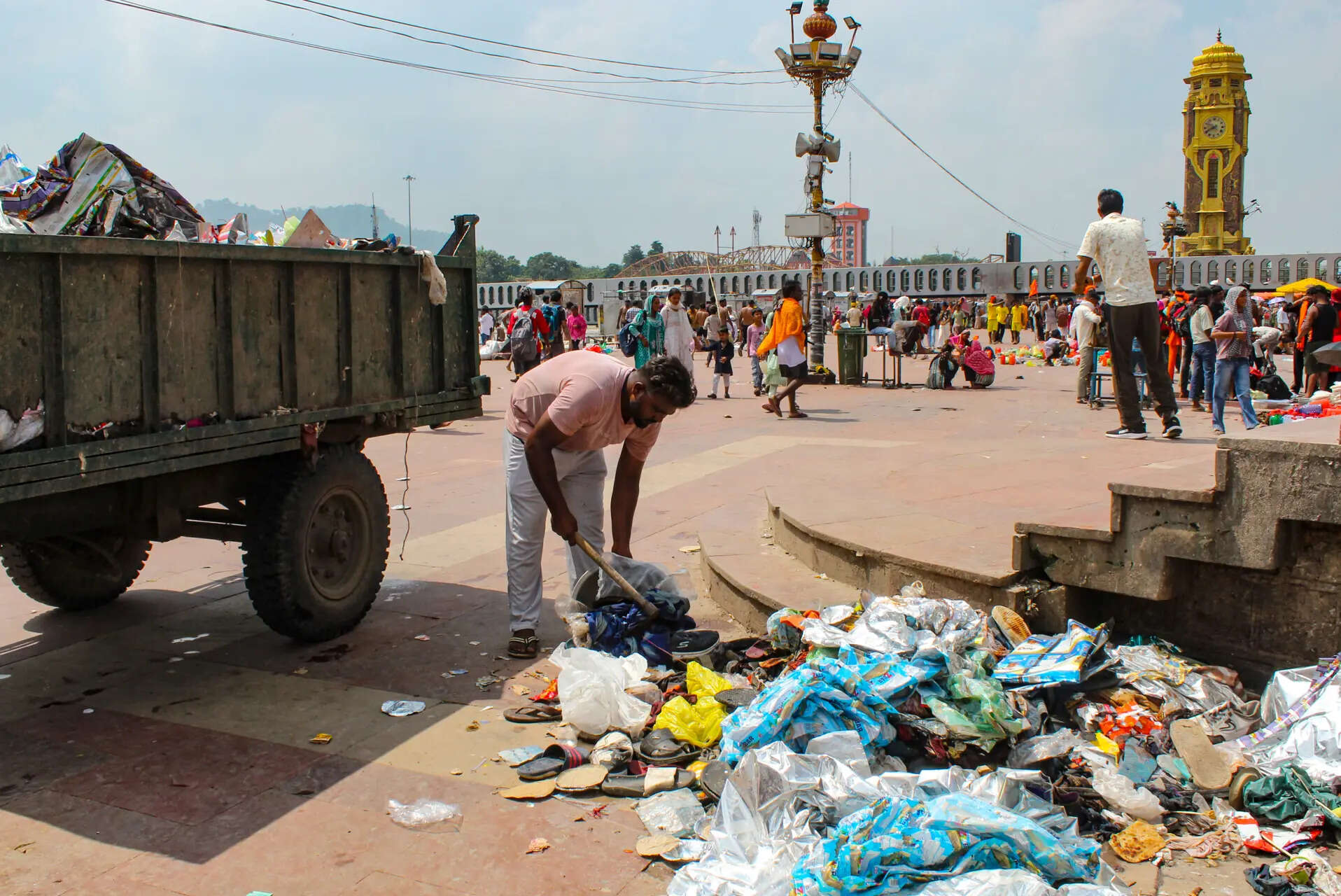
Haridwar: Workers clean up accumulated waste after the conclusion of the annual ‘Kanwar Yatra’, near ghat at Har Ki Pauri, in Haridwar, Uttarakhand. (PTI Photo) (PTI08_13_2026_000305B)
Initial reports said at least 7,000 tonnes of garbage had been transported to dumping grounds after the Kanwar Yatra. A subsequent report from the Haridwar Municipal Corporation put the figure at approximately 8,000 metric tonnes collected from the Ganga ghats and various mela sites during the pilgrimage period.That means the cleanup operation itself is effectively a major logistical exercise, requiring sanitation teams to collect, transport, segregate and dispose of waste left across a city that normally handles a much smaller volume.The latest figures also underline how quickly waste generation can escalate when millions of people converge on a relatively compact pilgrimage city over a short period.Why this matters for travellersFor travellers planning a visit to Haridwar after the Kanwar Yatra, the situation is a reminder that the pilgrimage season can significantly change the experience of visiting the city.The Kanwar Yatra is an annual pilgrimage during the monsoon months of Shravan, when devotees travel to places including Haridwar, Gaumukh and Gangotri to collect Ganga water. The District Haridwar administration describes it as an important annual pilgrimage associated with devotees of Shiva.The post-Kanwar cleanup challengesThe post-Kanwar cleanup also raises a larger question about sustainable pilgrimage tourism.Haridwar is not simply a tourist destination; it is a living religious city where millions of visitors arrive every year for faith, bathing rituals and festivals. Managing such numbers requires more than deploying additional cleaners after an event.The district administration’s website also lists ongoing solid-waste-management work and meetings related to sanitation, showing that waste management remains an active administrative concern in Haridwar.For visitors, the message is equally straightforward: religious tourism does not have to come at the cost of the destination’s environment.Travellers can help by carrying reusable bottles, avoiding single-use plastic, using designated bins and toilets, and never leaving clothes, food packaging or other offerings around the ghats.


