
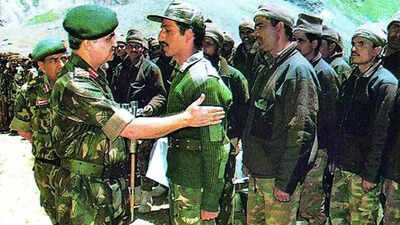
Gen V P Malik meeting frontline troops in Kargil in 1999. CHANDIGARH: Twenty-seven years after leading the Army during the 1999 Kargil War, former Army chief General VP Malik (retd) said the conflict’s hard lessons – from equipment shortages and intelligence gaps to the need for self-reliance – transformed India’s military capabilities, enabling the precision strikes on Pakistani airfields during last year’s Operation Sindoor without crossing the border.”The biggest operational lessons were the need to strengthen intelligence, surveillance and achieve ‘atmanirbharta (self-reliance)’ in military hardware,” Gen Malik told TOI in an interview ahead of the 27th anniversary of Kargil Vijay Diwas. Those lessons, he said, shaped India’s military preparedness over the next two decades.Citing Operation Sindoor, he pointed to the armed forces’ growing reliance on short- and long-range drones for surveillance and precision strikes, along with advanced rockets and missiles. CJP Jantar Mantar Protest UpdatesDharmendra Pradhan resigns as Union education minister amid massive student protests’We won’t go’: CJP’s Dipke says protests to continue till all demands metFresh clashes at Jantar Mantar after Pradhan’s exit; tear gas fired, stones pelted”We did not have to enter Pakistani territory when we struck airfields and radar stations, causing major havoc,” he said, contrasting it with Kargil.He said indigenous and imported platforms, including BrahMos, Akash and the S-400, were now tested in real-world conditions. Combined with an integrated tri-services command under Chief of Defence Staff (CDS), they have significantly strengthened India’s defence capability.Yet, Gen Malik stressed that technology alone could not win wars. “The man behind the gun is always more important. We must look after them,” he said.Recalling his visits to the frontlines in Jammu & Kashmir, Gen Malik said the soldiers themselves became a source of strength. “…every six days, I would visit… While morale in Delhi was sometimes anxious or uncertain, not a single soldier ever told me the task was difficult. Every visit replenished my own morale.”Reflecting on the reforms that followed the war, Gen Malik said govt constituted Kargil Review Committee, whose key recommendations included creating the CDS position to improve tri-service integration and civil-military coordination. He added that commemorating Vijay Diwas was not only about paying homage to the martyrs but also ensuring the lessons of the conflict continued to guide armed forces.Gen Malik said the valour displayed remained an inspiration for future generations. While the victory involved strategic planning at the highest level, he insisted the credit belonged to the young officers and soldiers who fought at unforgiving heights. “We must also remember the supporting arms and services. People often forget them but military functions like an orchestra during war. When every arm works in harmony, we achieve victory.”Invoking Bhagavad Gita, he said, “The true test of any plan lies in its execution. As written in the Gita: ‘Action is superior to knowledge’.”Get the latest India News and Live updates. Download the TOI app.About the AuthorSukhmani KoonerSukhmani Kooner joined Times of India straight from journalism school and covers consumer affairs, sports and public issues. She loves painting, trekking and being surrounded by natureRead MoreEnd of ArticleFollow Us On Social MediaVideos‘Time To Go Home’: CJP Removes Stage, Urges Protesters To Leave Jantar Mantar’Don’t Waste This Energy On One Resignation’: Yogendra Yadav On CJP Future, ‘Police Brutality’RSS Loyalist Pralhad Joshi Appointed As India’s New Education Minister Hours After Pradhan’s ExitPost Protest, Volunteers Launch Cleanliness Drive At Jantar Mantar’Wangchuk, Dipke Joined AISA’s Protest’: Harsh Dubey On NEET, Reservation, Jantar Mantar ProtestJantar Mantar Erupts In Celebration As Pradhan Resigns, Delhi Metro Reopens All Station Gates’Proof That We Can Take Anyone’s Resignation’: Abhijeet Dipke After Pradhan Quits | Jantar MantarEducation Minister Dharmendra Pradhan Resigns After Month-Long Protests, Lathi Charge Fury’No Information On Foreign Funding’ MEA Claims As CJP Protest Intensifies NationwideCJP Founder Abhijeet Dipke Diagnosed With Typhoid, Says Protest Continues Until Pradhan Resigns123PhotostoriesMillions of Indians may be living with hepatitis B without knowing it: A liver transplant surgeon explains why the silent virus is so dangerousNeurologists see these 8 brain health mistakes almost every day, and many people don’t realise they’re making themMonsoon jewellery styling: Why your rainy day wardrobe needs the right accessoriesTV actors who battled cancer: From Helen McCrory to Alan RickmanFrom Kanjeevaram to Banarasi: What different silk sarees say about youFrom ‘Mission: Impossible’ to ‘Bullet Train’: 5 heist films that deserve a spot on your watchlist8 famous foods named after real people10 forgotten Indian protein-rich foods grandparents ate regularlyFrom the cats of Red Keep to a good old game of Cyvasse: All of the ‘GoT’ references in ‘House of the Dragon’ season 35 most unusual things people have travelled for around the world123Hot PicksSchool holiday todayDelhi metroCJP ProtestMumbai rainGujarat RainAIIMS notificationNEET paper controversyAAI recruitment 2026Caitline ClarkTop TrendingMP NEET Arpirant RapeNEET Paper LeakCJP Protester AssaultedKerala IPS Ajith Kumar SuspensionAssam Flood DeathsDelhi Metro Stations ClosedMumbai ProtestUP Amroha WeddingHarbhajan singhIND U19 vs Sri Lanka U19

CHANDIGARH: Twenty-seven years after leading the Army during the 1999 Kargil War, former Army chief General VP Malik (retd) said the conflict’s hard lessons – from equipment shortages and intelligence gaps to the need for self-reliance – transformed India’s military capabilities, enabling the precision strikes on Pakistani airfields during last year’s Operation Sindoor without crossing the border.“The biggest operational lessons were the need to strengthen intelligence, surveillance and achieve ‘atmanirbharta (self-reliance)’ in military hardware,” Gen Malik told TOI in an interview ahead of the 27th anniversary of Kargil Vijay Diwas. Those lessons, he said, shaped India’s military preparedness over the next two decades.Citing Operation Sindoor, he pointed to the armed forces’ growing reliance on short- and long-range drones for surveillance and precision strikes, along with advanced rockets and missiles.
CJP Jantar Mantar Protest Updates
“We did not have to enter Pakistani territory when we struck airfields and radar stations, causing major havoc,” he said, contrasting it with Kargil.He said indigenous and imported platforms, including BrahMos, Akash and the S-400, were now tested in real-world conditions. Combined with an integrated tri-services command under Chief of Defence Staff (CDS), they have significantly strengthened India’s defence capability.Yet, Gen Malik stressed that technology alone could not win wars. “The man behind the gun is always more important. We must look after them,” he said.Recalling his visits to the frontlines in Jammu & Kashmir, Gen Malik said the soldiers themselves became a source of strength. “…every six days, I would visit… While morale in Delhi was sometimes anxious or uncertain, not a single soldier ever told me the task was difficult. Every visit replenished my own morale.”Reflecting on the reforms that followed the war, Gen Malik said govt constituted Kargil Review Committee, whose key recommendations included creating the CDS position to improve tri-service integration and civil-military coordination. He added that commemorating Vijay Diwas was not only about paying homage to the martyrs but also ensuring the lessons of the conflict continued to guide armed forces.Gen Malik said the valour displayed remained an inspiration for future generations. While the victory involved strategic planning at the highest level, he insisted the credit belonged to the young officers and soldiers who fought at unforgiving heights. “We must also remember the supporting arms and services. People often forget them but military functions like an orchestra during war. When every arm works in harmony, we achieve victory.“Invoking Bhagavad Gita, he said, “The true test of any plan lies in its execution. As written in the Gita: ‘Action is superior to knowledge’.”


