
From boiling acid to Antarctic ice: The extraordinary organisms that redefine the limits of life on Earth |

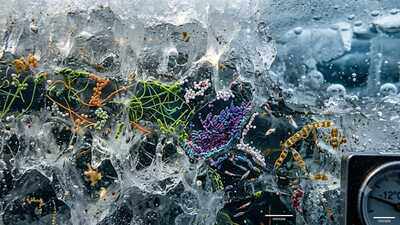
Life is often imagined as something that flourishes under mild conditions, comfortable temperatures, liquid water and breathable air. Yet some of Earth’s most resilient organisms have evolved in places that appear utterly inhospitable. They inhabit boiling hot springs, acidic pools, frozen Antarctic lakes, crushing ocean trenches and hypersaline deserts where most forms of life would perish within moments. These remarkable organisms, known as extremophiles, are not biological oddities living at the edge of existence. They are thriving ecosystems that are reshaping scientists’ understanding of evolution, the origins of life and even the possibility of life beyond Earth. Extremophiles demonstrate that life is far more adaptable than previously imagined.
Extremophiles flourish where most life simply cannot survive
The word extremophile literally means “lover of extremes”, referring to organisms that require environmental conditions once thought incompatible with life.Some species, called thermophiles, grow in water approaching the boiling point. Others, known as psychrophiles, remain active beneath Antarctic ice at temperatures well below freezing. Halophiles inhabit lakes and salt flats so saline that ordinary cells rapidly lose water, while acidophiles thrive in waters with acidity comparable to battery acid. At the opposite end of the spectrum, alkaliphiles flourish in highly alkaline environments, and piezophiles survive under pressures found several kilometres beneath the ocean surface.Many of these organisms belong to the domain Archaea, whose unusual cellular structures allow them to tolerate environmental stresses that would destroy most bacteria, plants and animals. Discoveries over the past several decades have repeatedly pushed back the known limits of where life can exist, revealing thriving microbial communities in places once considered sterile.
Their remarkable chemistry is changing medicine, biotechnology and industry
The resilience of extremophiles lies not in extraordinary strength but in extraordinary biochemistry.Their proteins remain stable at temperatures that normally cause enzymes to unravel. Their cell membranes resist intense heat, freezing temperatures or highly acidic surroundings through specialised molecular structures evolved over millions of years.One of the best-known examples is Thermus aquaticus, first isolated from Yellowstone National Park. The bacterium produces Taq DNA polymerase, an enzyme that remains functional at high temperatures and made the invention of the polymerase chain reaction (PCR) possible. PCR transformed molecular biology by allowing scientists to rapidly amplify DNA, becoming indispensable in medical diagnostics, forensic science, genetic research and infectious disease testing.The broader scientific importance of extremophiles was highlighted in the review ‘Extremophiles and Their Applications in Medical Processes and Biotechnology’ by Bishwambhar Mishra and colleagues, published in Cureus. The authors explain that enzymes and biomolecules from extremophiles are increasingly being used in pharmaceuticals, food processing, environmental remediation, biofuel production and numerous industrial applications because they continue functioning under conditions that would disable conventional biological molecules.
They may hold clues to how life first evolved on Earth
Extremophiles are also providing valuable insights into one of biology’s oldest questions: how life began.Early Earth was vastly different from today’s relatively stable planet. Billions of years ago, intense volcanic activity, stronger ultraviolet radiation, oxygen-poor atmospheres and chemically harsh environments dominated much of the planet’s surface.Because many extremophiles can survive similar conditions, researchers study them as living models of Earth’s earliest organisms. Their metabolic pathways, cellular adaptations and evolutionary history help scientists reconstruct the kinds of environments where the first microbial life may have emerged.As Mishra and colleagues note in their review, understanding these organisms not only improves knowledge of evolutionary biology but also reveals mechanisms that could inspire new medical treatments and industrial technologies.
Earth’s harshest microbes are shaping the search for life beyond our planet
Perhaps the greatest fascination surrounding extremophiles lies beyond Earth itself. For decades, scientists assumed that habitable worlds had to resemble our own. Extremophiles have challenged that assumption. If microorganisms can survive beneath Antarctic glaciers, around deep-sea hydrothermal vents, inside acidic volcanic pools or kilometres beneath the Earth’s crust, then similar forms of life might exist in equally hostile environments elsewhere in the Solar System.This possibility has made extremophiles central to modern astrobiology. Researchers use them to evaluate whether subsurface oceans on Europa and Enceladus, or ancient groundwater systems on Mars, might provide suitable conditions for microbial life.Extremophiles have transformed our understanding of life’s boundaries. Rather than defining where life ends, they continue expanding the places where scientists believe it could exist.
Tiny organisms with an outsized impact
Although invisible to the naked eye, extremophiles are influencing fields ranging from medicine and biotechnology to climate science and planetary exploration.Every newly discovered species broadens our understanding of biology, revealing that survival depends not on avoiding extreme environments but on evolving ingenious ways to exploit them. Their enzymes drive modern genetic research, their metabolism offers environmentally friendly industrial solutions and their resilience provides a blueprint for investigating life beyond Earth.Far from being isolated curiosities, extremophiles remind us that life is astonishingly adaptable. In the planet’s hottest, coldest, deepest and most chemically hostile environments, they continue to demonstrate that the limits of life are far wider than humanity once believed.


