
Finger Replantation: Mumbai woman nearly loses finger and suffers deep injuries on head after door slams shut on her; doctors successfully replant finger within hours despite challenges like diabetes and tobacco chewing habit

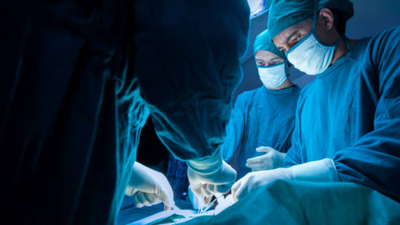
A team of doctors successfully operated on a 75-year-old woman in Mumbai after she arrived with deep injuries on her hand and head, including a severed finger.
What happened?
For 75-year-old Bhagwani Singh, a resident of Lower Parel, it was a scary day when strong winds sweeping through her high-rise apartment triggered a life-threatening accident. As she paused at her doorstep to remove her footwear, a powerful gust rushing through two west-facing windows violently slammed the heavy door shut on her hand, nearly amputating her index finger and causing a deep injury to another finger. In the painful attempt to pull her hand free, another gust pushed the door again, striking her forehead and leaving her with injuries that also required stitches. Nearly 18 hours later, despite the severity of the crush injury and several medical challenges, a specialist microsurgical team at Gleneagles Hospital, Parel, Mumbai, successfully replanted her finger, offering hope where the chances of saving it appeared extremely slim.
“She had a devastating crush amputation”
Dr. Kushal Shah, Hand, Wrist, Brachial Plexus and Reconstructive Surgeon said, “The elderly patient suffered a devastating crush amputation of her finger at the middle phalanx level after her hand was caught in a door. The patient reached the specialist team several hours after the injury, as her family initially admitted her to a nearby hospital while searching for the right centre with expertise in complex hand microsurgery, making the procedure technically demanding due to prolonged warm ischaemia. The treating surgeons decided to proceed with replantation after carefully assessing the condition of the amputated part and counselling the family regarding the guarded prognosis. The success of finger replantation is never determined by surgery alone. Every effort must be made to preserve length, sensation, and function, especially in the hand. Even in elderly patients, a replanted finger can provide superior functional and psychological outcomes compared with revision amputation, provided the patient understands the risks involved.”
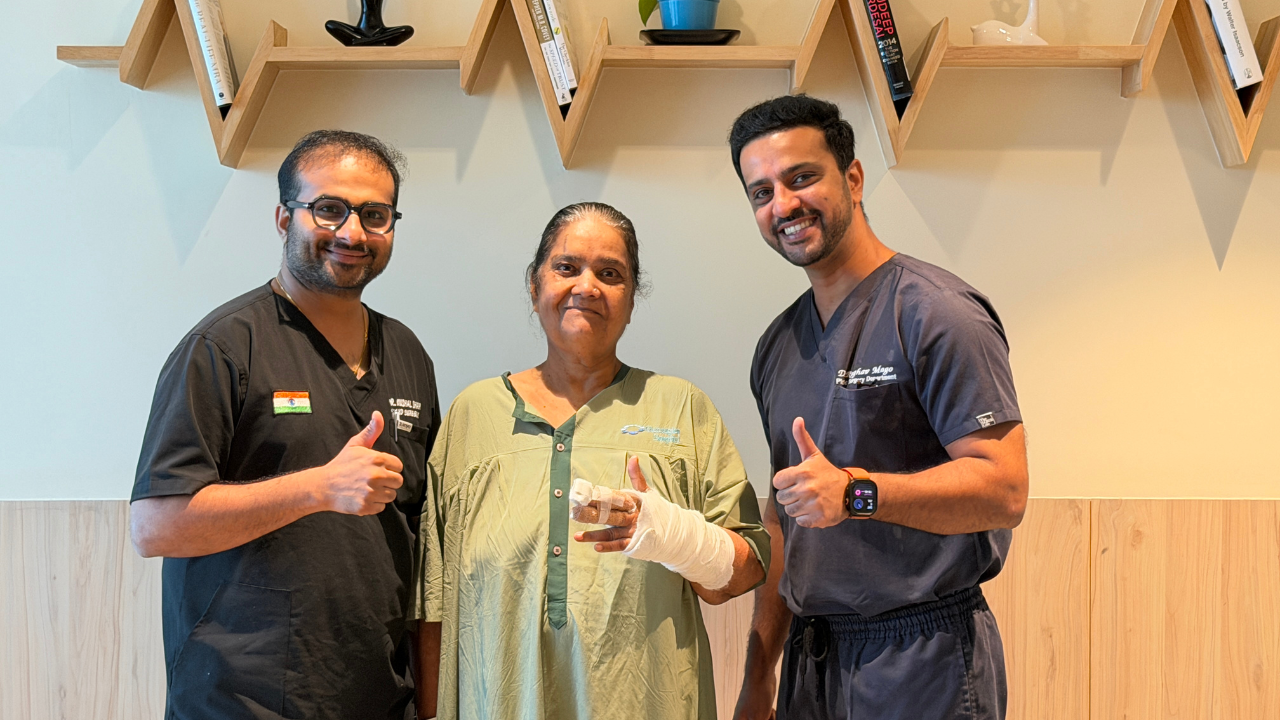
Dr. Shah led the skeletal reconstruction, achieving stable fracture fixation, followed by meticulous flexor and extensor tendon repair, creating a stable framework essential before the delicate microsurgical reconstruction could begin.“Restoring circulation is one of the most technically demanding aspects of replant surgery,” explained Dr. Raghav Mago, Plastic & Reconstructive Surgeon, who carried out the microvascular arterial and venous anastomoses under the operating microscope, restoring blood circulation to the amputated finger after nearly 18 hours from injury. “However, surgery is only one part of the battle. Factors such as diabetes, tobacco use, and the nature of the injury significantly influence healing and long-term survival of the replanted finger.
It was a challenging case, not because of injury
The case was particularly challenging because the patient was an uncontrolled diabetic with a long-standing tobacco-chewing habit, both of which are known to impair blood vessel function, reduce tissue healing, and increase the risk of thrombosis, infection, and wound complications.Unlike clean-cut amputations, door-crush injuries caused extensive damage to arteries, veins, nerves, and surrounding soft tissues. Combined with prolonged ischemia and medical co-morbidities, the probability of complications increases substantially.According to the treating team, finger replantation is not performed merely to save a digit. Preservation of finger length, sensation, grip strength, and hand mechanics can have a profound impact on independence and quality of life, particularly in elderly individuals who rely heavily on hand function for daily activities. The surgeons emphasized that age alone should not be considered a contraindication for replantation. Instead, every case should be evaluated individually by experienced microsurgeons after considering the injury pattern, ischemia time, patient expectations, and existing medical illnesses. “This case reminds us that modern microsurgery can often push the boundaries of what is considered possible,” Dr. Shah added. “At the same time, it also reminds patients that controlling diabetes, avoiding tobacco, and seeking immediate medical attention after an amputation are equally critical factors that influence the outcome.”The treating team hopes the case raises awareness about the importance of early referral to specialized hand trauma centres, proper preservation of amputated parts during transport, and timely microsurgical intervention, all of which can substantially improve the chances of successful finger replantation. “It all happened within a few seconds. She had simply returned home after her regular walk and was taking off her footwear when the wind suddenly slammed the door on her hand. We never imagined that something as ordinary as a strong gust of wind could cause such a devastating injury. Seeing her in so much pain was heartbreaking, and we feared she would lose her finger forever. We are deeply grateful to the expert team for giving her not only her finger back but also the confidence to continue living independently. This incident has taught our family how unpredictable accidents can be and how important it is to seek specialised treatment without delay,” said the patient’s granddaughter, Diksha Singh. “Cases like these remind us that extraordinary recoveries are possible when advanced technology, skilled specialists, and timely medical intervention come together. We are committed to delivering world-class trauma and reconstructive care while continuously raising awareness about the importance of early treatment and specialised referral in limb-saving emergencies, “concluded Dr. Bipin Chevale, CEO, Gleneagles Hospital Mumbai.


