
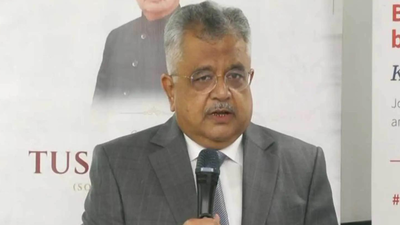
File photo: SG Tushar Mehta (Picture credit: ANI) NEW DELHI: Solicitor general Tushar Mehta on Saturday said associating Hindu law with ‘Manusmriti’ was a misconception as an overwhelming number of Hindus, except those in Assam and Bengal, followed the ‘Mitakshara’ school of thought.Delivering a lecture on ‘Ancient Wisdom & Legal Intelligence’, Mehta said, “People who allege that Hindu law is based on ‘Manusmriti’ are factually wrong since most of India follows ‘Mitakshara’ school of thought which is based on ‘Yajnavalkya Smriti’.”He added, “There are two theories of Hindu law prevalent in India since time immemorial, at least since prior to 700 AD. The first school of thought in Hindu law is ‘Mitakshara’ school of thought and the second school of thought is ‘Dayabhaga’.”The SG said the ‘Mitakshara’ school of thought, developed by Vijnaesvara, was solely based on ‘Yajnavalkya Smriti’ and not ‘Manusmriti’ as was wrongly believed. He said it was prevalent in the entire country except Bengal and Assam, which followed ‘Dayabhaga’ school of thought, based on ‘Manusmriti’.Distinguishing between the two schools of thought based on rights of inheritance as provided in scriptures, he said, “Inheritance in ‘Dayabhaga’ school of thought used to be applicable only to those who could perform ‘pind daan’.According to this system, ‘pind’ would mean rice cake offered in ‘shraadh’ ceremony to the ancestors. This was a very restrictive meaning in the ‘Dayabhaga’ school of thought prevalent in two states.”He said the ‘Mitakshara’ school was liberal and more dynamic as it gave the right of inheritance by birth, considering ‘pind’ as DNA.This concept is still in existence as a coparcener in a Hindu family gets the right of inheritance by birth.On adoption, Mehta presented four prevailing interpretations of “right to adopt’ to argue Hindu scripture-based laws were capable of being interpreted in a dynamic way.He also praised ancient wisdom for devising ‘prohibited degrees of relationships’ between man and woman and said the system devised much prior to 700 AD had been approved by Parliament while codifying the Hindu law on marriage.Get the latest India news and live updates. Download the TOI App.End of ArticleFollow Us On Social MediaVideosBig Setback To Mamata Banerjee As Loyalist Anubrata Mandal Joins Ritabrata-Led Rebel CampOperation Lotus In Kashmir? CM Omar Abdullah Claims BJP Offered NC MLAs Rs 20-30 Crore In JammuSIA Kashmir Secures Interpol Red Corner Notice Against Hizbul Terrorist KandooWhat India Gained From PM Modi’s New Zealand Visit: Defence, Trade, Indo-Pacific & More15 Indian Tourists Confirmed Dead As Speedboat Capsizes Off Vietnam’s Phu Quoc IslandSonam Wangchuk Rejects ‘Modern Gandhi’ Label As Hunger Strike Enters Fourteenth Day In DelhiSupriya Sule Dismisses Pawar-Shinde Meeting Row, Calls It A ‘Storm In A Tea Cup’ Amid SpeculationINS Mahendragiri Joins Indian Navy, Boosting Maritime Power Amid Indo-Pacific Challenges | WatchHighway Blocked, Resignations Threatened As BJP Faces Backlash Over Ticket Choice In MPNEET Paper Leak Traced To Contracted Paper Setters, Charge Sheet Likely This Month | Watch123PhotostoriesWhy India is facing a diabetes explosion: Stanford’s top 2% scientist reveals the hidden reasons Indians develop it younger than the rest of the worldFrom Priyanka Chopra to Ananya Panday: 5 best Wimbledon looks ever worn by Indian celebritiesChristopher Nolan’s best films to watch, ahead of ‘The Odyssey’: From ‘Oppenheimer’ to ‘Memento’10 foods that quietly contain too much saltWHO warns global cancer cases could nearly double by 2050; lifestyle changes, pollution and delayed diagnosis are fueling the riseAnkur Warikoo’s viral post on love after 20 years of marriage is striking a chord online10 foods that originated in India but became famous around the worldAlia Bhatt elevates a classic silk saree with modern draping at Akansha Ranjan Kapoor’s wedding festivitiesStylish Shubman Gill joins Anjali Sachin Tendulkar at Wimbledon 2026; fans ask, ‘Where is Sara?’World’s 10 most populous cities in 2026 every traveller should know123Hot PicksTravis Kelce and Taylor SwiftBlake LivelyAlex OvechkinJayden Adams DeathAlex PereiraJayden Adams Net WorthNico HischierStrait of HormuzSimone BilesTop TrendingWilliam NylanderVietnam Boat AccidentTelangana Techie Wife MurderFIFA World Cup 2026Chhattisgarh Student MurderTS EAMCET Phase 1 seat allotmentRamesh MhatreDelhi NCR rainGurgaon EncounterIran war

NEW DELHI: Solicitor general Tushar Mehta on Saturday said associating Hindu law with ‘Manusmriti’ was a misconception as an overwhelming number of Hindus, except those in Assam and Bengal, followed the ‘Mitakshara’ school of thought.Delivering a lecture on ‘Ancient Wisdom & Legal Intelligence’, Mehta said, “People who allege that Hindu law is based on ‘Manusmriti’ are factually wrong since most of India follows ‘Mitakshara’ school of thought which is based on ‘Yajnavalkya Smriti’.”He added, “There are two theories of Hindu law prevalent in India since time immemorial, at least since prior to 700 AD. The first school of thought in Hindu law is ‘Mitakshara’ school of thought and the second school of thought is ‘Dayabhaga’.”The SG said the ‘Mitakshara’ school of thought, developed by Vijnaesvara, was solely based on ‘Yajnavalkya Smriti’ and not ‘Manusmriti’ as was wrongly believed. He said it was prevalent in the entire country except Bengal and Assam, which followed ‘Dayabhaga’ school of thought, based on ‘Manusmriti’.Distinguishing between the two schools of thought based on rights of inheritance as provided in scriptures, he said, “Inheritance in ‘Dayabhaga’ school of thought used to be applicable only to those who could perform ‘pind daan’.According to this system, ‘pind’ would mean rice cake offered in ‘shraadh’ ceremony to the ancestors. This was a very restrictive meaning in the ‘Dayabhaga’ school of thought prevalent in two states.”He said the ‘Mitakshara’ school was liberal and more dynamic as it gave the right of inheritance by birth, considering ‘pind’ as DNA.This concept is still in existence as a coparcener in a Hindu family gets the right of inheritance by birth.On adoption, Mehta presented four prevailing interpretations of “right to adopt’ to argue Hindu scripture-based laws were capable of being interpreted in a dynamic way.He also praised ancient wisdom for devising ‘prohibited degrees of relationships’ between man and woman and said the system devised much prior to 700 AD had been approved by Parliament while codifying the Hindu law on marriage.


