
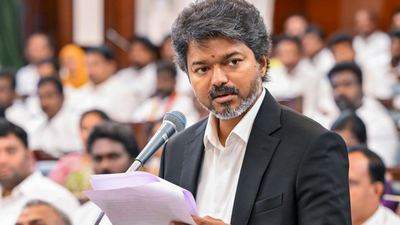
File photo of Tamil Nadu chief minister Vijay NEW DELHI: Tamil Nadu chief minister C Joseph Vijay has written to Prime Minister Narendra Modi opposing Karnataka’s proposed Mekedatu dam across the Cauvery and challenging the Centre’s claim that the consent of lower riparian states is not expressly required under the Supreme Court’s 2018 judgment.Vijay’s letter came a day after Union minister of state for Jal Shakti Raj Bhushan Choudhary told the Rajya Sabha that the February 16, 2018 verdict contained no provision requiring Karnataka to secure the approval of Tamil Nadu, Kerala or Puducherry before constructing a structure across the Cauvery. The reply was given to a question raised by PMK MP Anbumani Ramadoss. Watch Why Tamil Nadu CM Vijay Is Engaging With PM Modi Despite Remaining BJP’s Biggest Critic”This disappointing reply from the Hon’ble Minister of State for Jal Shakti seems to have been made without taking into consideration the prevailing legal position and settled law with regard to the consent of the lower riparian states,” Vijay said in his letter.The Tamil Nadu chief minister cited the Supreme Court’s ruling in the Alamatti dam dispute between Karnataka and Andhra Pradesh to argue that the consent of downstream states was necessary for projects capable of affecting river flows.Citing the judgment, Vijay said: “Nor can Karnataka State be permitted to construct up to that height without the consent of all other riparian States as well as without the approval of the Central government.”He also referred to Clause XVIII of the Cauvery Water Disputes Tribunal’s final award, which preserves a state’s authority to regulate the use of water within its territory only when such action is not inconsistent with the tribunal’s order.Vijay argued that any project that could affect the regulated flow regime established under the award must therefore be examined for compliance with it.The Centre, in its Rajya Sabha reply, had relied on the same clause to say that the 2018 Supreme Court judgment did not specifically require Karnataka to obtain the consent of the other Cauvery basin states. It said states retained the authority to use water within their boundaries as long as their actions were not inconsistent with the tribunal’s directions.Tamil Nadu, however, maintained that the issue could not be decided merely by looking for an explicit consent clause in the 2018 verdict.In his letter, Vijay pointed to the tribunal’s directions concerning Kerala’s Pambar hydroelectric project, which involved only 0.1 TMC of consumptive use. The tribunal had directed Kerala and Tamil Nadu to jointly agree on the schedule of water releases to ensure that downstream irrigation was not adversely affected.According to Vijay, the direction showed that the tribunal had attached importance not only to annual water allocations but also to the coordinated regulation of releases affecting downstream states.He further cited Clause XI of the award, which, according to the letter, prohibits an upper riparian state from taking action affecting scheduled deliveries to downstream states except through mutual agreement and consultation with the regulatory authority.Clause XX, he said, recognises that changes to the award can be made only through an agreement among the party states.”Tamil Nadu is therefore of the considered opinion that the proposed Mekedatu Project cannot be evaluated merely as an engineering proposal,” Vijay wrote.He said the project’s legal permissibility must first be examined against the Cauvery tribunal’s final award, the Supreme Court’s February 2018 judgment and the rights of lower riparian states.The chief minister also pointed out that the Detailed Project Report submitted by Karnataka in 2019 had been returned by the Central Water Commission for revision to ensure compliance with the tribunal award and applicable guidelines.Tamil Nadu has consistently opposed Karnataka’s proposal to construct the balancing reservoir, arguing that it could affect the quantity and timing of Cauvery water reaching the downstream state.Karnataka maintains that the project is intended primarily to meet Bengaluru’s drinking-water requirements and generate hydroelectric power.Get the latest India News and Live updates. Download the TOI app.About the AuthorTOI News DeskThe TOI News Desk comprises a dedicated and tireless team of journalists who operate around the clock to deliver the most current and comprehensive news and updates to the readers of The Times of India worldwide. With an unwavering commitment to excellence in journalism, our team is at the forefront of gathering, verifying, and presenting breaking news, in-depth analysis, and insightful reports on a wide range of topics. The TOI News Desk is your trusted source for staying informed and connected to the ever-evolving global landscape, ensuring that our readers are equipped with the latest developments that matter most.”Read MoreEnd of ArticleFollow Us On Social MediaVideosWangchuk Calls for “Humility” as CJP Celebration Videos Go Viral, Saurav Das Clarifies DebateFamilies Of 4 Injured Policemen Move SC Seeking Action Against CJP Protest ViolenceKhajuraho Airport Tops AAI Customer Satisfaction Survey Despite Having No Flights in July-AugustBihar Withdraws F.I.Rs Against NEET Protesters, Orders Release Of All Arrested In July 25 CasesPetrol Bomb Hurled At BJP Office In Sangrur, BJP Questions Punjab Law And OrderSonam Wangchuk’s Wife Slams BJP And Congress, Says Both Use ‘Identical Tactics’ Against CriticsBig Setback For Vijay Govt, Madras High Court Cancels Jobs Order For Karur Victims’ FamiliesKangana Ranaut Slams Gen Z-led CJP Protests, Calls Viral Protest Reels “Puke Inducing” OnlineDelhi Fast Track Court Directs Prosecutor Appointment, Adjourns NEET Accused Bail Pleas Till Aug 3Delhi-Haridwar Highway Traffic Alert: Major Restrictions Announced Ahead of Kanwar Yatra 2026123Photostories11 oldest and historic restaurants in Kolkata where every meal comes with a storyWhat happens when you line aluminium foil in your cutlery drawerExclusive – Laughter Chefs 3 winner Jannat Zubair on bond with Aly Goni, missing the show and journey; ‘Saying goodbye is definitely the hardest part’7 Natural ways to protect your car from rats and mice6 food ingredients used in the US but banned in many parts of the worldIs your banana ripening too fast? Know why its happening and 5 simple ways to slow it down5 Must-try monsoon maintenance tips for a grand wooden entrance doorThe longevity revolution: Why people are investing in skin health earlier than ever beforeWhy Indians reach for curd after spicy food while Koreans choose completely different side dishes7 tall plants for the ultimate green vibe for your balcony123Hot PicksH.C. VermaBTEUP Even Semester resultMHT CET final merit listDelhi weatherWeather tomorrowRupaidiha border crossingOdisha schoolTN supplementary resultsCBSE 12 supplementary examTop TrendingDelhi WeatherStalker 2 Release DateChhattisgarh MurderE20 FuelCJP Parliament MarchNEET ProtestersBengaluru Woman HarassmentBengaluru Metro SuicideIB Officer Murder CaseWeather Tomorrow

NEW DELHI: Tamil Nadu chief minister C Joseph Vijay has written to Prime Minister Narendra Modi opposing Karnataka’s proposed Mekedatu dam across the Cauvery and challenging the Centre’s claim that the consent of lower riparian states is not expressly required under the Supreme Court’s 2018 judgment.Vijay’s letter came a day after Union minister of state for Jal Shakti Raj Bhushan Choudhary told the Rajya Sabha that the February 16, 2018 verdict contained no provision requiring Karnataka to secure the approval of Tamil Nadu, Kerala or Puducherry before constructing a structure across the Cauvery. The reply was given to a question raised by PMK MP Anbumani Ramadoss.“This disappointing reply from the Hon’ble Minister of State for Jal Shakti seems to have been made without taking into consideration the prevailing legal position and settled law with regard to the consent of the lower riparian states,” Vijay said in his letter.The Tamil Nadu chief minister cited the Supreme Court’s ruling in the Alamatti dam dispute between Karnataka and Andhra Pradesh to argue that the consent of downstream states was necessary for projects capable of affecting river flows.Citing the judgment, Vijay said: “Nor can Karnataka State be permitted to construct up to that height without the consent of all other riparian States as well as without the approval of the Central government.”He also referred to Clause XVIII of the Cauvery Water Disputes Tribunal’s final award, which preserves a state’s authority to regulate the use of water within its territory only when such action is not inconsistent with the tribunal’s order.Vijay argued that any project that could affect the regulated flow regime established under the award must therefore be examined for compliance with it.The Centre, in its Rajya Sabha reply, had relied on the same clause to say that the 2018 Supreme Court judgment did not specifically require Karnataka to obtain the consent of the other Cauvery basin states. It said states retained the authority to use water within their boundaries as long as their actions were not inconsistent with the tribunal’s directions.Tamil Nadu, however, maintained that the issue could not be decided merely by looking for an explicit consent clause in the 2018 verdict.In his letter, Vijay pointed to the tribunal’s directions concerning Kerala’s Pambar hydroelectric project, which involved only 0.1 TMC of consumptive use. The tribunal had directed Kerala and Tamil Nadu to jointly agree on the schedule of water releases to ensure that downstream irrigation was not adversely affected.According to Vijay, the direction showed that the tribunal had attached importance not only to annual water allocations but also to the coordinated regulation of releases affecting downstream states.He further cited Clause XI of the award, which, according to the letter, prohibits an upper riparian state from taking action affecting scheduled deliveries to downstream states except through mutual agreement and consultation with the regulatory authority.Clause XX, he said, recognises that changes to the award can be made only through an agreement among the party states.“Tamil Nadu is therefore of the considered opinion that the proposed Mekedatu Project cannot be evaluated merely as an engineering proposal,” Vijay wrote.He said the project’s legal permissibility must first be examined against the Cauvery tribunal’s final award, the Supreme Court’s February 2018 judgment and the rights of lower riparian states.The chief minister also pointed out that the Detailed Project Report submitted by Karnataka in 2019 had been returned by the Central Water Commission for revision to ensure compliance with the tribunal award and applicable guidelines.Tamil Nadu has consistently opposed Karnataka’s proposal to construct the balancing reservoir, arguing that it could affect the quantity and timing of Cauvery water reaching the downstream state.Karnataka maintains that the project is intended primarily to meet Bengaluru’s drinking-water requirements and generate hydroelectric power.


