
‘Everyone told him to leave judo’: How Harsh Singh defied injuries to become a CWG champion

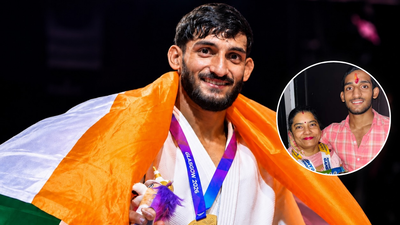
For Harsh Singh’s family, the gold medal at the 2026 Commonwealth Games was the culmination of years of training, injuries and uncertainty. The 23-year-old from Delhi became the first Indian male judoka to win a Commonwealth Games gold, beating Australia’s Joshua Katz in the men’s 60kg final in Glasgow on July 31.Back home in Delhi, however, his family was thinking about something much more personal: the boy who had once been told to give up the sport had just become a Commonwealth champion.
28 Jul 2026 | 16:22
How do you teach children about money and financial responsibility?
“My son has worked really hard right from the beginning. He had also suffered injuries and broken a bone. Everyone told him to leave Judo, that it would damage his body,” she told ANI. “He refused, he was determined to focus on the sport. He made Judo his everything. He watched only Judo on TV and his phone.”
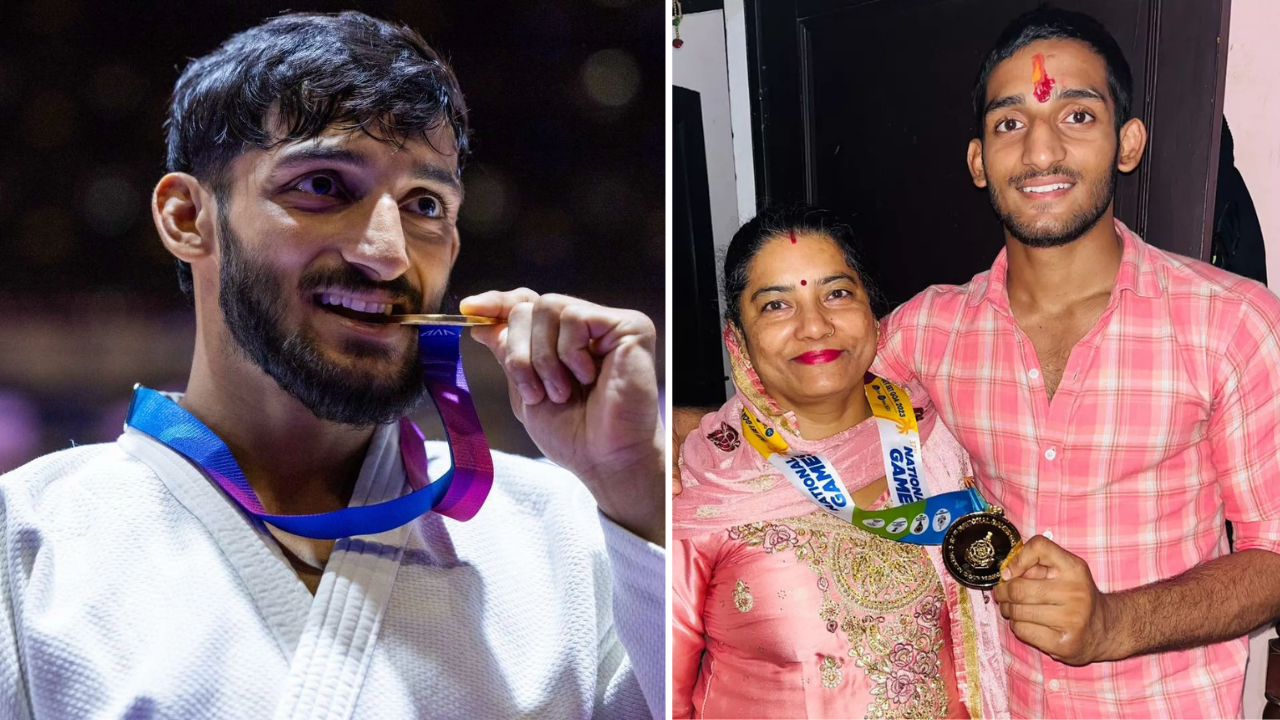
His mother Babli recalled how Harsh refused to give up despite injuries.
Harsh first took up judo when he was around eight years old. His father, Uday Bhan Singh, said the family found a coach named Manoj who encouraged them to support Harsh’s interest in the sport. “We found a coach, Manoj Sir. He encouraged me for Judo. So, we pushed him for it,” his father said. “He was always determined and hardworking. He was always so flexible.”
From a Delhi academy to the Commonwealth podium
Harsh grew up in a modest family in Delhi and trained at Victory Judo Academy in Kakrola. His childhood coach Hemant Rathee remembers him as an energetic child who followed his friends to the academy. “He was always at some or other kind of mischiefs but has a lot of energy so I decided to use it in the sport,” Rathee recalled.His family’s circumstances meant that training was not always easy. Coaches and academy staff helped with his diet and sporting kit as he developed as a judoka. He eventually progressed to the national and international circuit, with the 2026 Commonwealth Games becoming the biggest stage of his career.
A year away after a serious knee injury
The biggest interruption came before Glasgow. Singh spent about a year recovering from a knee injury, according to Glasgow 2026. The injury came at a crucial stage of his career and required surgery and rehabilitation. Returning to competition meant rebuilding his physical condition and getting back into the 60kg category.The setback did not prevent him from making the Commonwealth Games team. By July 31, Singh was back on the mat in Glasgow- and he was in no mood to make his first Commonwealth Games appearance a quiet one.
Four bouts, one historic gold
Singh began his 60kg campaign by defeating Malawi’s Chikondi Kathewera by ippon in the round of 16. He then beat Vanuatu’s Alan Monthouel by ippon in the quarterfinal.The semifinal against Australia’s Pedro Carlos Antun Neto was tougher, but Singh won by waza-ari to reach the final. Waiting for him was another Australian, Joshua Katz, an Olympian.The International Judo Federation described Singh as “fast, agile and focused” during the competition. In the final, Singh kept attacking and eventually found the scoring move with less than a minute remaining, earning a waza-ari and taking control of the contest.He finished with a 10-0 scoreline and the gold medal.The victory was significant beyond Singh’s own career. India had never won a men’s judo gold at the Commonwealth Games before Glasgow. Singh became the first Indian male judoka to do so.
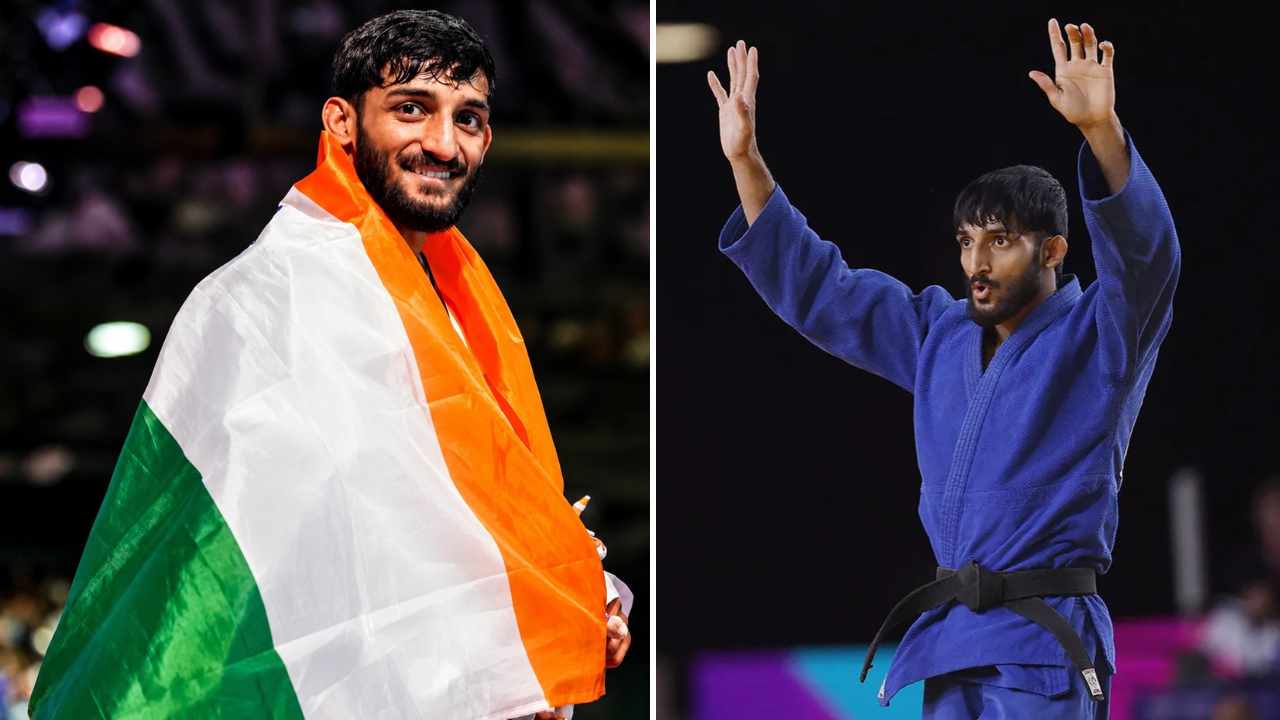
Harsh Singh’s journey from a young Delhi judoka to Commonwealth Games champion culminated in Glasgow.
‘It feels great’
For his mother, the medal was a validation of the decision Harsh had made as a child- to stay with judo despite injuries and repeated advice to quit. “It feels great. He has won a medal for the country and made the country proud. He is elated,” Babli said. His father was equally emotional about the result.“I am delighted,” Uday Bhan said. The gold also gives Singh a new platform in a sport that, he has said, needs greater visibility in India. His Commonwealth victory came after a difficult period of rehabilitation and marked his return to the biggest stage.For a boy who entered a Delhi judo academy as a child, was nicknamed ‘khajur’ for his lean frame and was repeatedly told that injuries could make him give up the sport, the Glasgow final provided a definitive answer. He did not leave judo. He became a Commonwealth champion.


