
Elon Musk says a future on Mars could help humanity survive pandemics, AI and global disasters

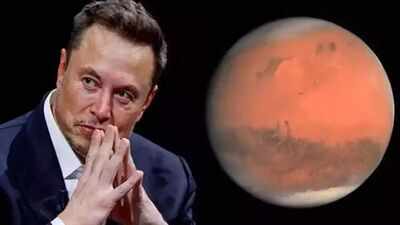
Elon Musk has expanded on his long-standing vision of making humanity a multi-planet species, arguing that a self-sustaining colony on Mars could serve as a crucial safeguard against civilisation-ending catastrophes on Earth. Responding to a debate on X (formerly Twitter), Musk said his views had been misunderstood, emphasising that he has never claimed Mars would be immune to the same dangers facing Earth. Instead, he argued that the vast distance between the two planets could significantly reduce the impact of threats such as deadly pandemics, cyberattacks and advanced AI systems. While acknowledging that a Martian civilisation would not eliminate existential risks, Musk said it could dramatically improve humanity’s long-term prospects by ensuring that human civilisation is no longer confined to a single planet.
Elon Musk explains how Mars could shield humanity from pandemics and AI
Musk’s latest comments were prompted by a discussion on X (formerly Twitter) about whether establishing communities on Mars would genuinely reduce risks that originate on Earth. Responding to criticism, he said people had misunderstood his position. He stressed that he had never believed Mars would be free from dangers linked to Earth, adding that “the immense difficulty of travelling to Mars means that there is a much higher likelihood of mitigating risks originating from Earth.”A journey to Mars currently takes around six months using existing mission profiles. Musk pointed to that travel time as a practical advantage, describing it as “an automatic 6 month quarantine” if a deadly pandemic were to emerge on Earth. Rather than preventing disease altogether, he argued that the lengthy journey would provide valuable time to identify the threat, understand it and potentially stop it from reaching a Martian settlement before a spacecraft arrived.His argument extended beyond biological hazards. Musk suggested that the physical separation between Earth and Mars also limits the speed at which certain digital threats could spread. Because communication between the planets takes roughly four to twenty light minutes depending on their positions in orbit, he argued that even a computer virus or hostile AI attack travelling at the speed of light “can potentially be stopped” before reaching another planet.
Elon Musk says Mars would reduce, not eliminate, humanity’s risks
The entrepreneur was careful to distinguish between reducing risk and eliminating it altogether. He acknowledged that problems affecting Earth could still eventually reach Mars, especially once the two planets became more closely connected through regular transport.His point was instead about improving humanity’s chances of surviving extremely rare but severe events. In his view, establishing independent settlements beyond Earth would prevent civilisation from relying entirely on a single location, making it less vulnerable to disasters concentrated on one planet.That argument has become a recurring theme in Musk’s public discussions about Mars. Rather than presenting colonisation as an escape from Earth’s environmental or political problems, he has often described it as a way of ensuring that human civilisation has a second foothold if something catastrophic were to occur. In his latest post, he said a Martian civilisation would not “eliminate all risk”, but maintained that it would “greatly reduce the risk of consciousness being extinguished.“
How much could a future trip to Mars cost
Musk also linked this broader vision to SpaceX’s longer-term ambition of making deep-space travel available to far more people than the small number of professional astronauts who have traditionally ventured beyond Earth.During SpaceX’s IPO event in June, he said the company’s goal was not simply to conduct landmark missions but eventually to allow anyone who wished to visit the Moon or Mars the opportunity to do so. He framed that ambition as turning ideas once confined to science fiction into something that ordinary people could realistically aspire to.According to various reports, during a conversation with TED’s Chris Anderson, Musk once suggested that a future ticket to Mars might eventually fall to around $100,000, although he stressed at the time that it was only a rough illustration rather than a planned fare.
The Moon remains the immediate destination
Despite the attention given to Mars, SpaceX’s current priorities remain much closer to Earth. The company continues to play a central role in NASA’s Artemis programme, which aims to return astronauts to the lunar surface before attempting crewed missions deeper into the Solar System.Musk has repeatedly described the Moon as an important stepping stone rather than the final destination. Experience gained through sustained lunar operations, along with advances in spacecraft and life-support systems, could eventually support the much longer and more demanding voyages to Mars.
Looking beyond the Solar System
Musk’s ambitions stretch well beyond establishing a settlement on the Red Planet. In his latest comments, he described Mars as “a stepping stone” towards extending human consciousness throughout the Solar System and, ultimately, to “millions of stars within our galaxy”. He argued that expanding beyond a single planet could dramatically increase the long-term survival of civilisation.He also acknowledged that his strongest personal motivation is not risk reduction alone. Instead, he said he is inspired by the idea of exploration itself and by the prospect of travelling among the stars. That journey, he suggested, could eventually bring unexpected discoveries, whether through encounters with alien life or by uncovering the remains of long-extinct civilisations that may once have existed elsewhere in the universe.“We will meet aliens or find the remains of long-dead civilizations that lasted millions of years.”


