
El Niño is a climate pattern of warming of the ocean surface in central and eastern tropical Pacific. NEW DELHI: With the shadow of El Niño looming large over India due to its potentially negative impact on monsoon, a study by a group of farm scientists from an ICAR institution shows that El Niño years in the past have reduced output of key kharif crops, such as paddy and maize, by more than 10% in 77 and 65 districts, respectively, in different states.The research, led by Subash N Pillai at the ICAR-Indian Institute of Farming Systems Research, notes that significant impact was observed on the output of the most popular kharif crop, paddy, in Andhra Pradesh, Bihar, Chhattisgarh, MP, Maharashtra, UP, Jharkhand and Odisha. Besides paddy and maize, yields of sorgh-um and pearl millets also declined by over 10% in 36 districts each during El Niño years.Researchers warn of over 10% crop loss in vulnerable districtsEl Niño is a climate pattern of warming of the ocean surface in central and eastern tropical Pacific. It is associated with weaker monsoon in India. The study, published in Climate Services journal by Elsevier in 2023, looked at three El Niño years — 2002, 2004 and 2009 — and may provide insights to policymakers and other stakeholders in preparing short- and long-term contingency plans to cope with the situation.“The study revealed that El Niño years cause significant spatial and temporal variability in Indian summer monsoon rainfall, leading to substantial reductions in the productivity of major kharif crops such as rice, maize, pearl millet and sorghum across several districts of India. It identified many highly vulnerable districts where crop yields declined by more than 10% during recent El Niño years, emphasizing the need for climate-resilient agricultural planning at the district level,” Pillai told TOI on Sunday.Pillai, currently serving as head of the division of Agricultural Physics at ICAR-Indian Agricultural Research Institute, said, “As El Niño conditions are likely to prevail this year, policymakers should strengthen contingency planning through promotion of drought-tolerant crop varieties, weather-based agro-advisory services, efficient water management and location-specific adaptation strategies to minimise agricultural losses and safeguard farmers’ livelihoods.”About the AuthorVishwa MohanVishwa Mohan is Senior Editor at The Times of India. He writes on environment, climate change, agriculture, water resources and clean energy, tracking policy issues and climate diplomacy. He has been covering Parliament since 2003 to see how politics shaped up domestic policy and India’s position at global platform. Before switching over to explore sustainable development issues, Vishwa had covered internal security and investigative agencies for more than a decade.Read MoreEnd of ArticleFollow Us On Social MediaVideosKolkata: Protest Against Demolition Drive Turns Violent In Park Circus, 3 Cops InjuredPM Modi Gets Bengali-Style Welcome In Sweden’s Gothenburg | WatchVD Satheesan Announces Kerala Cabinet Ahead Of Oath, IUML To Get 5 PostsWhy PM Modi Visited Afsluitdijk Dam In Netherlands: The Dutch Model India NeedsBhojshala Row Intensifies As Congress MP Digvijaya Singh Calls High Court Verdict “Vague”‘Lack Of Understanding About India’: MEA Hits Back At Dutch PM’s Remarks On MinoritiesIndia-Bound LPG Carrier Reaches Gujarat Safely After Crossing Strait Of HormuzIndia’s First Captagon Seizure: NCB Busts Rs 182 Cr Int’l Drug Network, Syrian National ArrestedBhagwant Mann’s Remarks On PM Modi’s Foreign Visits Trigger BJP CounterattackRajinikanth Breaks Silence On Vijay Government, Rejects Political Speculation Over Stalin Meeting123PhotostoriesSuccess quote of the day by Maya Angelou: “What you’re supposed to do when you don’t like a thing is…”Amit Shah says this Indian brand’s sugar-free chocolate is bestseller in India: 5 benefits of consuming chocolatesScarlett Johansson’s most iconic roles: Charlotte in ‘Lost in Translation’, Nicole in ‘Marriage Story,’ and moreGreen Grapes vs Black Grapes: Which has more antioxidants?Optical illusion personality test: Dancing girl or silhouette of a man? What you see first reveals if you are effortlessly confident or too kind-heartedUrvashi Rautela’s third Cannes 2026 look has the internet asking, “Isn’t this Gigi Hadid’s golden saree at NMACC?”Personality test: Choose a crown and see what kind of leader are you– bold, calm or traditional5 weekend getaways from Delhi under 500 km to escape the June heatOats vs Poha (flattened rice): Which breakfast is better for weight loss and energy?5 common signs that your dog is in pain (and what to do about it)123Hot PicksCBSE class 12 resultUS Iran warPrateek YadavHaryana election resultForeign outflowNEET exam cancelledTamil Nadu assemblyTop TrendingRishabh PantNEET PaperIPL Points TableNEET Aspirant DieKerala Board SSLC Result 2026IPL 2026IPL Orange Cap 2026Bengaluru RapeCBSE 2 Language RuleTS EAPCET Result 2026

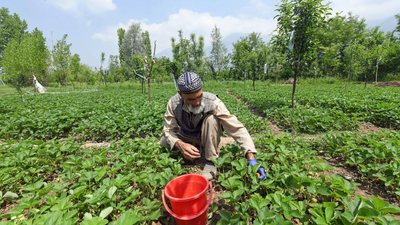
El Niño is a climate pattern of warming of the ocean surface in central and eastern tropical Pacific.
NEW DELHI: With the shadow of El Niño looming large over India due to its potentially negative impact on monsoon, a study by a group of farm scientists from an ICAR institution shows that El Niño years in the past have reduced output of key kharif crops, such as paddy and maize, by more than 10% in 77 and 65 districts, respectively, in different states.The research, led by Subash N Pillai at the ICAR-Indian Institute of Farming Systems Research, notes that significant impact was observed on the output of the most popular kharif crop, paddy, in Andhra Pradesh, Bihar, Chhattisgarh, MP, Maharashtra, UP, Jharkhand and Odisha. Besides paddy and maize, yields of sorgh-um and pearl millets also declined by over 10% in 36 districts each during El Niño years.Researchers warn of over 10% crop loss in vulnerable districtsEl Niño is a climate pattern of warming of the ocean surface in central and eastern tropical Pacific. It is associated with weaker monsoon in India. The study, published in Climate Services journal by Elsevier in 2023, looked at three El Niño years — 2002, 2004 and 2009 — and may provide insights to policymakers and other stakeholders in preparing short- and long-term contingency plans to cope with the situation.“The study revealed that El Niño years cause significant spatial and temporal variability in Indian summer monsoon rainfall, leading to substantial reductions in the productivity of major kharif crops such as rice, maize, pearl millet and sorghum across several districts of India. It identified many highly vulnerable districts where crop yields declined by more than 10% during recent El Niño years, emphasizing the need for climate-resilient agricultural planning at the district level,” Pillai told TOI on Sunday.Pillai, currently serving as head of the division of Agricultural Physics at ICAR-Indian Agricultural Research Institute, said, “As El Niño conditions are likely to prevail this year, policymakers should strengthen contingency planning through promotion of drought-tolerant crop varieties, weather-based agro-advisory services, efficient water management and location-specific adaptation strategies to minimise agricultural losses and safeguard farmers’ livelihoods.”


